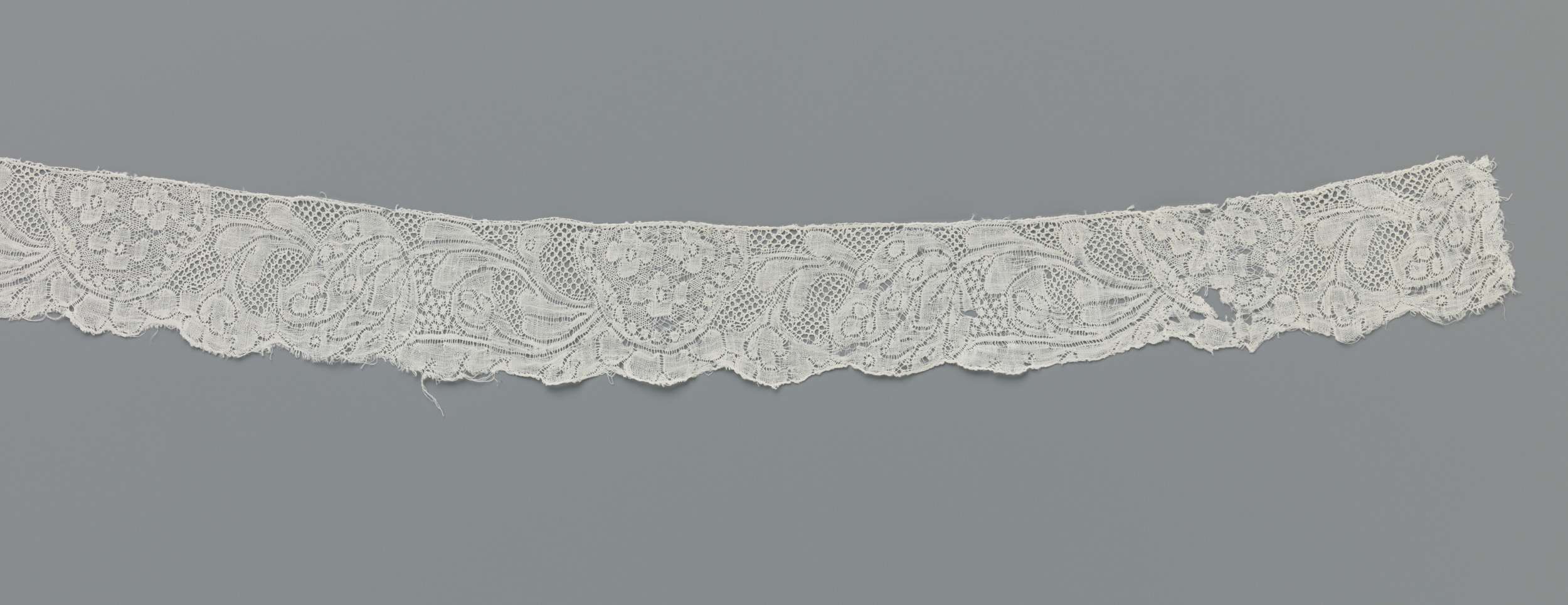
Strook kloskant met grote tulp — History & Analysis
“The canvas doesn’t lie — it simply waits.” Each brushstroke pulses with the ecstatic energy of creation, inviting us to explore the intimate dance of art and nature. Focus first on the intricate lacework at the center, where a delicate interplay of light and shadow breathes life into the fabric. The artist has masterfully crafted each loop and thread, capturing the ethereal quality of kloskant, or bobbin lace, that clings to the tulip like a lover's embrace. Notice the vibrant reds and greens of the tulip petals, their hues shimmering against the beige background, drawing your gaze deeper into this harmonious composition.
In this piece, the juxtaposition of hard and soft elements speaks to the ongoing tension between nature's fleeting beauty and the permanence of artistry. The tulip, a symbol of passion, stands proudly amidst the fragile lace, representing resilience in the face of time's passage. This contrast evokes a rich emotional landscape, where ecstasy and fragility coexist, inviting viewers to contemplate their own fleeting moments of joy.
Created around 1750, this work belongs to a time when floral motifs and intricate textile patterns flourished in the Dutch art scene. The anonymity of the artist leaves us to ponder the societal influences that shaped their craft during an era rich with the exchange of ideas in decorative arts. It reflects a broader cultural appreciation for the beauty found in everyday objects, a celebration of life through an intimate lens.