Strook witte kant met één rechte zijde, de andere zijde is geschulpt en gepicoteerd, op karton — History & Facts
Who listens when art speaks of silence? In Strook witte kant met één rechte zijde, de andere zijde is geschulpt en gepicoteerd, op karton, the delicate interplay of texture and form reveals an intimate dialogue between the viewer and the unseen. Look closely at the intricate lacework that dominates the canvas. Notice how the artist's deft hand captures the whimsical undulations of the fabric — one side stiff and straight, anchoring the composition, while the other flutters and curls as if it is caught in a gentle breeze. The clean white of the material glows against the muted background, inviting light to caress its surface.
Each fold and scallop beckons your gaze, drawing you into a world where simplicity transforms into complexity. This artwork transcends mere decoration, whispering themes of fragility and resilience. The juxtaposition of the straight edge with the ornate, sculpted side evokes the tension between order and chaos — a reminder that life often exists in delicate balance. The meticulous details speak to craftsmanship, suggesting that beauty lies in the nuances.
This lace, seemingly so ephemeral, embodies permanence through its portrayal, urging us to reflect on the fleeting nature of existence itself. Created around 1925, this piece emerged during a transformative period for Gustav Schnitzler. After World War I, the art world was grappling with a quest for new expressions and meanings. As a member of the avant-garde movement in Europe, Schnitzler's explorations of material and form reflected both his personal experiences and the broader search for identity in a rapidly changing society.
This work stands as a testament to his innovative spirit in a time of artistic renewal.
More Artworks by Gustav Schnitzler
Browse all →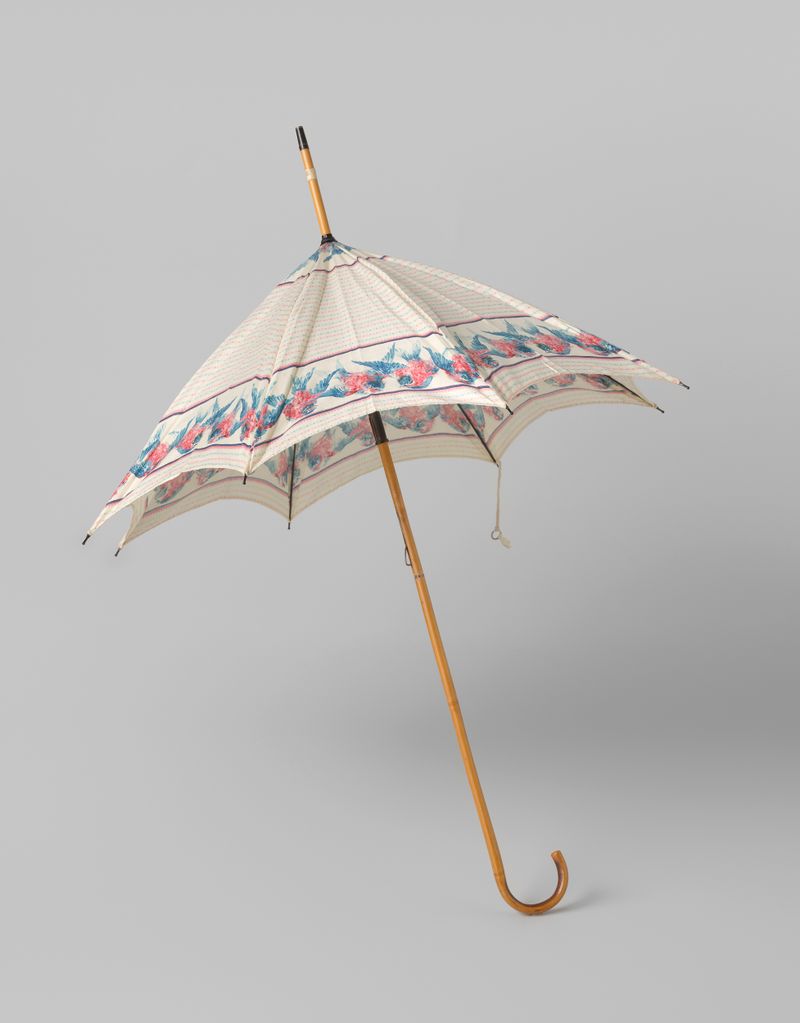
Parasol met dek witte katoen bedrukt met roze en blauwe vogeltjes, op een bamboe stok met gebogen handvat
Gustav Schnitzler
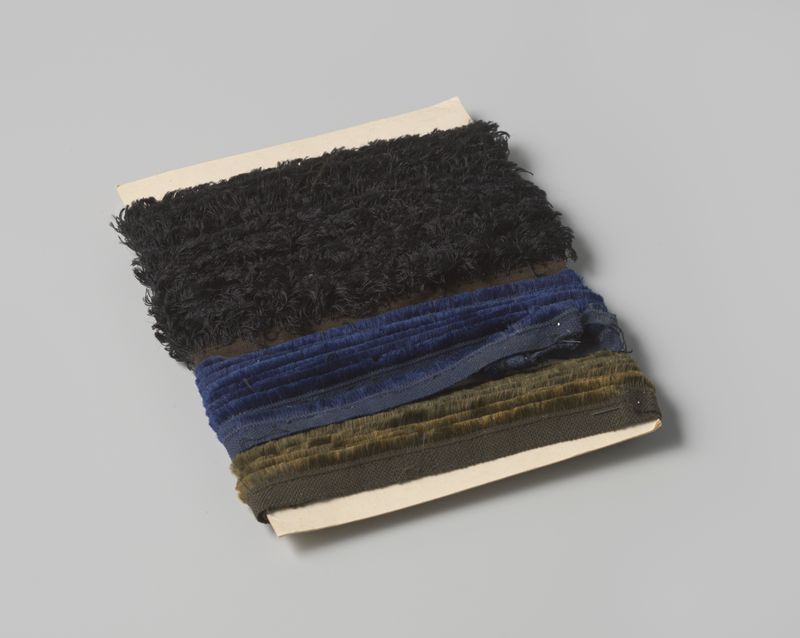
Strook zwarte franje aan bezemband, op karton
Gustav Schnitzler
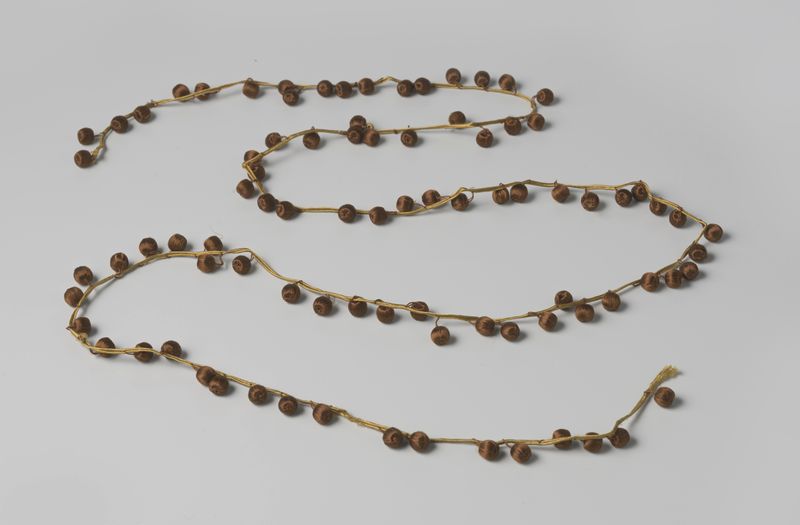
Galon, goudkleurig, waaraan pompons van bruin (zijde)draad hangen
Gustav Schnitzler
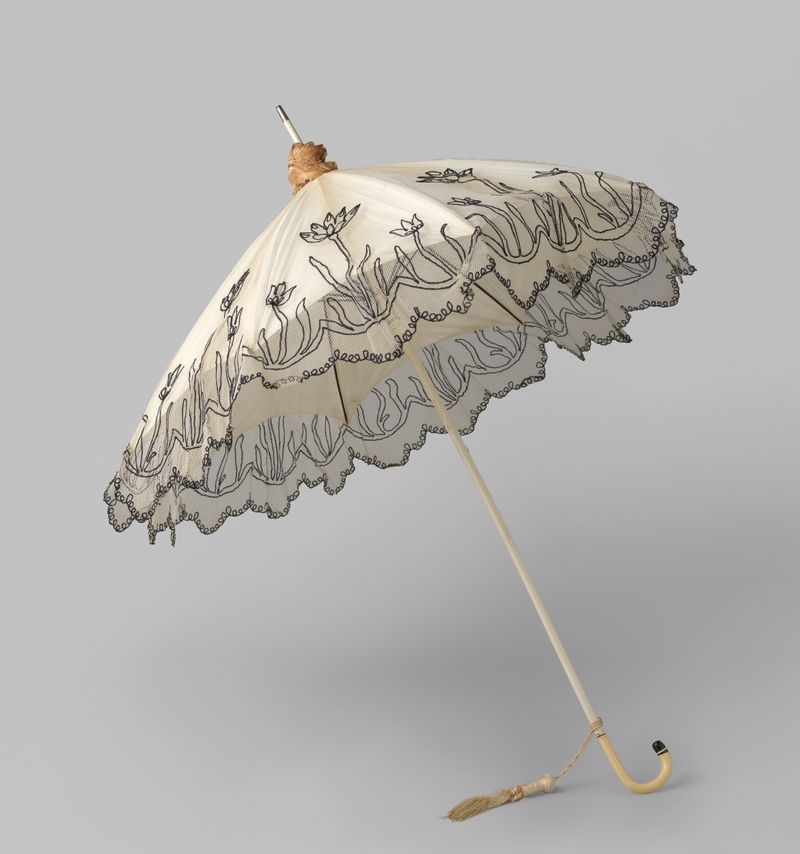
Parasol met dek van witte tule waarop zwart borduurwerk van telkens drie bloemen, op een witgeverfde houten stok, waaraan een gebogen ivoorkleurig handvat
Gustav Schnitzler

Parasol met dek van witte katoen, waartussen een strook van witte kant, op een lichte, houten stok met een ronde haak
Gustav Schnitzler

Strook franje, getand, wit en écru, gewikkeld rond een met gouden randen afgezet plankje
Gustav Schnitzler
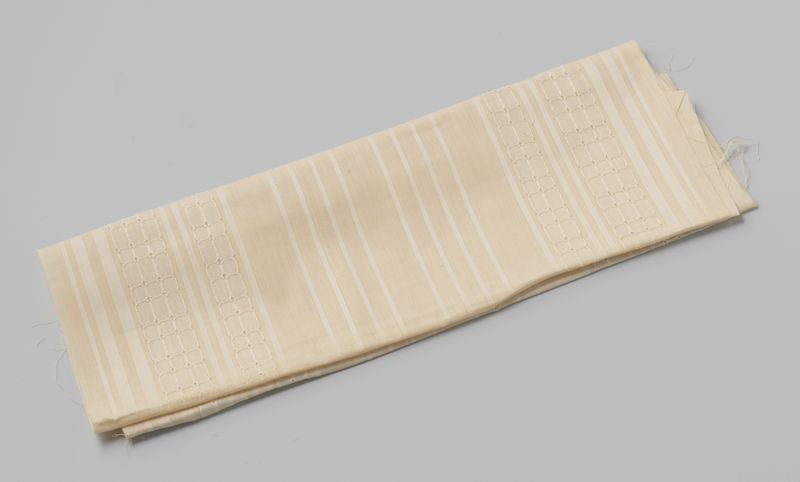
Coupon wit parasolkatoen met beige strepen aan weerszijden
Gustav Schnitzler
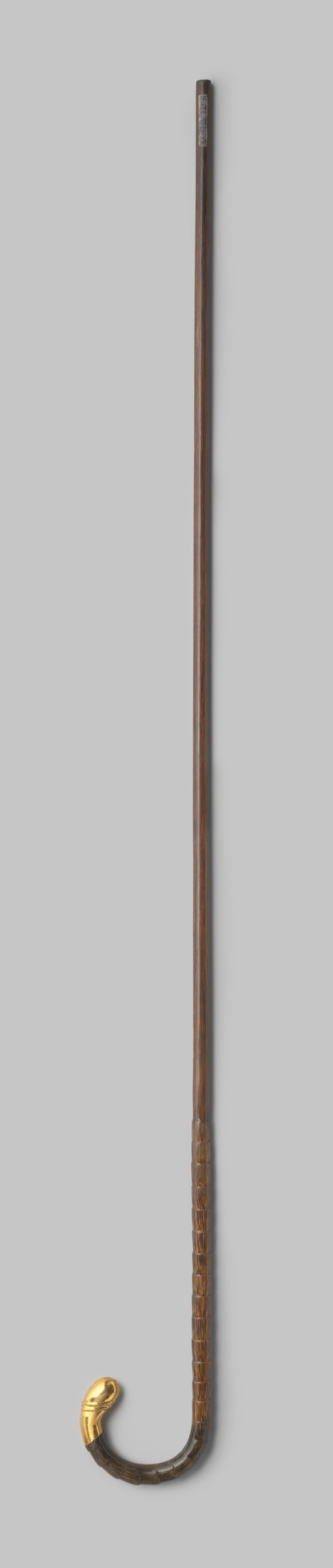
Onderstok van een parapluie of parasol van kokospalm met ronde haak en goudkleurig (verguld?) metalen uiteinde
Gustav Schnitzler
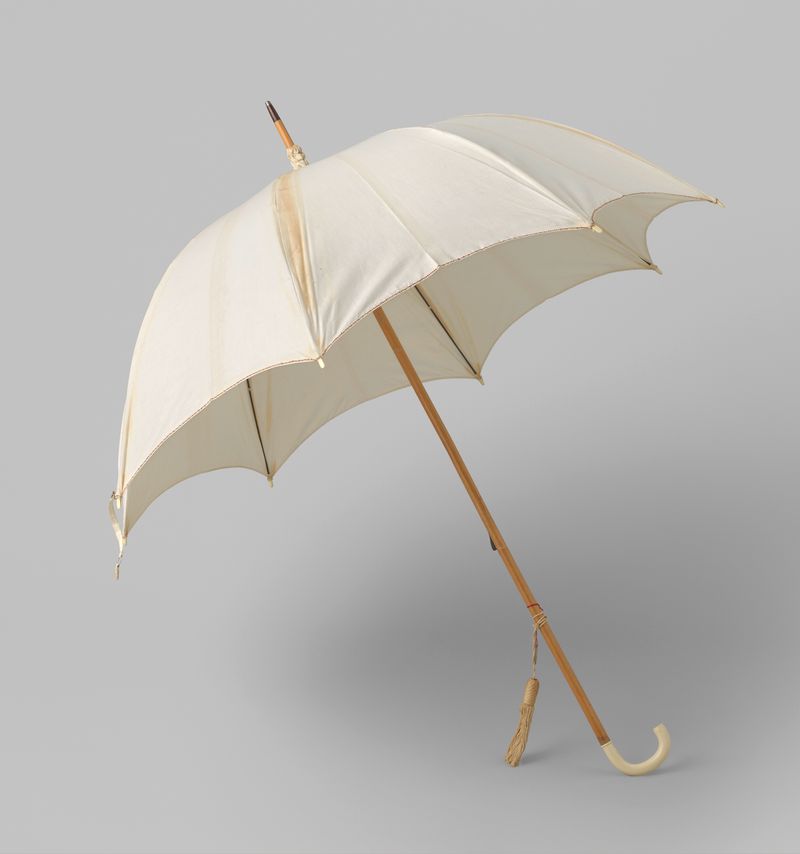
Parasol met dek van effen witte katoen met een smal meerkleurig draad langs de rand geregen, op lichte houten stok, met gebogen, ivoorkleurig handvat
Gustav Schnitzler
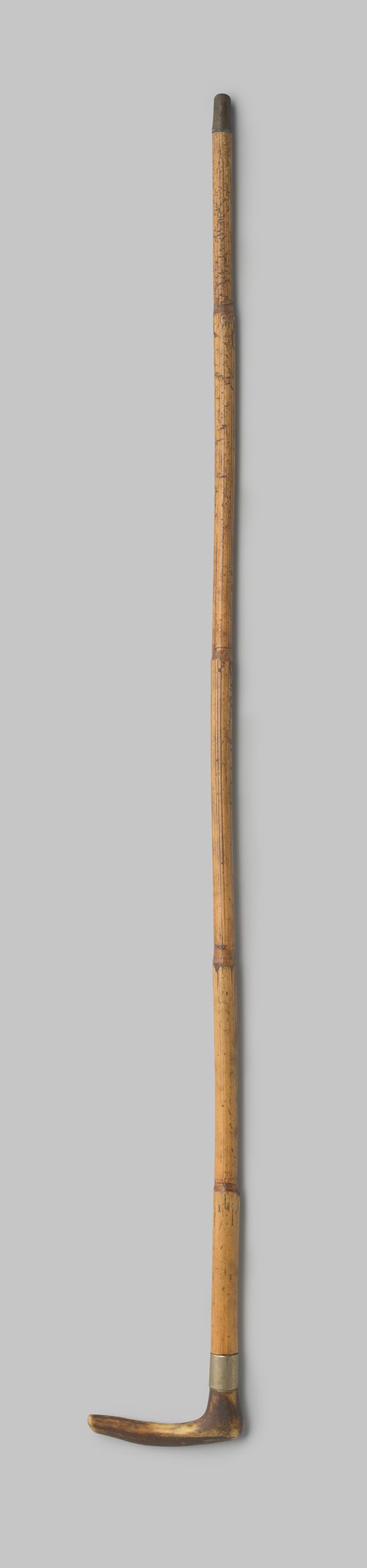
Onderstok van parasol of parapluie van bamboe met rechte haak van hertshoorn, met ring en punt van koper
Gustav Schnitzler