Parasol met dek van witte katoen, waartussen een strook van witte kant, op een lichte, houten stok met een ronde haak — History & Facts
The delicate interplay of light and texture reveals the fragility of existence, evoking a contemplation of beauty that is both transient and profound. Focus your gaze on the intricate lace detailing that adorns the parasol. Its delicate whorls and patterns seem to whisper secrets to the viewer, inviting exploration. Notice how the soft, muted colors blend seamlessly, creating an ethereal quality against the backdrop of the pale wooden handle.
The craftsmanship is exquisite—each element is deliberate, drawing attention to the parasol's function as both an object and a metaphor for protection and vulnerability. The juxtaposition of the sturdy wooden stick with the sheer, almost haunted fabric speaks to the tension between strength and delicacy. This duality prompts reflections on the human condition, where resilience often coexists with fragility. The use of light softens the contours of the parasol, suggesting the passage of time and the inevitable fading of all beauty.
It’s as if the piece captures a moment of stillness, a pause before the fleeting nature of life asserts itself. Created around 1900, the artist worked during a period of rapid change in Europe, when Art Nouveau was captivating audiences with its emphasis on organic forms and delicate beauty. Schnitzler's focus on nuanced details and the fragility of life's moments reflects a broader artistic trend that valued craftsmanship and the aesthetic of everyday objects. This was a time when society grappled with modernization, and his work resonates with both the nostalgia and hope of that era.
More Artworks by Gustav Schnitzler
Browse all →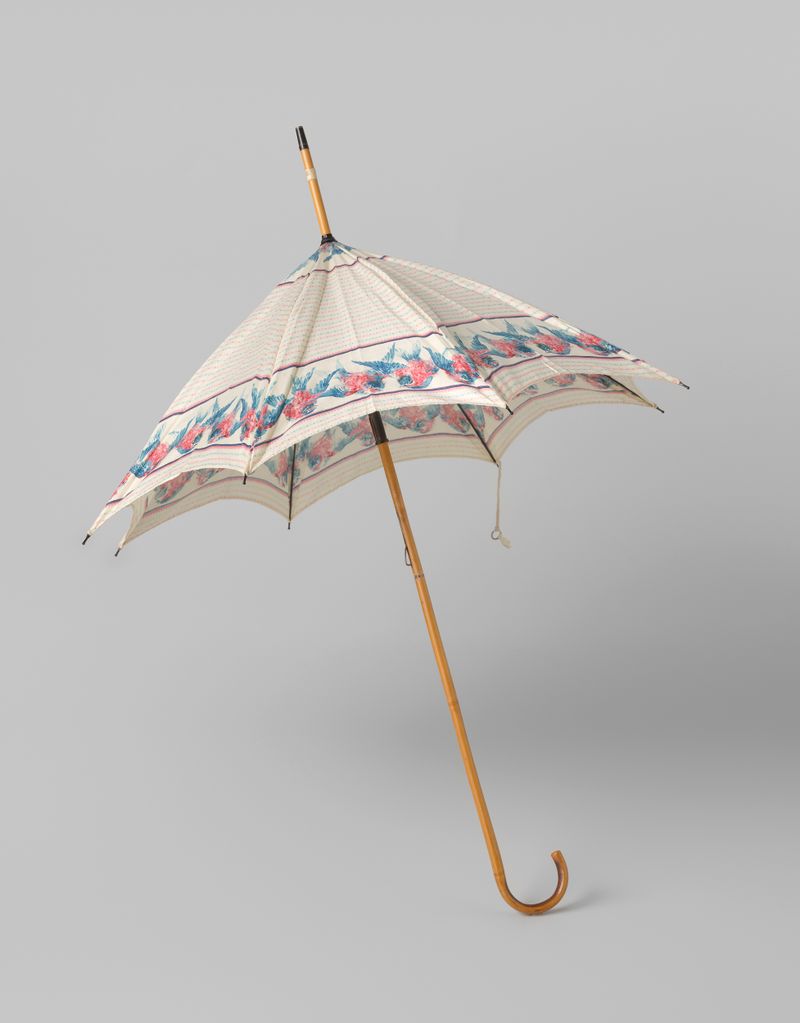
Parasol met dek witte katoen bedrukt met roze en blauwe vogeltjes, op een bamboe stok met gebogen handvat
Gustav Schnitzler
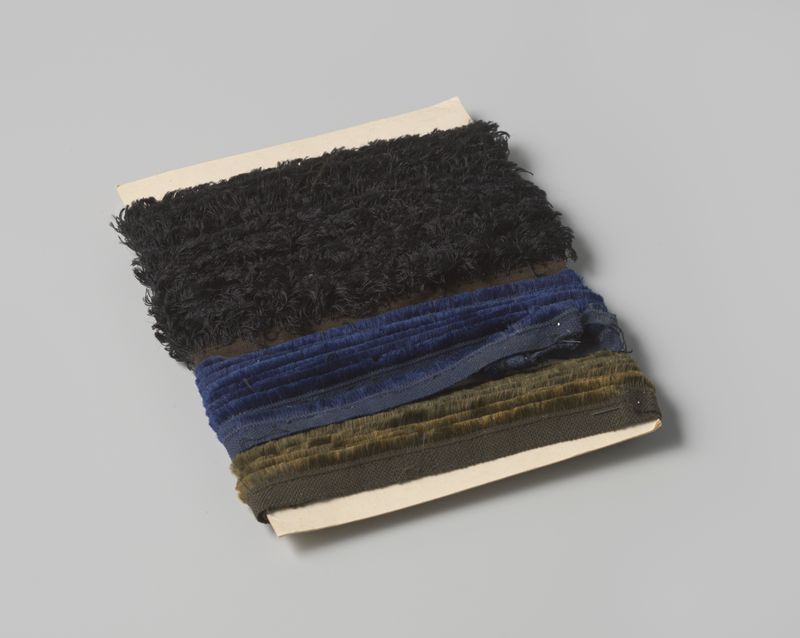
Strook zwarte franje aan bezemband, op karton
Gustav Schnitzler
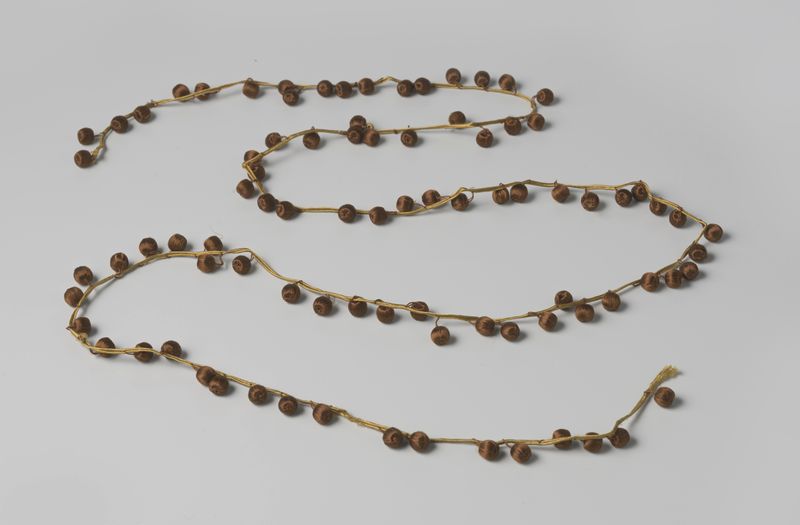
Galon, goudkleurig, waaraan pompons van bruin (zijde)draad hangen
Gustav Schnitzler
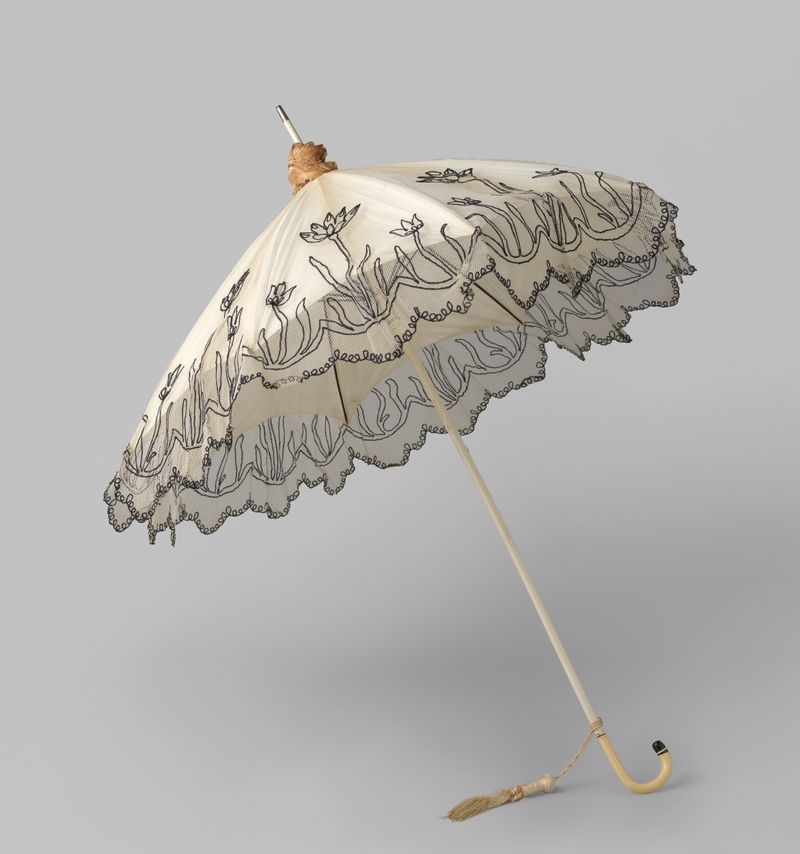
Parasol met dek van witte tule waarop zwart borduurwerk van telkens drie bloemen, op een witgeverfde houten stok, waaraan een gebogen ivoorkleurig handvat
Gustav Schnitzler

Strook franje, getand, wit en écru, gewikkeld rond een met gouden randen afgezet plankje
Gustav Schnitzler
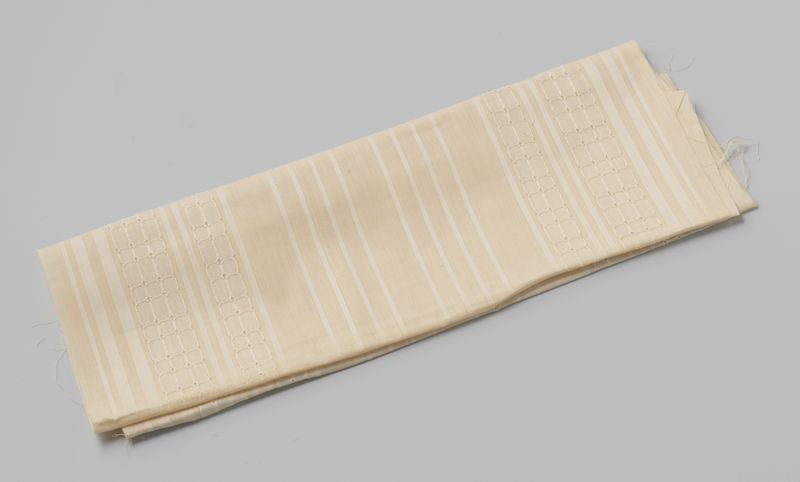
Coupon wit parasolkatoen met beige strepen aan weerszijden
Gustav Schnitzler
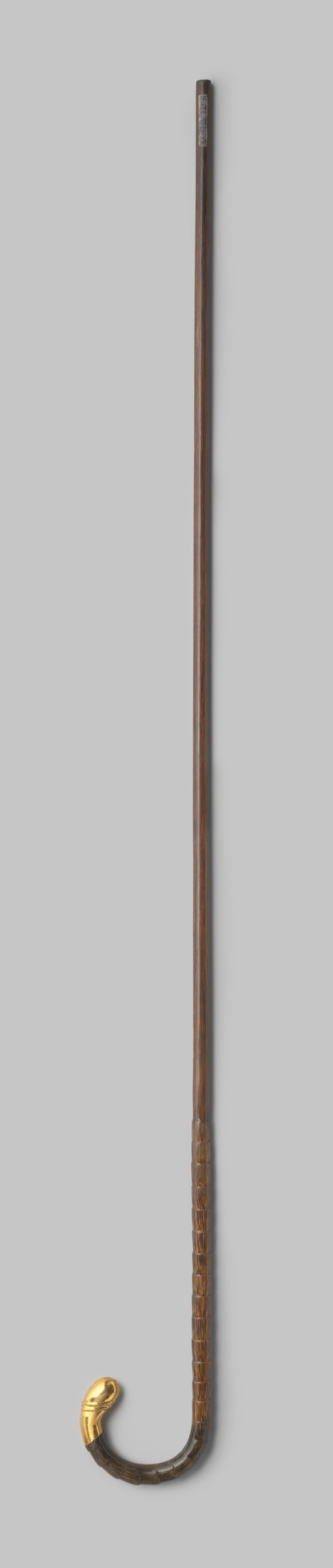
Onderstok van een parapluie of parasol van kokospalm met ronde haak en goudkleurig (verguld?) metalen uiteinde
Gustav Schnitzler

Parasol met dek van effen witte katoen met een smal meerkleurig draad langs de rand geregen, op lichte houten stok, met gebogen, ivoorkleurig handvat
Gustav Schnitzler
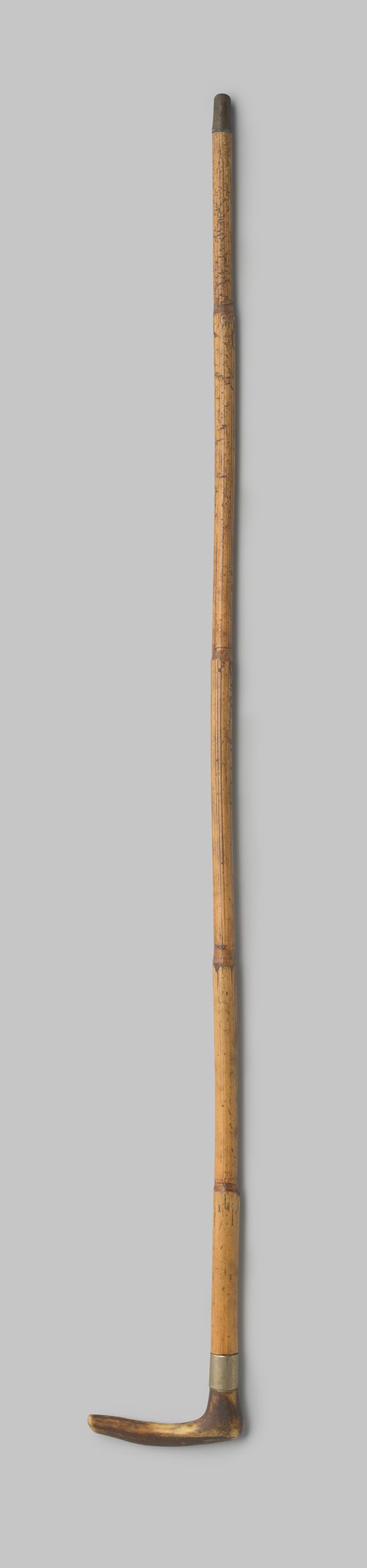
Onderstok van parasol of parapluie van bamboe met rechte haak van hertshoorn, met ring en punt van koper
Gustav Schnitzler
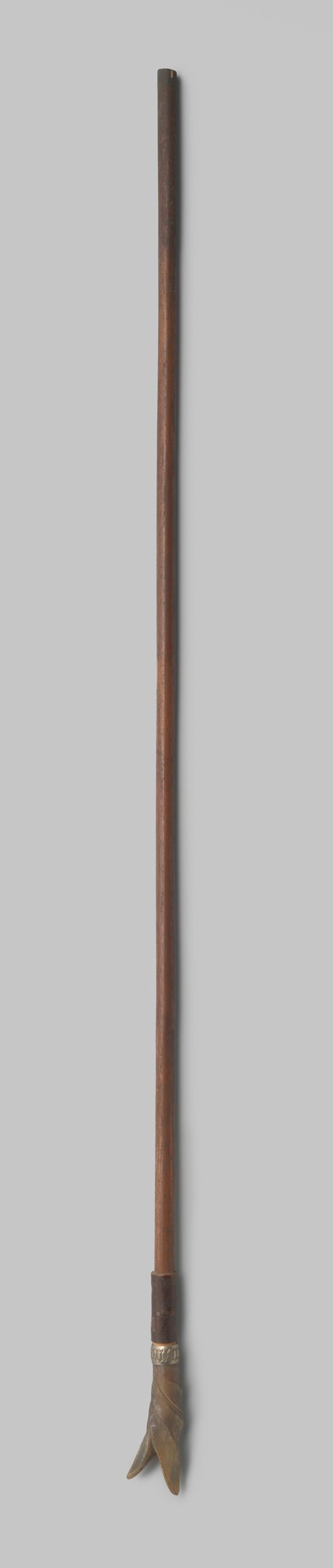
Onderstok van parasol of parapluie met knop van buffelhoorn, hout en zilverkleurige ring
Gustav Schnitzler