
Study of Rocks — History & Facts
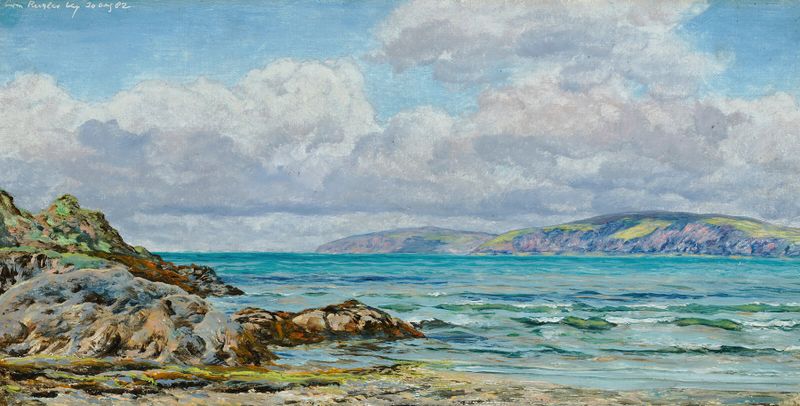
In Study of Rocks, a vibrant awakening unfolds among the silent stones, stirring memories of nature's raw beauty. Each contour and shadow whispers stories untold, inviting us to explore the intimate dialogue between artist and earth. Look to the lower forefront, where the rugged rocks emerge with extraordinary detail. The artist captures their texture through deft brushwork, creating a tactile quality that invites touch.
Notice how the light dances across the surface, casting gentle shadows that reveal depth and dimension. The rich palette of earthy tones—deep umbers mingling with hints of vibrant greens—suggests a world teeming with life, hidden within the stony facade. Yet beneath the surface lies a profound contrast between permanence and transience. The solidity of the rocks juxtaposes the fleeting moment captured on canvas, hinting at the relentless passage of time.
The subtle inclusion of lichen and moss provides a delicate reminder of nature’s resilience, as life persists even amid harshness. This painting does not merely depict; it evokes a sense of awe, urging viewers to contemplate their relationship with the natural world. John Brett painted this work during the late 19th century, a time when the Pre-Raphaelite movement was flourishing, and artists sought to challenge conventions. Working primarily in England, Brett was influenced by a growing appreciation for realism and nature.
The period was marked by a desire to return to meticulous detail, which he embraced in his pursuit of capturing the beauty of the landscape around him.
More Artworks by John Brett
Browse all →
The Cornish Coast Near Newquay
John Brett

A View of Felixstowe
John Brett

A Summer Day, Whitesands Bay, Pembrokeshire, South Wales
John Brett

Heavy Squall off the Start Lighthouse
John Brett

Kynance
John Brett

Entrance To Yarmouth Harbour
John Brett

The Close Of A Summer Day
John Brett

Cape Wrath
John Brett

Man of War Rocks, Coast of Dorset
John Brett
Cwm-yr-Eglwys Bay
John Brett





