Study Of Spiš Landscape — History & Facts
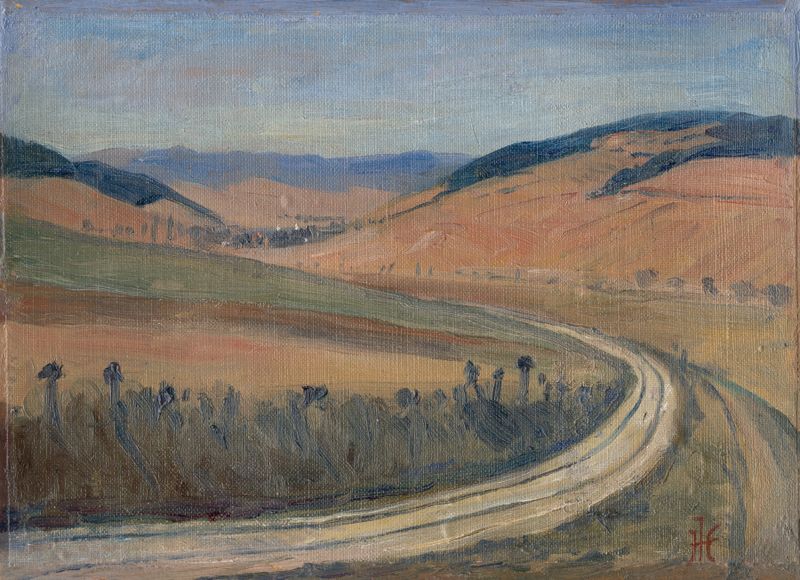
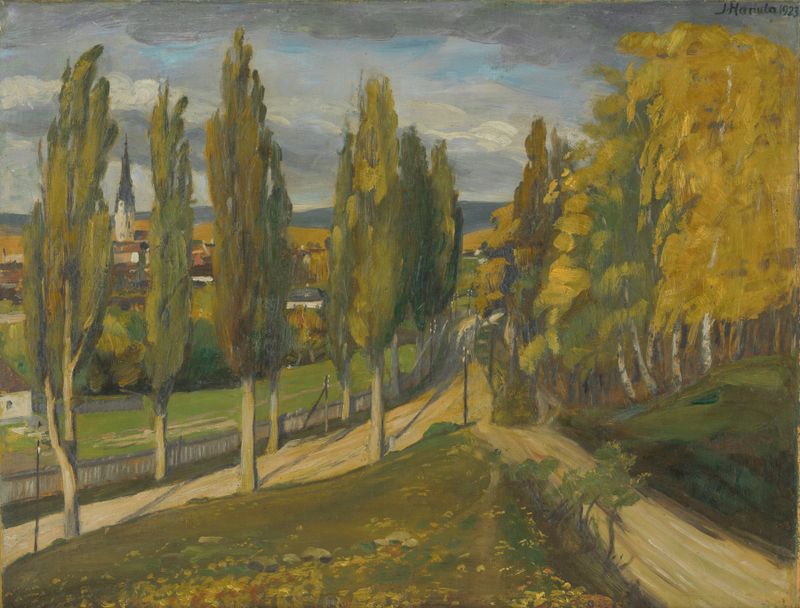
When did color learn to lie? In the quiet depths of Jozef Hanula's Study Of Spiš Landscape, hues evoke not just beauty but a profound melancholy, capturing the essence of a world on the brink of change. Look to the left at the gentle curve of the hills, painted in muted greens and browns that seem to sigh under the weight of history. Notice how the sky, a chaotic blend of grays and soft blues, looms above, heralding an approaching storm. The composition draws the eye toward the horizon, where a flicker of light hints at hope amid the encroaching darkness, inviting contemplation of both the land and one's own internal landscape. In this work, contrasts emerge—the interplay between the tranquil earth and the tumultuous heavens reflects the emotional tension of the era.
The trees, though still and silent, suggest a resilience amid uncertainty, while the sweeping clouds act as a metaphor for the transient nature of life itself. Each brushstroke resonates with an undercurrent of nostalgia, whispering secrets of the past and the inevitability of change. Jozef Hanula created this piece in 1920, during a time when Europe was grappling with the scars of World War I and the shifting tides of modernism in art. Based in Slovakia, Hanula was deeply influenced by the landscapes surrounding him, striving to encapsulate their beauty while also reflecting the collective spirit of a nation in transition.
His work embodies the search for stability and identity in a world that felt increasingly fragmented.