
View Of The Church — History & Facts
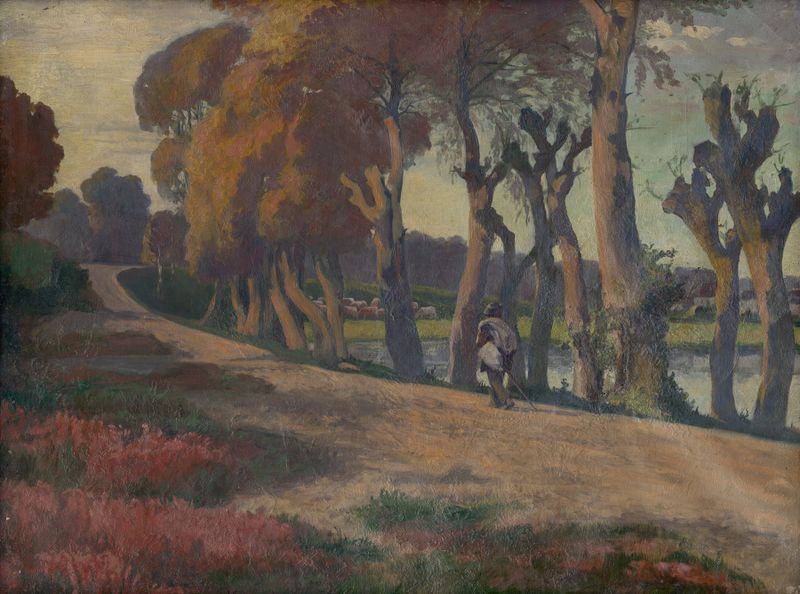
What if beauty was never meant to be finished? In the delicate interplay of light and form, a vision emerges that speaks to the transient nature of hope. Look to the center of the canvas, where the church stands resolutely, its steeple reaching towards the heavens. The artist employs a soft palette of pale blues and warm ochres, inviting the viewer to bask in the gentle glow of dawn. Notice how the light spills across the façade, highlighting the intricate details of the architecture while casting subtle shadows that breathe life into the structure.
The brushwork is meticulous; each stroke seems infused with a quiet reverence, drawing us into the tranquil scene. In the foreground, wildflowers bloom with abandon, their vibrant colors contrasting with the solemnity of the church, symbolizing resilience and the cycle of life. The distant hills, painted with a sense of softness, create a harmonious backdrop that suggests both stability and the vastness of possibility. This tension between the steadfastness of the church and the fleeting nature of the flowers embodies a deeper narrative about faith and renewal in times of uncertainty. Painted in 1939, the work emerged during a tumultuous period in Jozef Hanula's life, just before the outbreak of World War II.
Living in Poland, he witnessed the cultural upheaval and shifting tides of an era marked by conflict and despair. This painting reflects not only his artistic journey but also the collective yearning for hope and beauty amidst chaos, a testament to resilience in times of trial.
More Artworks by Jozef Hanula
Browse all →
More Architecture Art
Browse all →
The statue of Liberty
Frédéric Auguste Bartholdi

View of Houses in Delft, Known as ‘The Little Street’
Johannes Vermeer

View of Houses in Delft, Known as ‘The Little Street’
Johannes Vermeer

The Cathedral in Rouen. The portal, Grey Weather
Claude Monet

The yellow house
Vincent van Gogh

The Church in Auvers-sur-Oise, View from the Chevet
Vincent van Gogh