
Suburban landscape in the vicinity of Paris — History & Facts
Who listens when art speaks of silence? In a world that often drowns out the whispers of nature, the stillness in this work invites contemplation on the echoes of loss that persist in the human experience. Look to the horizon where gentle hills cradle the village, their soft curves painted in muted greens and browns. The trees stand sentinel, their elongated shadows hinting at the passage of time, while the distant rooftops emerge like silent witnesses beneath a delicate sky washed in pastel hues. Notice how the carefully applied brushstrokes create a tapestry of texture, imbuing the landscape with an ethereal quality that invites the viewer to linger in its quiet embrace. Beneath the surface, this serene vista reveals an underlying tension between nostalgia and the inevitable march of progress.
The fading light taps into a sense of melancholy, evoking memories of a simpler past while confronting the viewer with the reality of change. The juxtaposition of the natural elements against the man-made structures serves as a dialogue between preservation and loss, reflecting the fragility of human connection to the earth. In 1893, Stanisław Wyspiański painted this piece during a period of significant transformation in France, where rapid industrialization was beginning to reshape both city and countryside. Living in Paris, he was influenced by the Symbolist movement, which compelled artists to explore deeper emotional truths.
During this time, Wyspiański was immersed in the interplay of art, literature, and theater, seeking to capture the essence of his environment through a lens that balanced beauty and transience.
More Artworks by Stanisław Wyspiański
Browse all →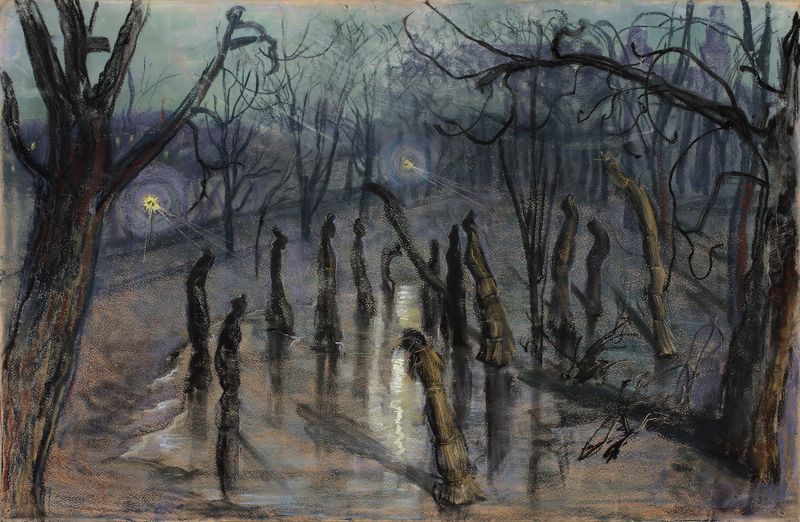
Chochoły (Straw Men Dancing in the Planty)
Stanisław Wyspiański
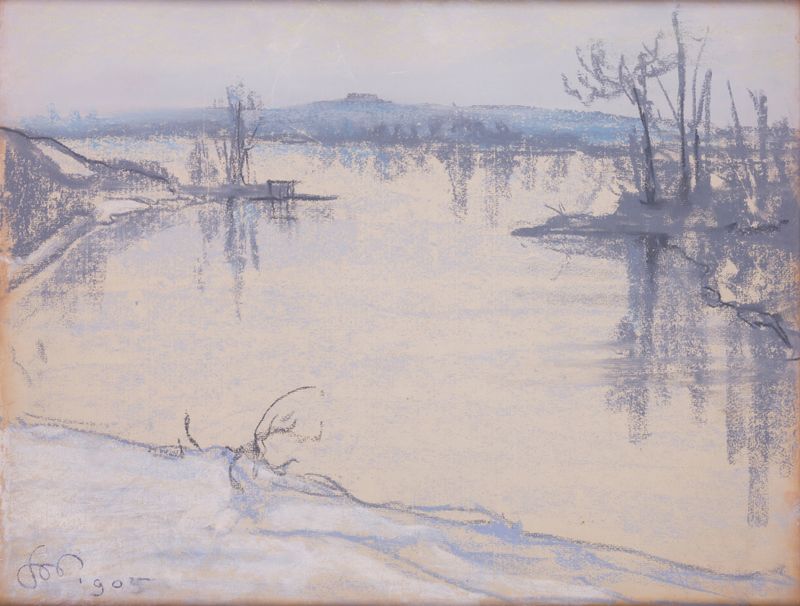
Wisła pod Krakowem
Stanisław Wyspiański
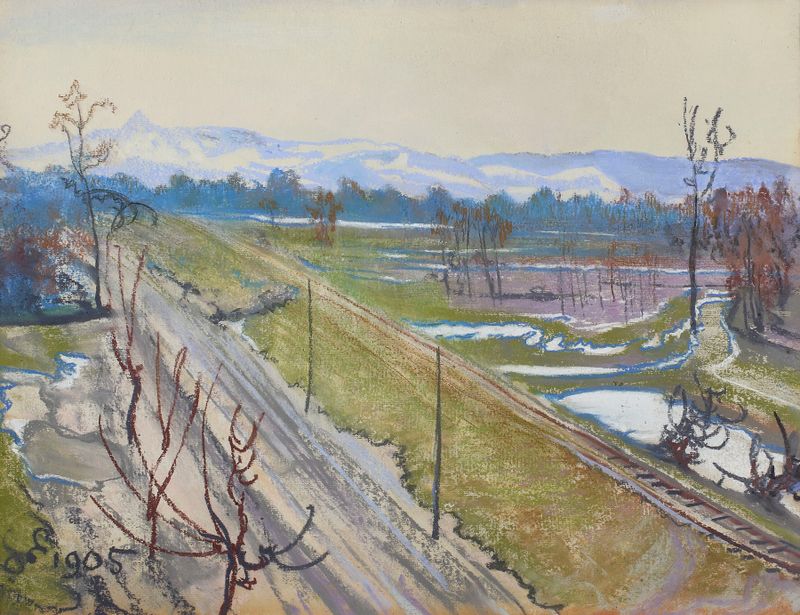
View from the window of the artist’s studio of Kościuszko Mound
Stanisław Wyspiański
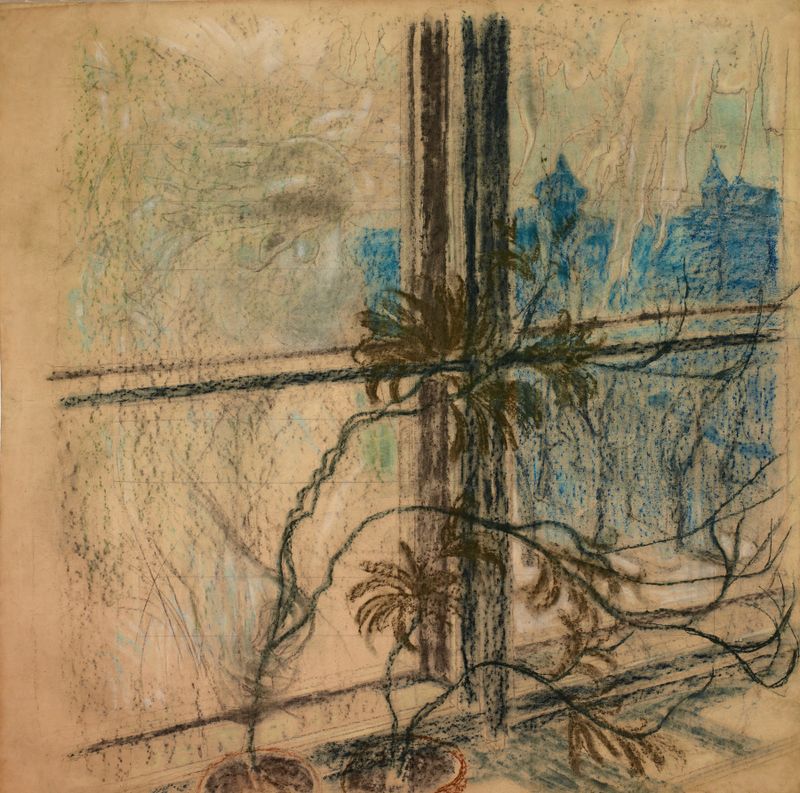
Widok z okna na mury miejskie Krakowa
Stanisław Wyspiański
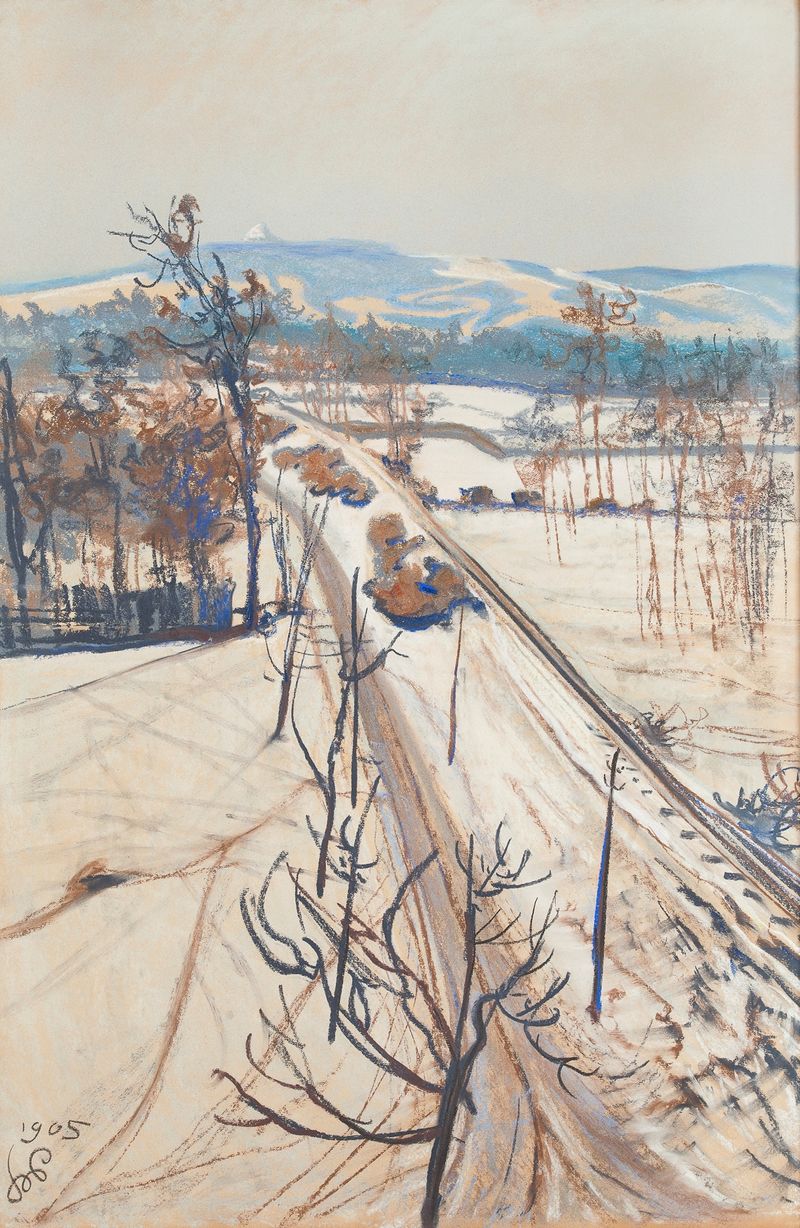
Widok na Kopiec Kościuszki. Szary dzień
Stanisław Wyspiański

View of the Wawel Castle
Stanisław Wyspiański

The Barbican and the Floriańska Street – View from Zacisze Street
Stanisław Wyspiański
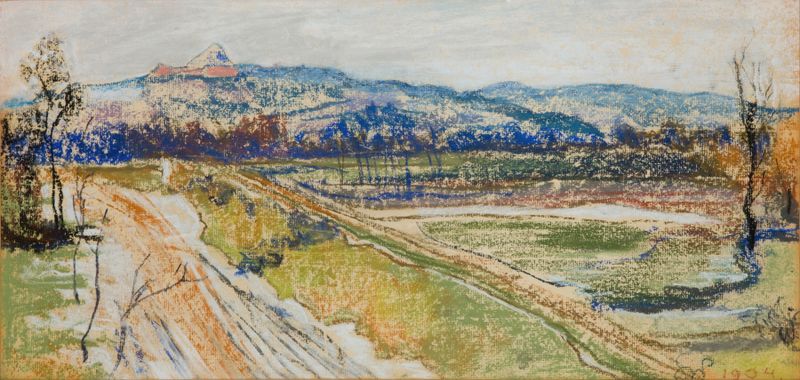
View of the Kościuszko Mound in Krakow from the Window in the Artist’s Studio
Stanisław Wyspiański
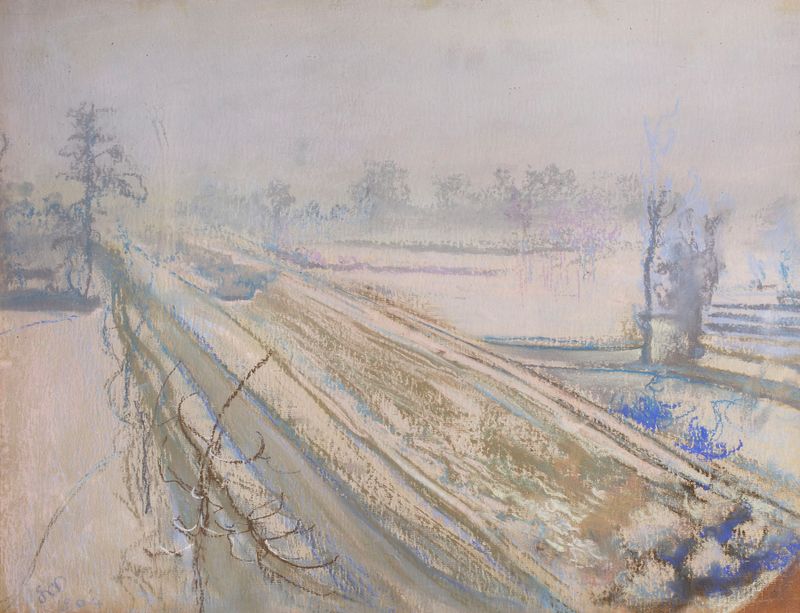
View from the window of the artist’s studio of Kościuszko Mound
Stanisław Wyspiański
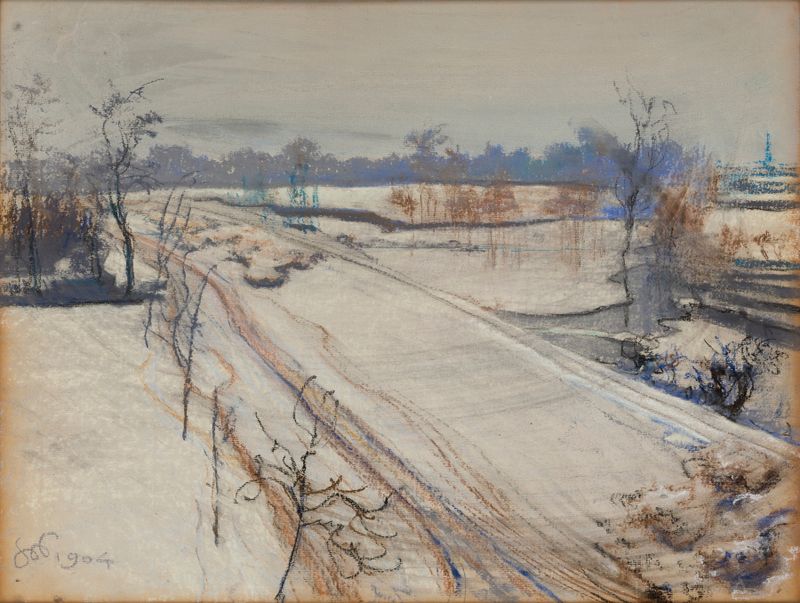
Widok z okna na Kopiec Kościuszki w Krakowie. Szary dzień
Stanisław Wyspiański





