
Summer Night — History & Facts
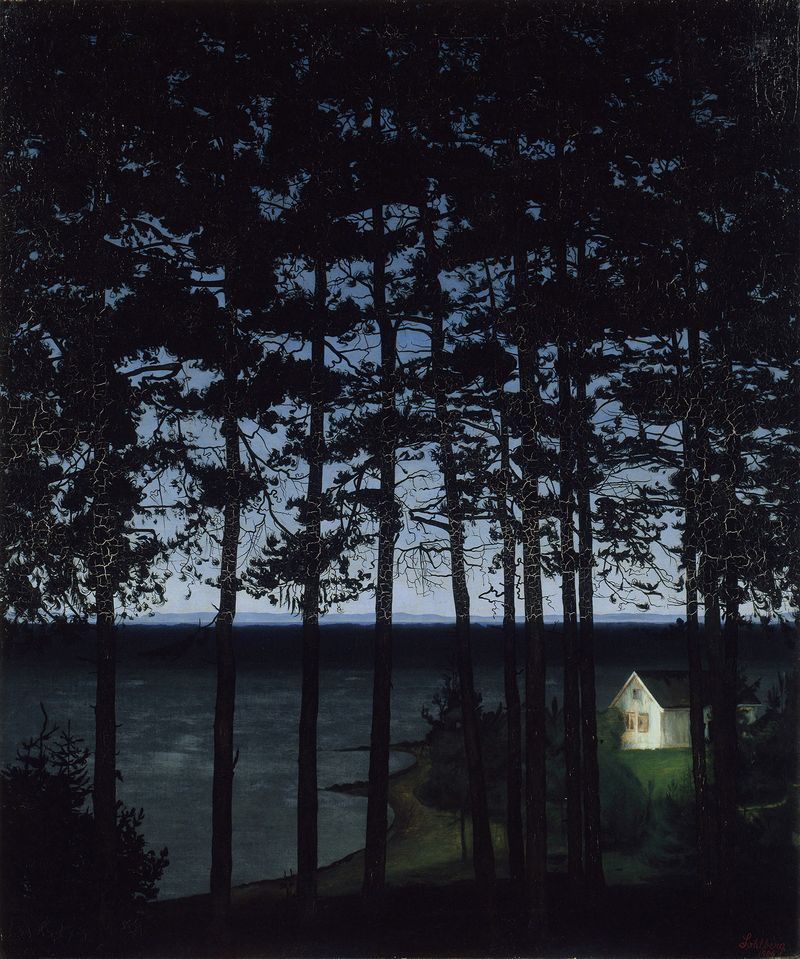
Is this a mirror — or a memory? The twilight hour spills a soft glow over the landscape, blurring the line between reality and dream, inviting the viewer to step into a serene moment that feels both timeless and ephemeral. Look to the center of the canvas, where the gentle hues of blues and purples meld seamlessly into one another. Sohlberg’s deft brushwork captures the essence of a summer night, as the quiet lake reflects the sky’s fading light. The soft strokes create a whisper of movement, drawing the eye across the tranquil water, while the trees stand sentinel, their silhouettes framing the edges of this peaceful haven. In the delicate interplay of light and shadow, there lies an exploration of solitude and introspection.
The stillness of the scene speaks to the viewer’s own experiences of quiet reflection, while the vibrant colors evoke the warmth of a setting sun, contrasting with the coolness of encroaching night. The artist's choice of composition offers both a personal sanctuary and a universal experience, inviting each observer to linger in a shared moment of calm. Harald Sohlberg painted this work in 1899, during a period when the Symbolist movement was gaining ground, deeply influencing his approach to color and emotion. Living in Norway, he sought to encapsulate the essence of his homeland while expressing the deeper feelings associated with nature.
This piece emerged from his desire to blend realism with a dreamlike quality, reflecting a significant evolution in his artistic journey.
More Artworks by Harald Sohlberg
Browse all →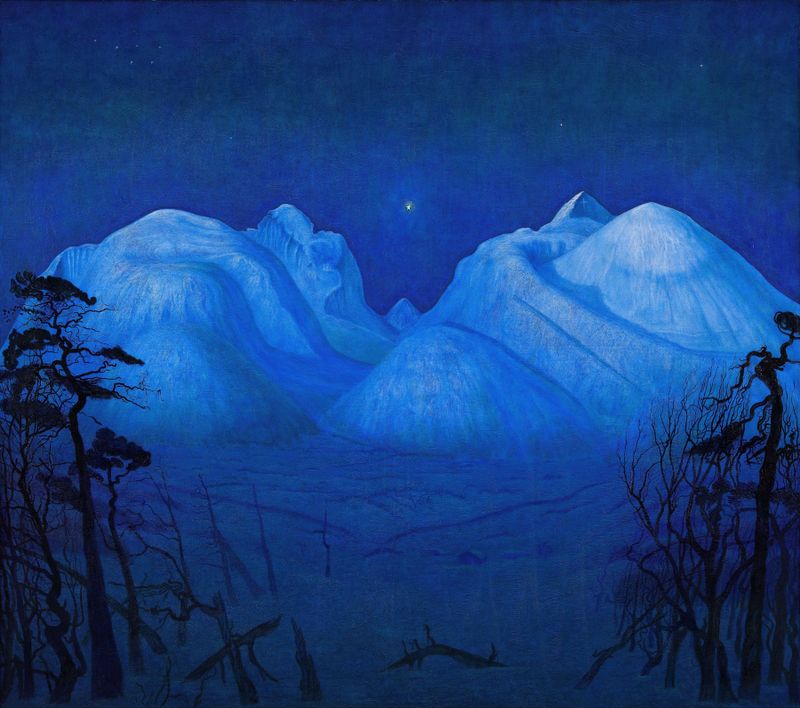
Winter Night in the Mountains
Harald Sohlberg

Street in Røros in Winter
Harald Sohlberg

Street in Røros
Harald Sohlberg

From Værvågen, The Fisherman’s Cottage
Harald Sohlberg
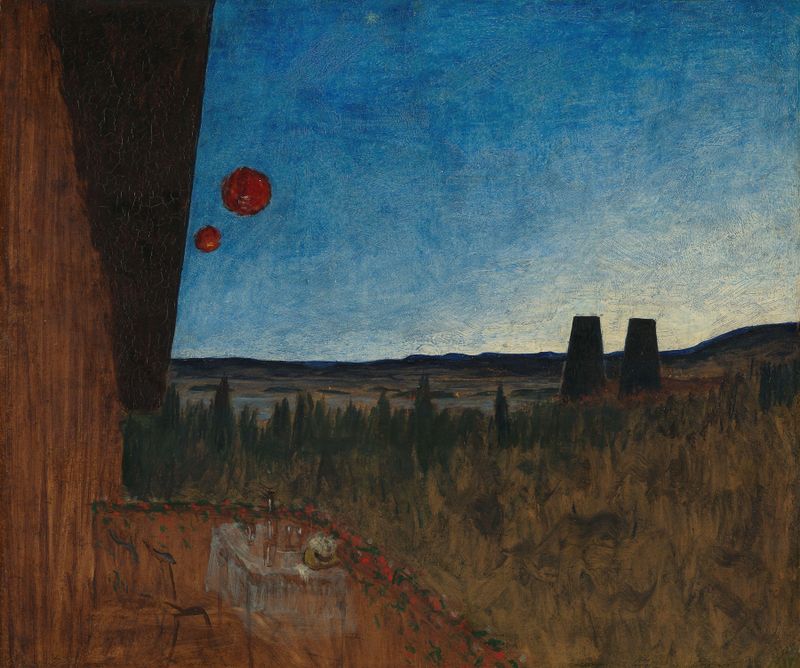
Summer Night
Harald Sohlberg

View from Karl XII’s Street
Harald Sohlberg
Fisherman’s Cottage
Harald Sohlberg

Courtyard in Slush at Røros
Harald Sohlberg
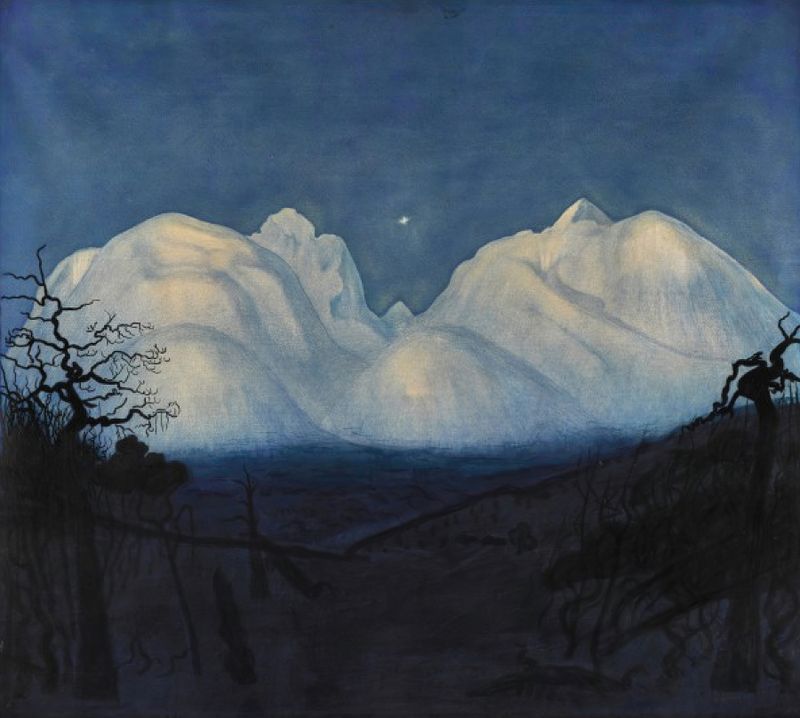
Winter Night in the Mountains
Harald Sohlberg

Flower Meadow in the North
Harald Sohlberg





