
Sun in Forest — History & Facts
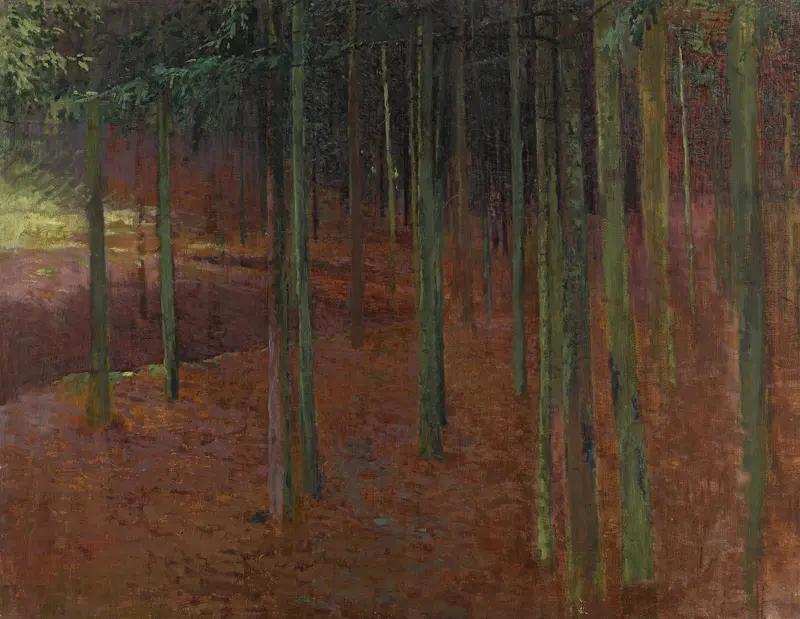
What first catches the eye in Sun in Forest is the way sunlight scatters across the woodland floor, not in a single burst but in a constellation of golden patches. The painter leads us into a quiet drama: the forest is not a stage for human action, but for the play of light and shadow. The slender trunks, rendered with a keen sense of vertical rhythm, guide the gaze upward, while the dappled ground draws it back down, creating a gentle tension.
Each flicker of brightness feels deliberate, as if the artist is inviting us to notice how the sun animates even the most ordinary hillside. The palette is rich with earthy reds and greens, but it is the yellow-white of sunlight that gives the scene its pulse. Created in 1898, this work belongs to a moment when artists across Europe were turning away from grand historical narratives to capture the fleeting effects of nature itself. Painters like Antonín Slavíček found new poetry in the everyday, often working outdoors to chase the changing light.
While little is recorded about the specific journey of this painting, its presence in a private collection today reminds us how such works were cherished for their immediacy and freshness. In a world on the brink of modernity, a painting like this offered—and still offers—a quiet escape, urging viewers to linger and watch the sun move through the trees.
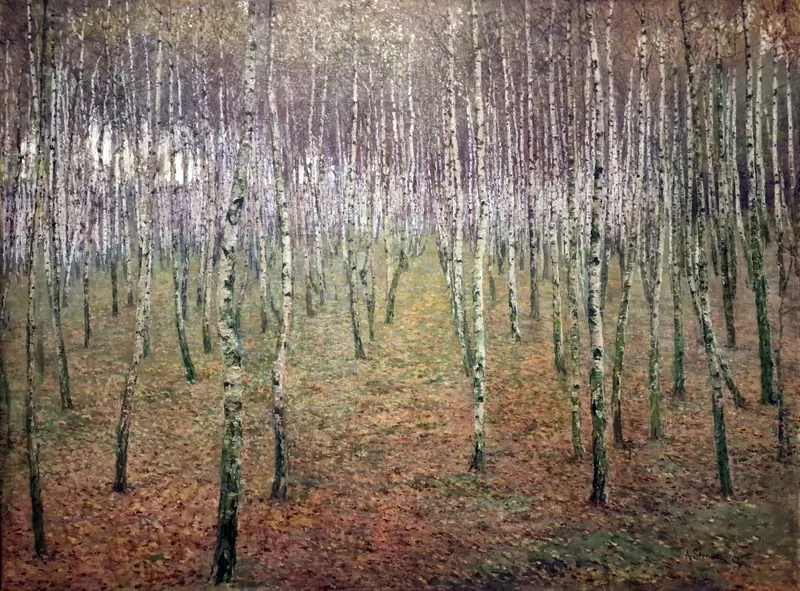
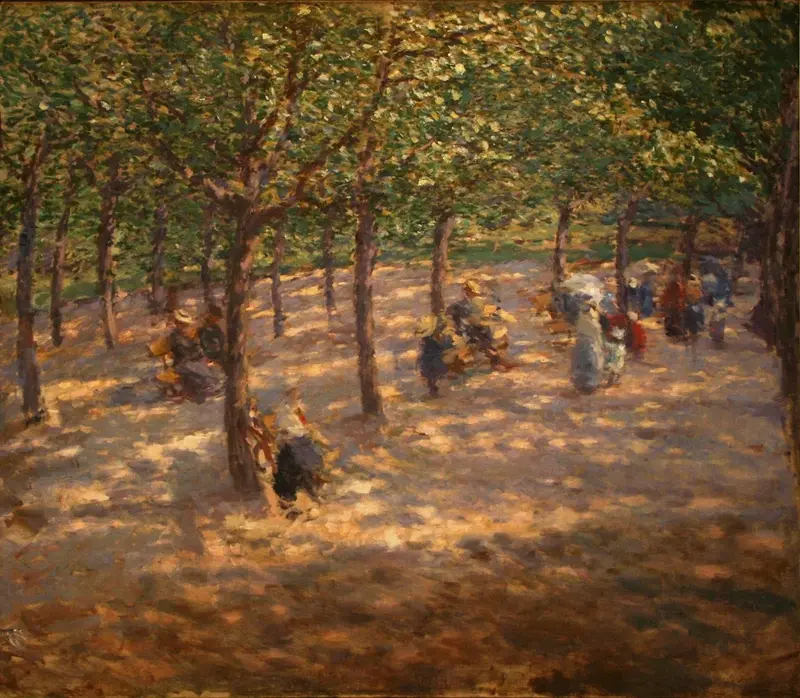
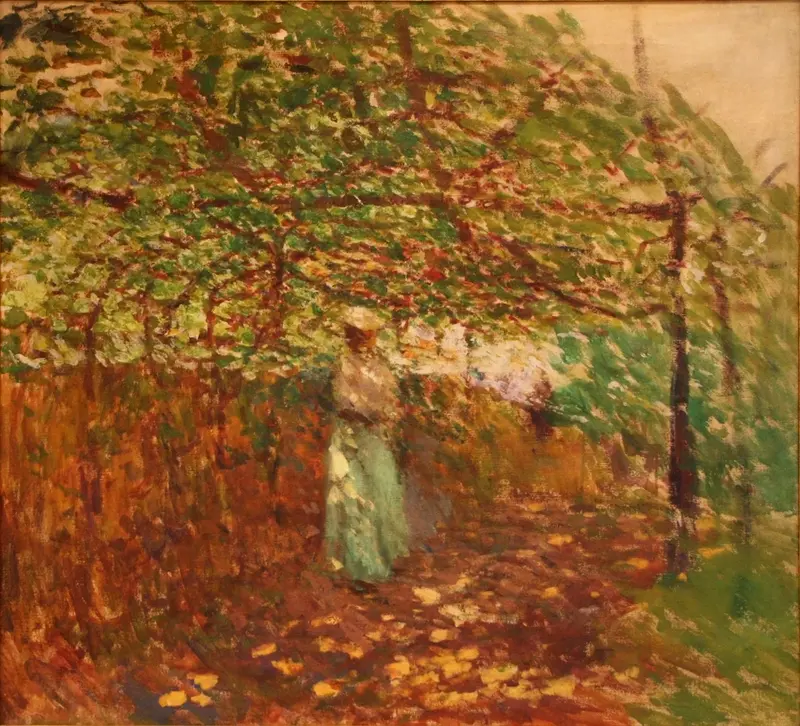
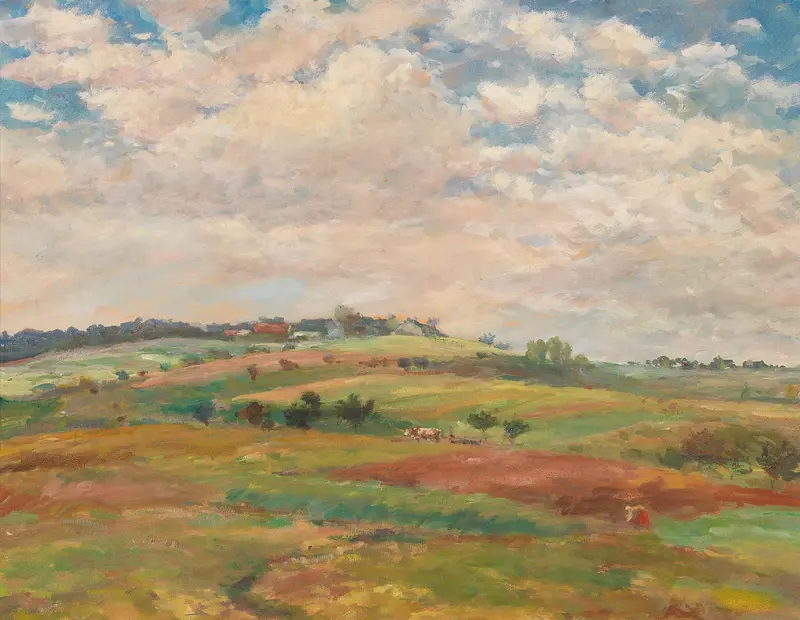
More Artworks by Antonín Slavíček

More Landscape Art

The Starry Night
Vincent van Gogh

View of Delft
Johannes Vermeer

Water Lilies
Claude Monet

The Grand Canal, Venice, looking north-west from the Ca' Corner to the Ca' Contarini degli Scrigni, with the campanile of Santa Maria della Carità
Canaletto

Windsor Castle
Canaletto

The Grand Canal looking North-East from the Palazzo Dolfin-Manin to the Rialto Bridge
Canaletto