Sunlight Walk — History & Facts
A sudden blaze of color pulls the viewer into Sunlight Walk, where the world is filtered through the eyes of August Macke at the height of 1913. The scene is not just observed—it is felt, as the figures seem to dissolve into their own shadows and the dappled light. The woman in the foreground, leaning gently on a railing, is caught in a moment of quiet absorption, her silhouette broken by the bold geometry of her hat and the sunlight that falls across her dress.
Behind her, a companion and a child recede into a riot of red and gold, the path almost aflame beneath their feet. The trees arch overhead, their trunks rendered in deep crimson, their leaves a storm of green and yellow, guiding the eye upward and then back down to the figures below. This painting belongs to a world on the cusp of modernity, where artists like August Macke—a leading figure of the German Expressionist group known as Der Blaue Reiter—sought to capture not the details of a scene, but its sensation. In 1913, Europe’s cities and parks were alive with the rhythms of daily life, and painters responded with works that celebrated color, movement, and fleeting experience.
Sunlight Walk stands as a testament to that moment, preserved in the Yorck Project’s vast digital collection of masterpieces. History has kept few traces of this specific canvas’s travels, but its energy and palette speak directly to the restless optimism of its era—inviting you to linger, and to see how sunlight can become a story all its own.
More Artworks by August Macke
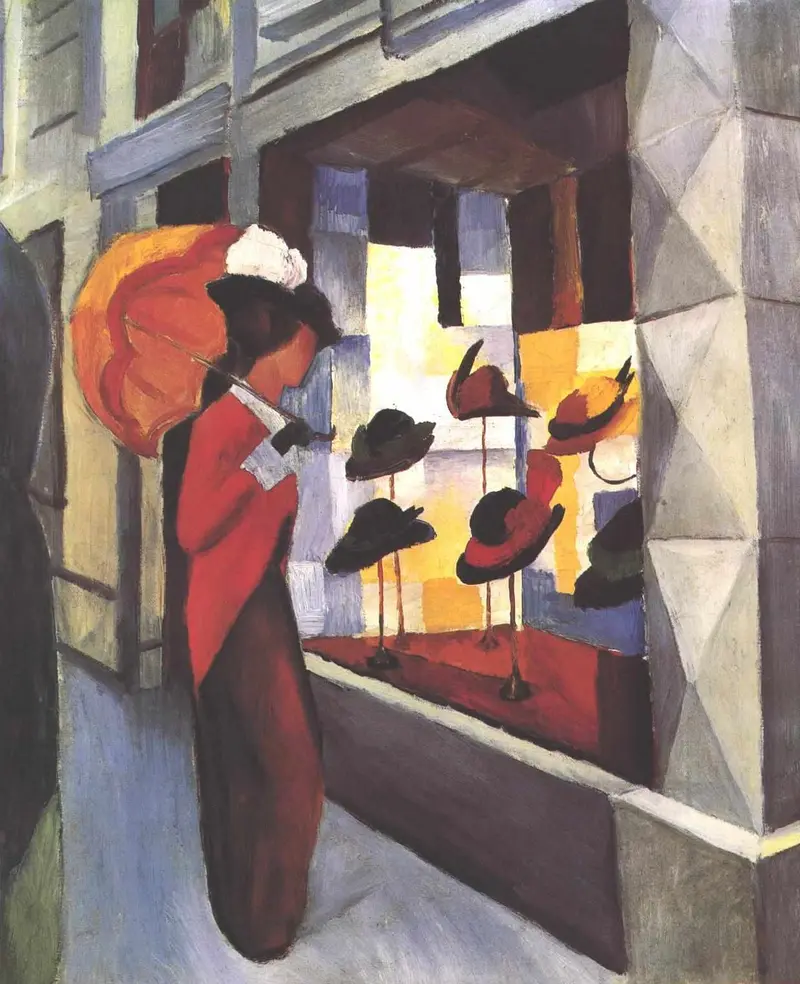
Woman with a Parasol in Front of a Hat Shop
August Macke

Street with Church in Kandern
August Macke
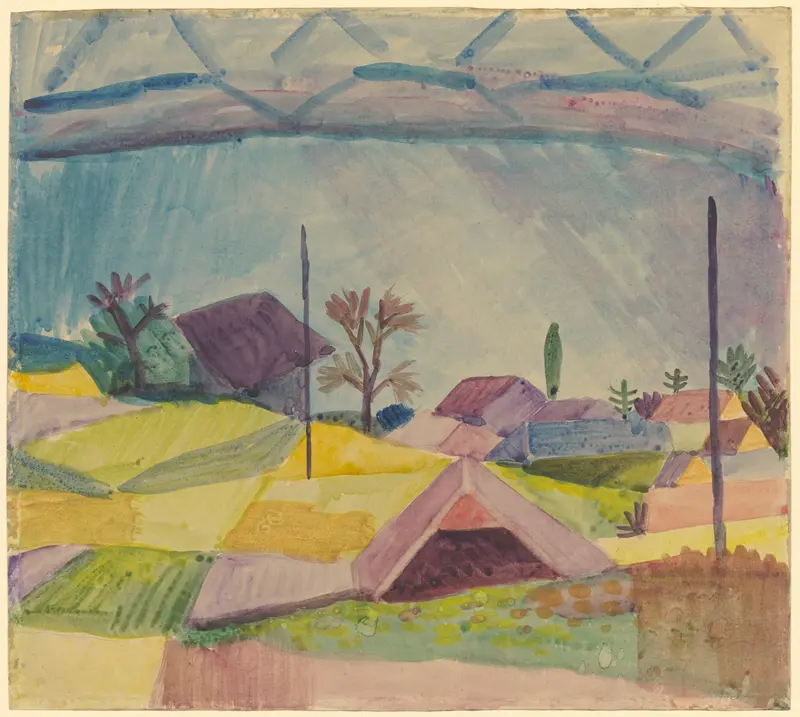
View of Hilterfingen
August Macke

Paar im Nachen
August Macke
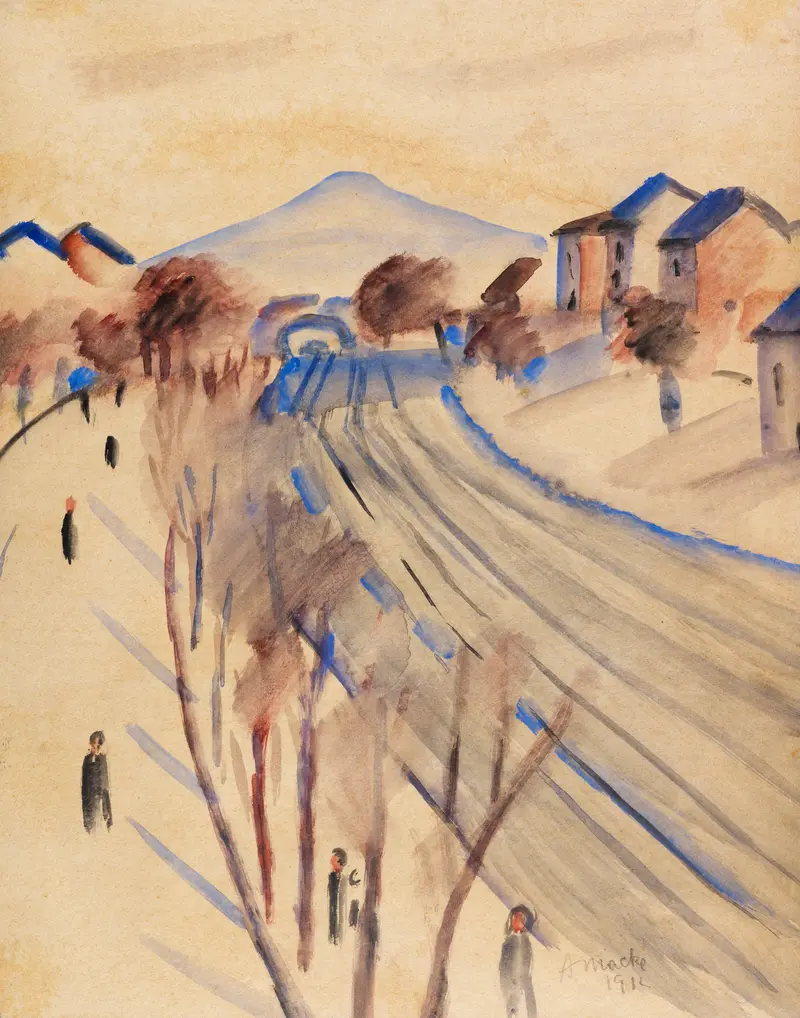
Ölberg mit Bahngleisen II
August Macke
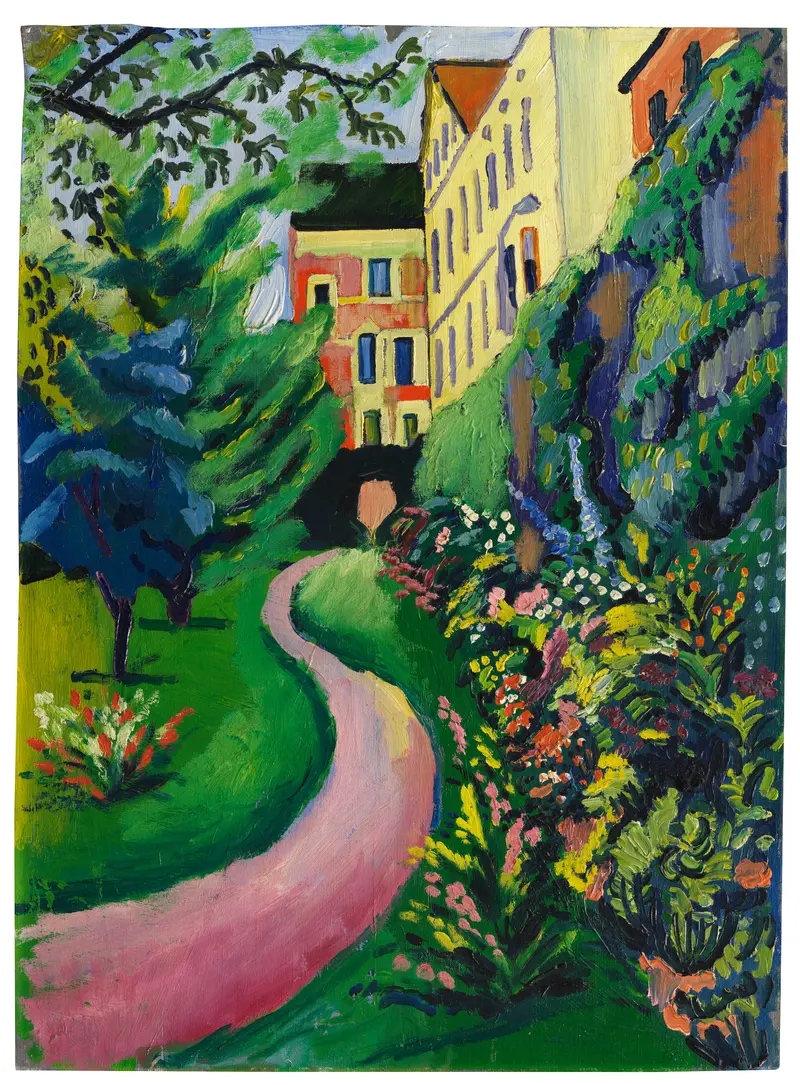
Unser Garten mit blühenden Rabatten
August Macke
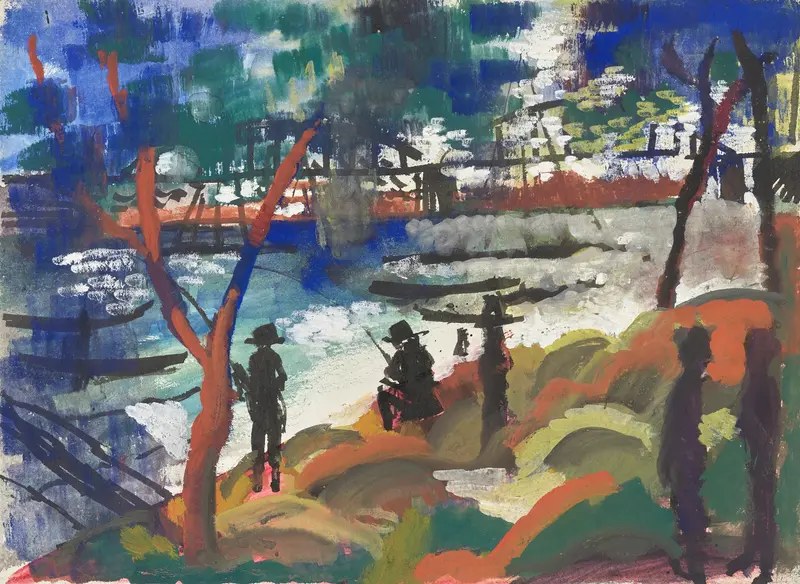
Angler am Fluss
August Macke
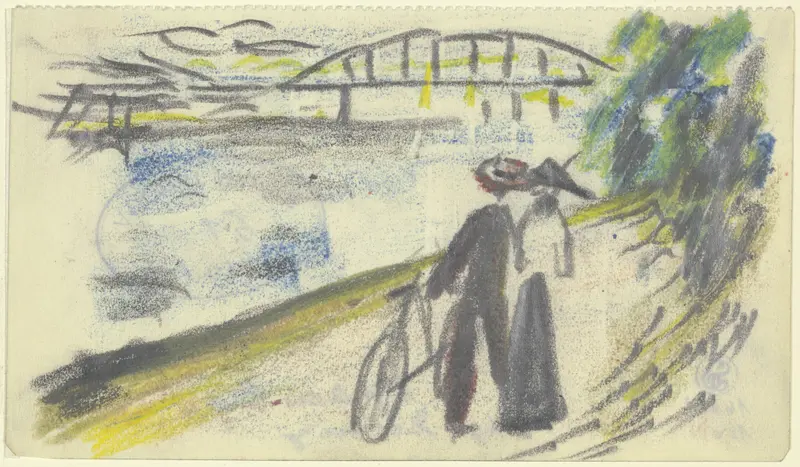
Path at the Rhine
August Macke
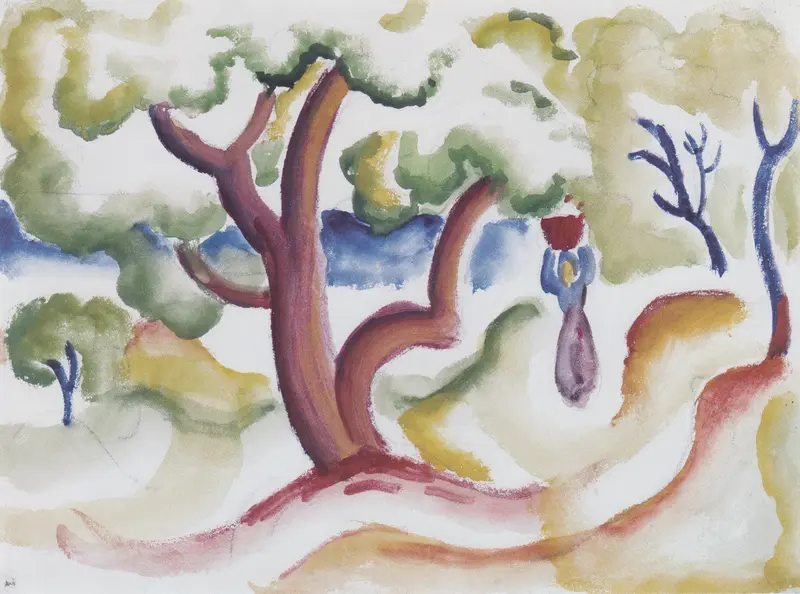
Frau mit Krug unter Bäumen
August Macke
Sonnige Straße mit Hund
August Macke