
Sunny Path — History & Facts
What first catches the eye in Sunny Path is the way color itself seems to spill across the canvas, as if sunlight has been broken into its purest components and scattered along the ground. The figures—bent in quiet contemplation or mid-stride—are not portraits but presences, their forms shaped by bold sweeps of green, blue, and orange. The trees arch overhead, their trunks and branches rendered in urgent, almost musical strokes, guiding the gaze along the path and deeper into the scene.
The light is not just illumination; it is the subject, turning the ordinary act of walking into an experience of radiance and movement. The palette, with its jostling primaries, sets a mood of warmth and restless energy, inviting the viewer to imagine the hum of a summer day. Painted in 1913, this work belongs to the world of early twentieth-century German Expressionism, a movement that sought to capture not just appearances but the pulse of modern life. August Macke was a leading figure among the Der Blaue Reiter circle, artists who believed that color and form could express inner truths more powerfully than realism.
While little is recorded about the specific history of this painting, its presence in the Wuselig collection today is a testament to the enduring fascination with this brief, luminous period before the First World War. In the rush of color and the blur of figures, we glimpse both the optimism and the fleetingness of a world on the brink of change—an invitation to linger, and to look again.
More Artworks by August Macke
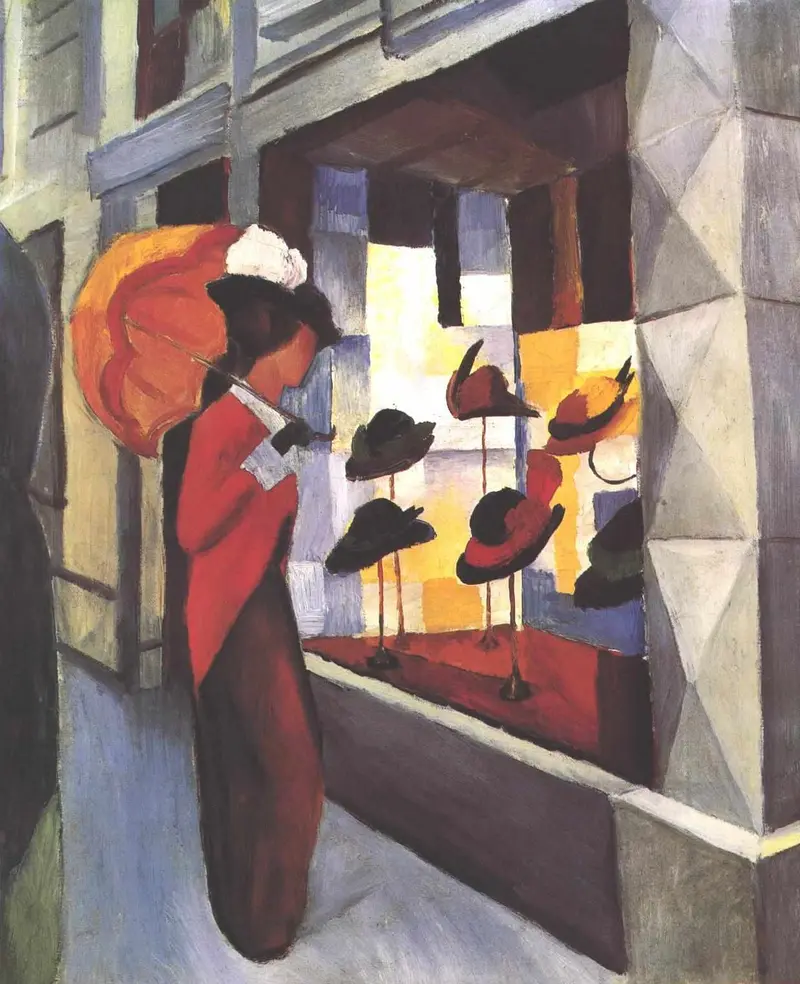
Woman with a Parasol in Front of a Hat Shop
August Macke

Street with Church in Kandern
August Macke
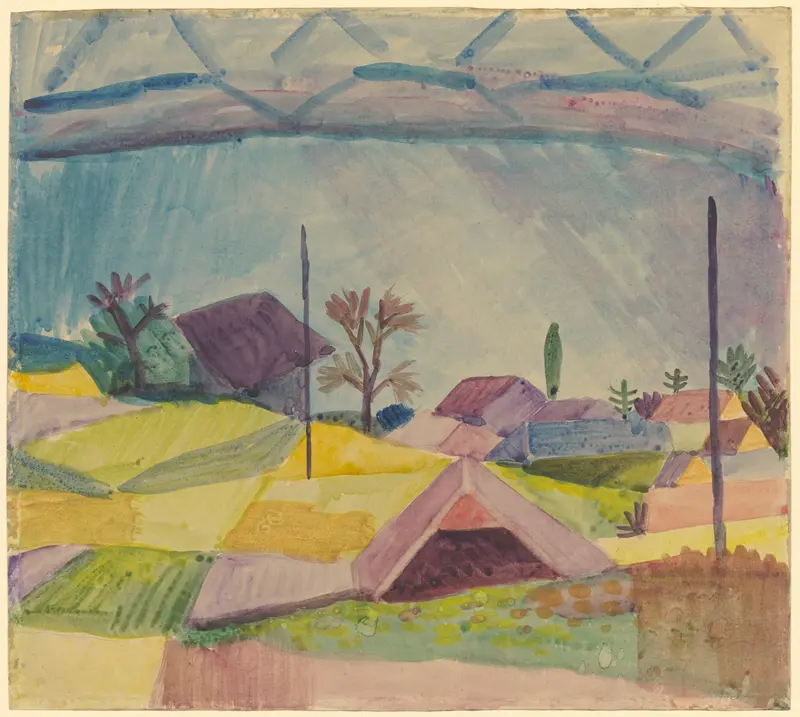
View of Hilterfingen
August Macke

Paar im Nachen
August Macke
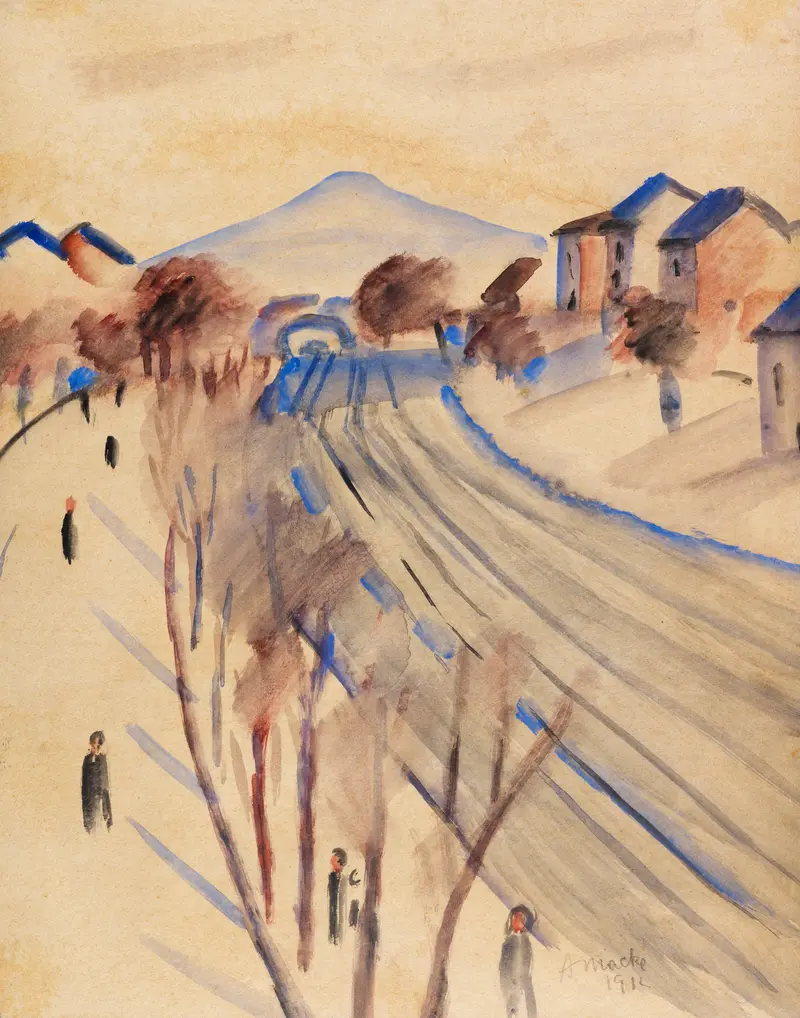
Ölberg mit Bahngleisen II
August Macke
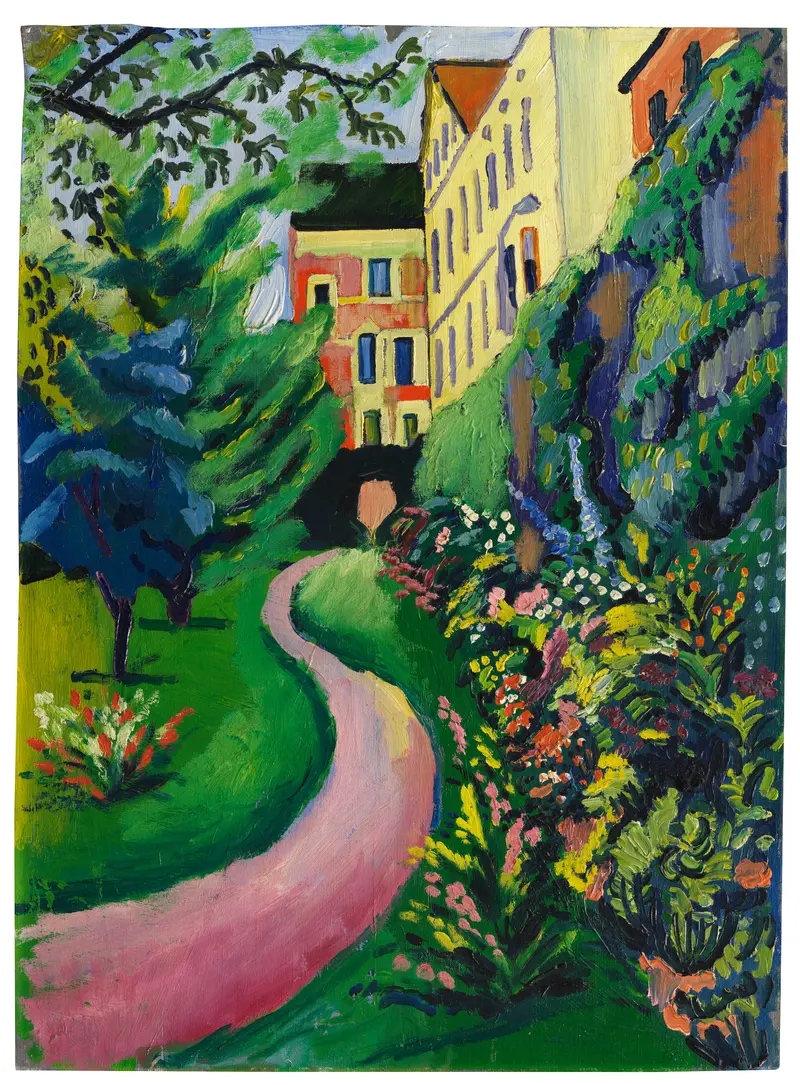
Unser Garten mit blühenden Rabatten
August Macke
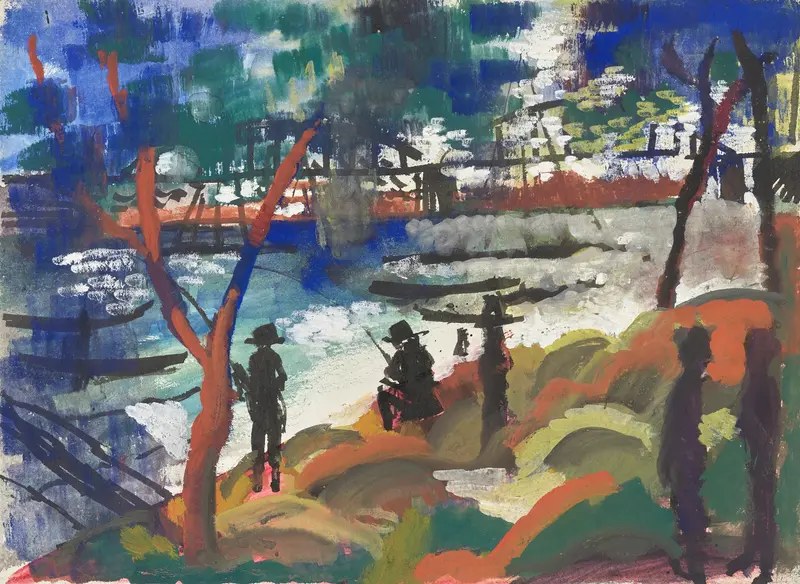
Angler am Fluss
August Macke
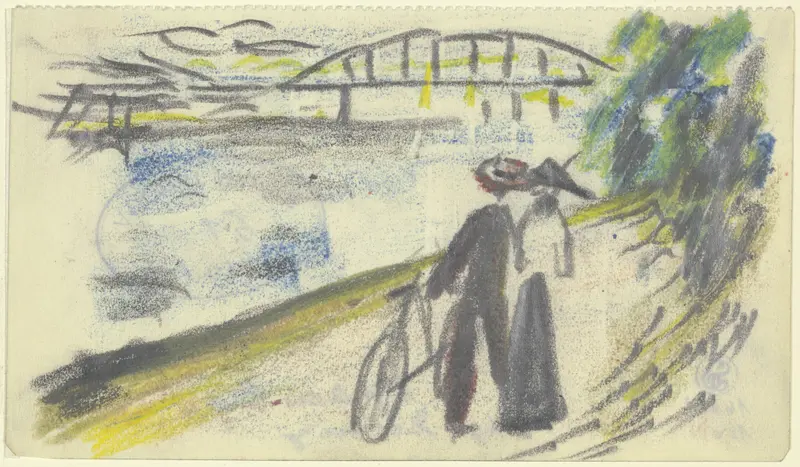
Path at the Rhine
August Macke
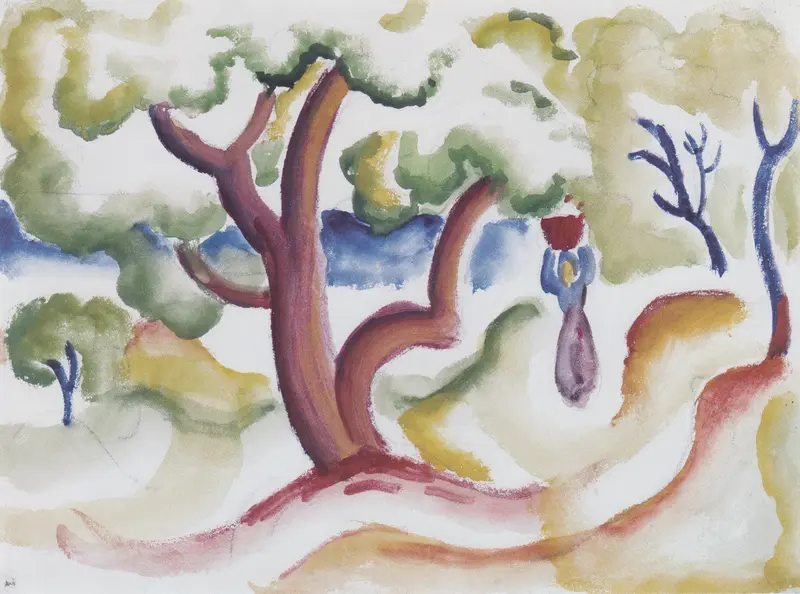
Frau mit Krug unter Bäumen
August Macke
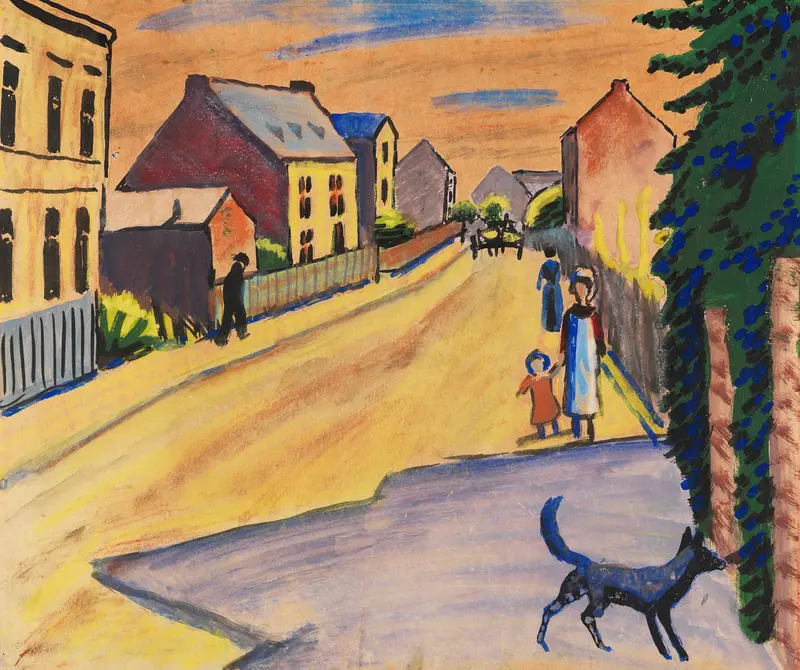
Sonnige Straße mit Hund
August Macke
More Landscape Art

The Starry Night
Vincent van Gogh

View of Delft
Johannes Vermeer

Water Lilies
Claude Monet

The Grand Canal, Venice, looking north-west from the Ca' Corner to the Ca' Contarini degli Scrigni, with the campanile of Santa Maria della Carità
Canaletto

Windsor Castle
Canaletto

The Grand Canal looking North-East from the Palazzo Dolfin-Manin to the Rialto Bridge
Canaletto