
Sunset in the Mountains — History & Facts
Can beauty exist without sorrow? The delicate interplay of light and shadow in Sunset in the Mountains invites us to ponder this question, revealing both a glorious vista and an underlying sense of fragility. Look to the horizon, where hues of crimson and gold bleed into one another, casting a warm glow over the rugged peaks. The brushstrokes are fluid yet deliberate, capturing the transient nature of twilight. Notice how the fading daylight illuminates the valleys below, hinting at the lush life that thrives there, while the darker shades creeping in from the edges remind us that night—symbolic of loss and quietude—awaits just beyond the frame. Within this landscape, a poignant contrast emerges.
The vibrant colors speak of life and hope, yet the encroaching shadows evoke a sense of melancholy and inevitability. The mountains stand as silent witnesses to time’s passage, their enduring strength juxtaposed against the ephemeral beauty of the sunset. Each detail, from the textured surfaces of the rocks to the gentle curves of the clouds, reflects the duality of existence: the breathtaking and the bittersweet. During the years 1940 to 1944, Weisz-Kubínčan painted this work while navigating the tumult of war-torn Europe.
Residing in Prague, he faced the challenges of both personal and societal upheaval. This context of uncertainty influenced his artistic vision, ultimately shaping a piece that captures not only the beauty of the natural world but also the fragility of life itself.
More Artworks by Arnold Peter Weisz-Kubínčan
Browse all →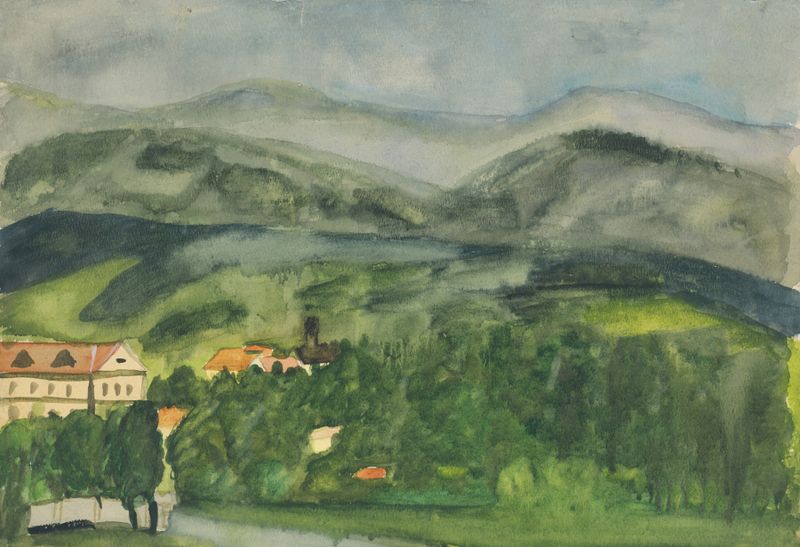
Landscape with houses
Arnold Peter Weisz-Kubínčan
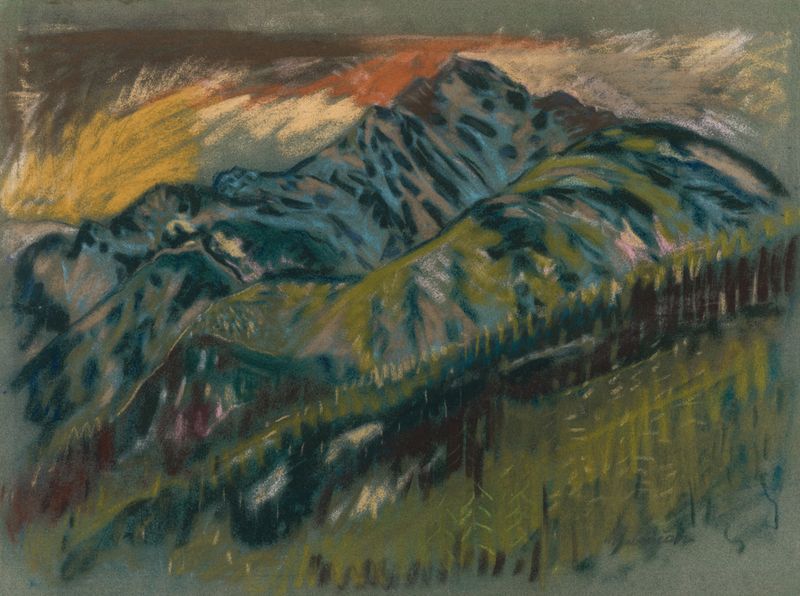
The Roháče Mountains
Arnold Peter Weisz-Kubínčan
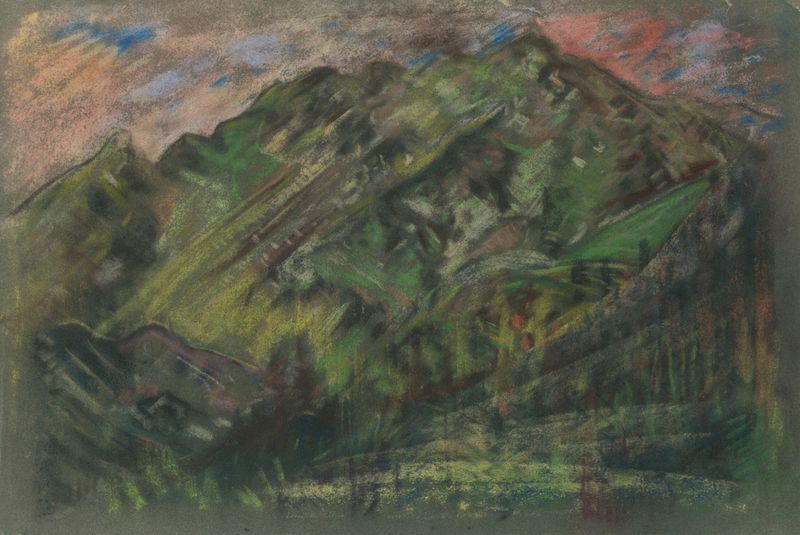
Motif from the High Tatras
Arnold Peter Weisz-Kubínčan

A man from Orava on a horse
Arnold Peter Weisz-Kubínčan
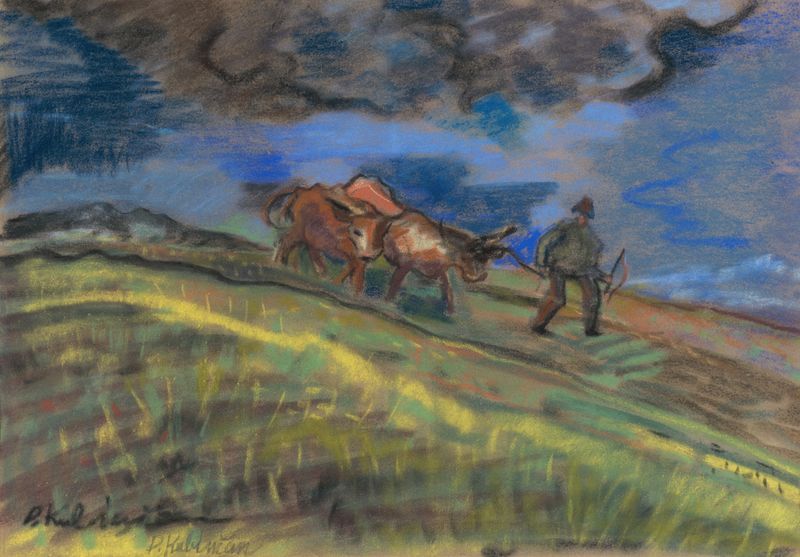
Ploughman
Arnold Peter Weisz-Kubínčan

Motif from Dolný Kubín
Arnold Peter Weisz-Kubínčan
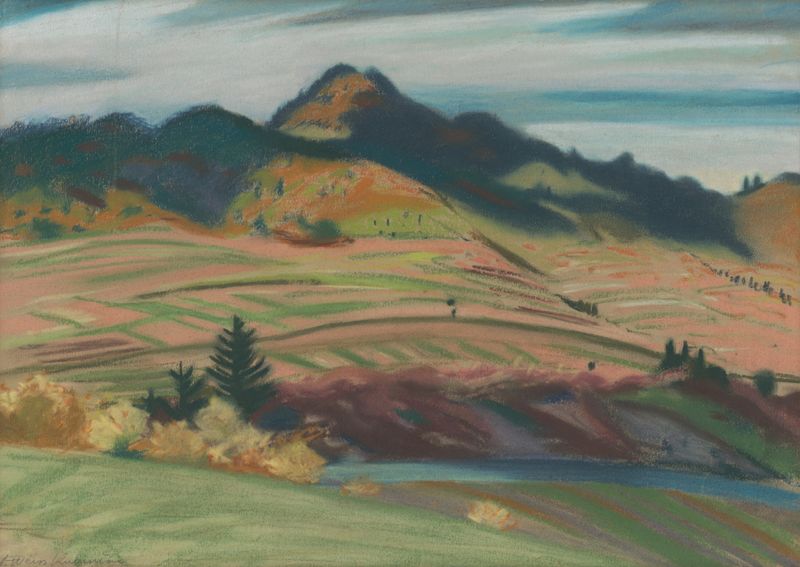
Thorns
Arnold Peter Weisz-Kubínčan

Sad man in the village
Arnold Peter Weisz-Kubínčan
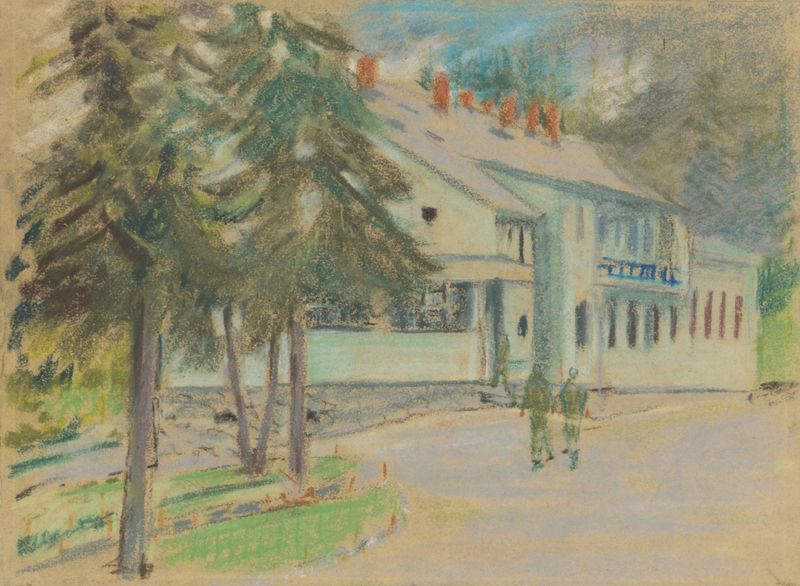
Barracks
Arnold Peter Weisz-Kubínčan

Lonely House
Arnold Peter Weisz-Kubínčan





