
Sur les Toits pres Notre Dame — History & Facts
In the realm of art, perhaps no phrase captures the essence of movement quite like this one, beckoning us to explore the dynamic pulse of life encapsulated within a frame. It invites a contemplation of the interplay between city life and the stillness of artistic expression, challenging our perception of reality. Focus on the rooftops that dominate the composition, their textured surfaces bustling with energy. Notice how the artist employs a palette of soft greys and muted tones to suggest the gentle embrace of twilight, allowing the warm glow of the setting sun to kiss the edges of the buildings.
The intricate linework showcases careful observation and a reverence for the architecture, while the use of light creates a captivating contrast that both highlights and softens the scene. Within this tranquil urban vista lies a hidden narrative—an interplay of solitude and community. The rooftops, reminiscent of a stage, seem to cradle both the mundane and the extraordinary. Tiny figures appear to move about their daily lives, yet they remain shrouded in anonymity, suggesting a broader commentary on the human condition: we are all part of this bustling cityscape, yet each person’s story remains uniquely their own.
The juxtaposition of stillness and implied movement beckons us to consider the connections we forge amidst the chaos. In 1893, the artist found inspiration in Paris, a city rife with transformation and creative energy. As he painted this scene, the art world was shifting toward impressionism, with artists exploring light and everyday life in new ways. At this pivotal moment, Lepère’s work reflects both a personal exploration of the urban landscape and a larger dialogue about the evolving nature of art in a rapidly modernizing world.
More Artworks by Auguste Louis Lepère
Browse all →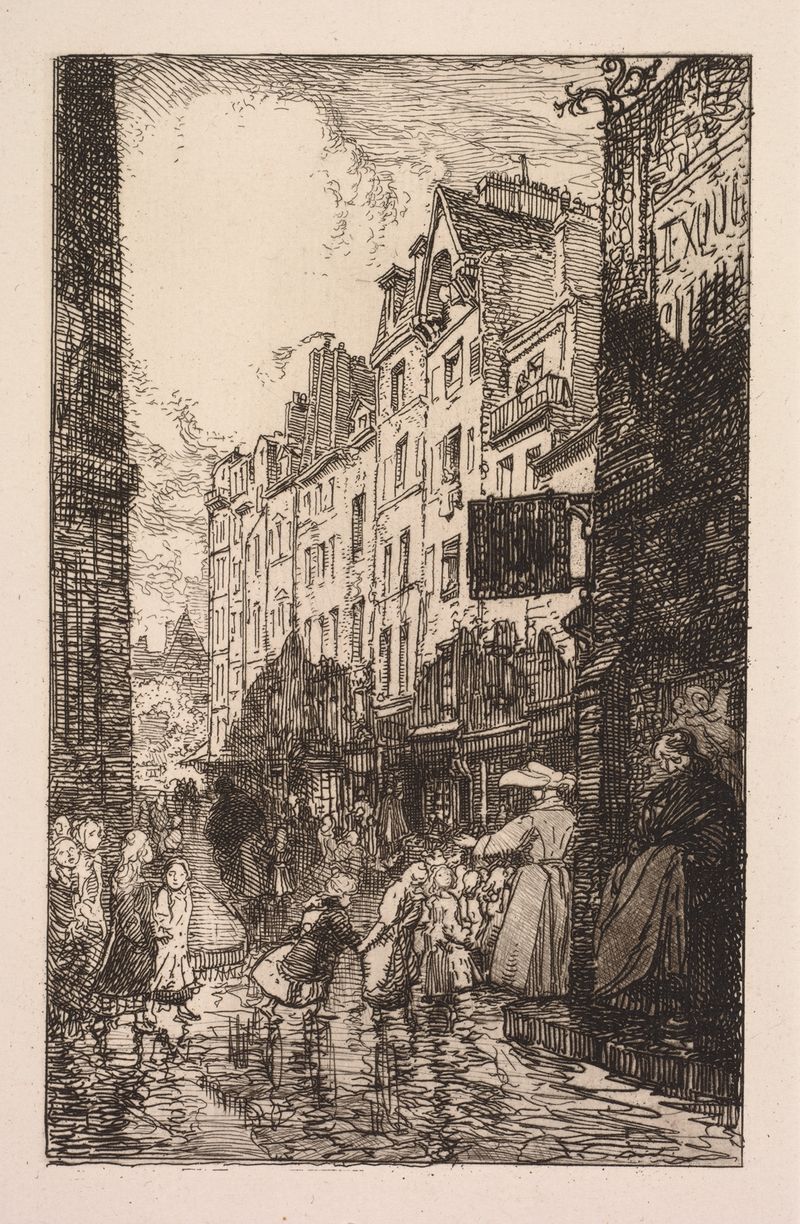
La Rue des Prêtres Saint-Séverin
Auguste Louis Lepère
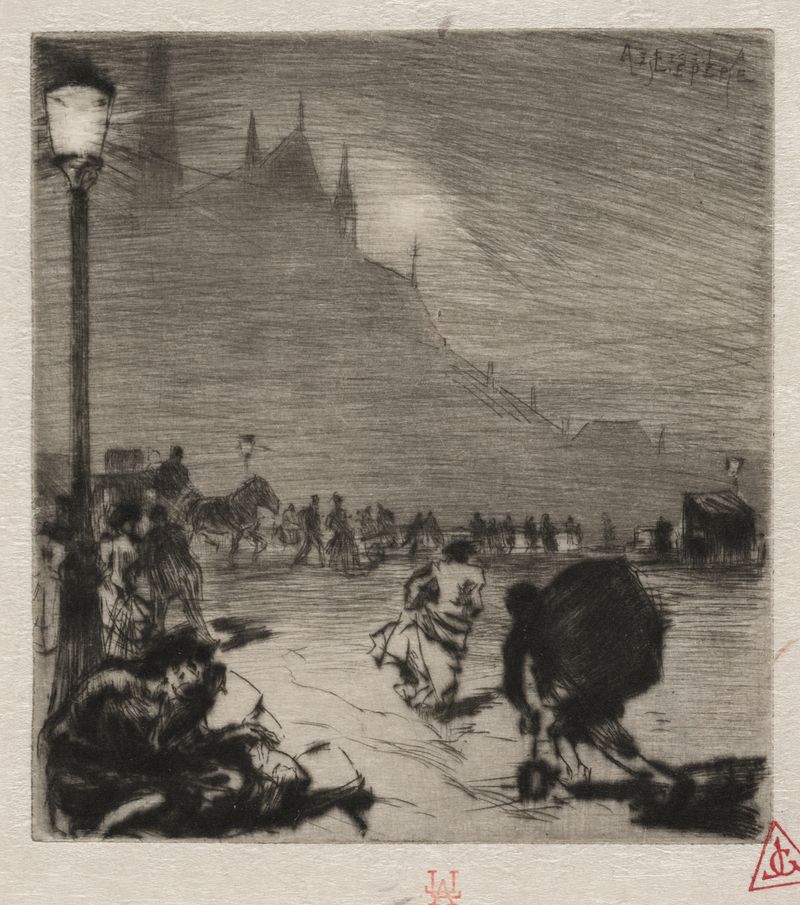
Au Coin du Pont-aux-Doubles
Auguste Louis Lepère
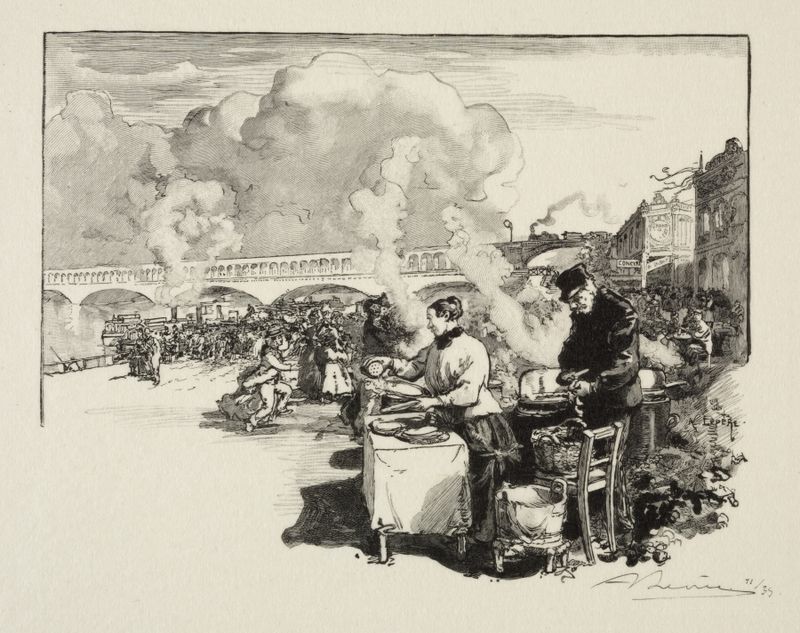
Debarcadère des bateaux-omnibus
Auguste Louis Lepère

La Seine, au quai de la Rapée
Auguste Louis Lepère
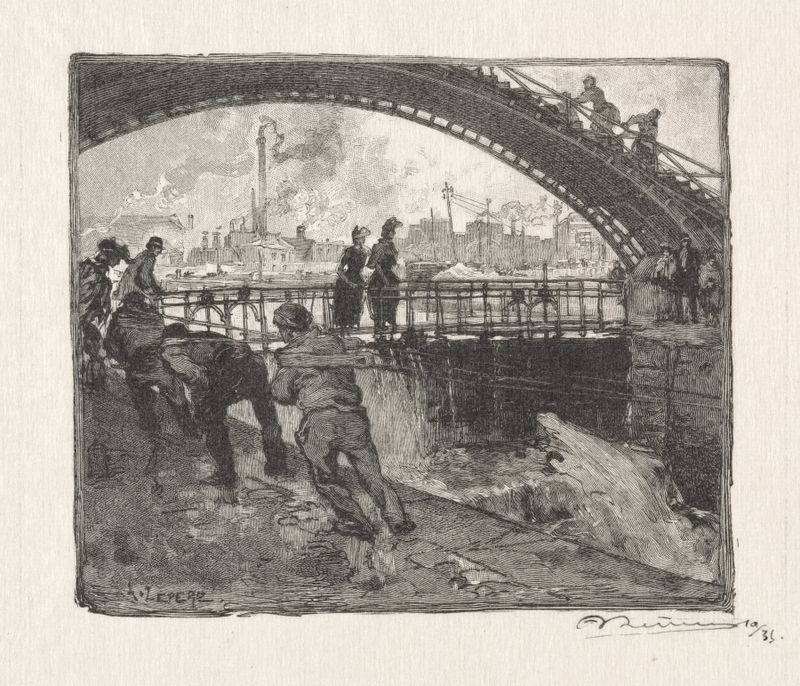
L’Ecluse du Canal St. Martin
Auguste Louis Lepère

Le Boulevard Montmartre, le Soir
Auguste Louis Lepère

Une Chasse au Mont Gérard
Auguste Louis Lepère
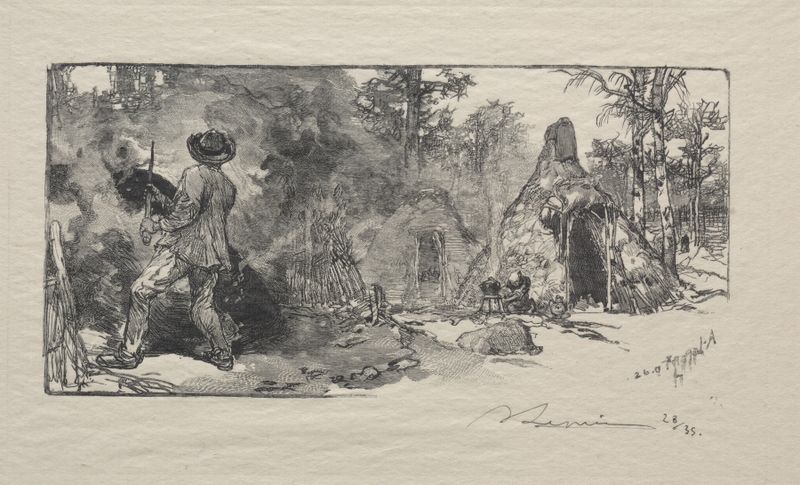
Les Charbonniere
Auguste Louis Lepère
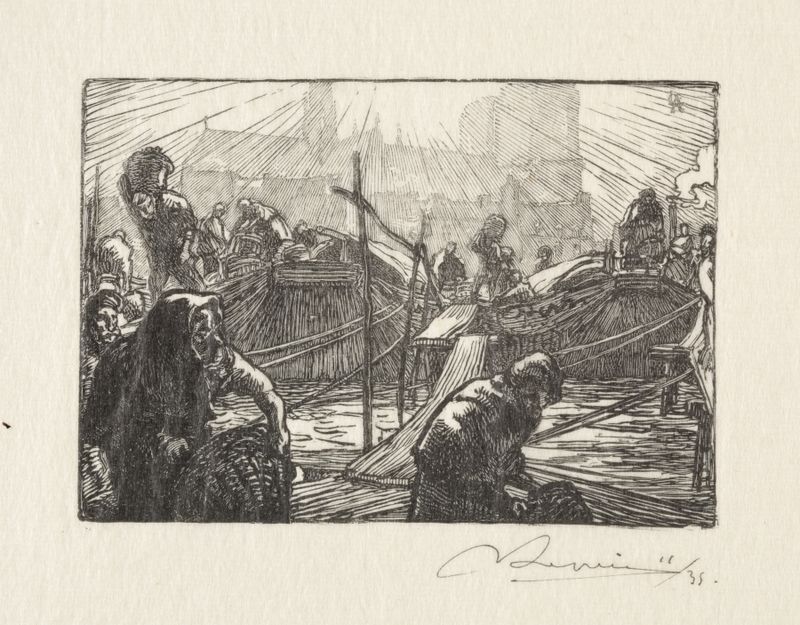
Notre Dame vue du Marché aux pommes
Auguste Louis Lepère

Le Palais des Arts Liberaux, Intèrieur
Auguste Louis Lepère
More Architecture Art
Browse all →
The statue of Liberty
Frédéric Auguste Bartholdi

View of Houses in Delft, Known as ‘The Little Street’
Johannes Vermeer

View of Houses in Delft, Known as ‘The Little Street’
Johannes Vermeer

The Cathedral in Rouen. The portal, Grey Weather
Claude Monet

The yellow house
Vincent van Gogh

The Church in Auvers-sur-Oise, View from the Chevet
Vincent van Gogh