
Sylvretta vom grossen Maderer — History & Facts
Could a single brushstroke hold eternity? In Sylvretta vom grossen Maderer, the passage of time becomes palpable, each delicate stroke echoing the whispers of loss that linger in the alpine air. Begin by examining the mountainscape unfurling before you. Look to the left, where jagged peaks rise majestically against a softly painted sky. Notice how the light dances across the snow-capped summits, casting shadows that weave intricate patterns on the canvas.
The muted palette of blues and whites conveys a serene yet imposing silence, while the gentle gradient of the sky hints at dusk, evoking a bittersweet transition between day and night. Delve deeper, and you'll uncover the tension between grandeur and fragility within the landscape. The towering mountains stand as a testament to nature's enduring strength, yet the gentle strokes suggest an ephemeral beauty, urging viewers to reflect on impermanence. There’s an emotional weight to the scene, as if it captures a fleeting moment before it dissolves into memory, reminding us of what it means to lose something precious.
The interplay of light and shadow further amplifies this contrast, highlighting both the majesty and vulnerability of the natural world. In 1910, Edward Theodore Compton was living in England, though he often traveled to the Alps that inspired much of his work. At that time, the art world was evolving, embracing new movements that celebrated realism and the sublime beauty of nature. This painting reflects his deep engagement with the landscape, capturing not only the physical form of the mountains but also the emotional resonance they held for him as an artist grappling with his own experiences of loss and nostalgia.
More Artworks by Edward Theodore Compton
Browse all →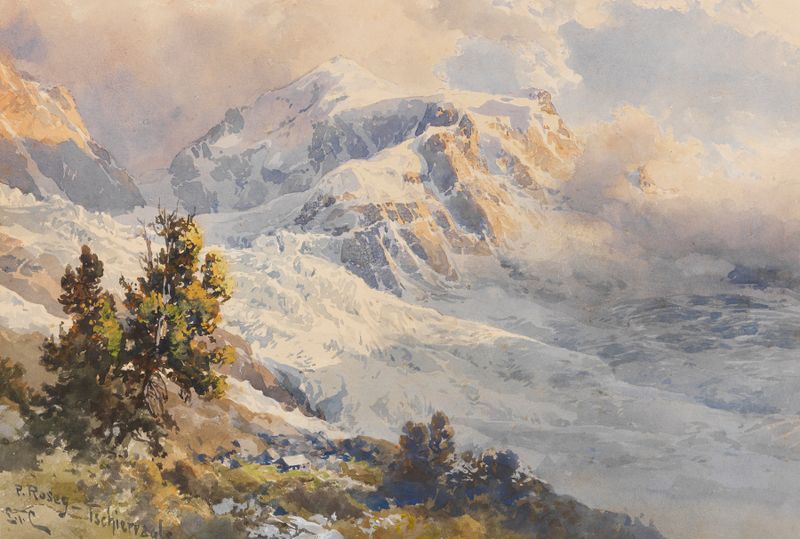
Piz Roseg – Tschiervagletscher
Edward Theodore Compton
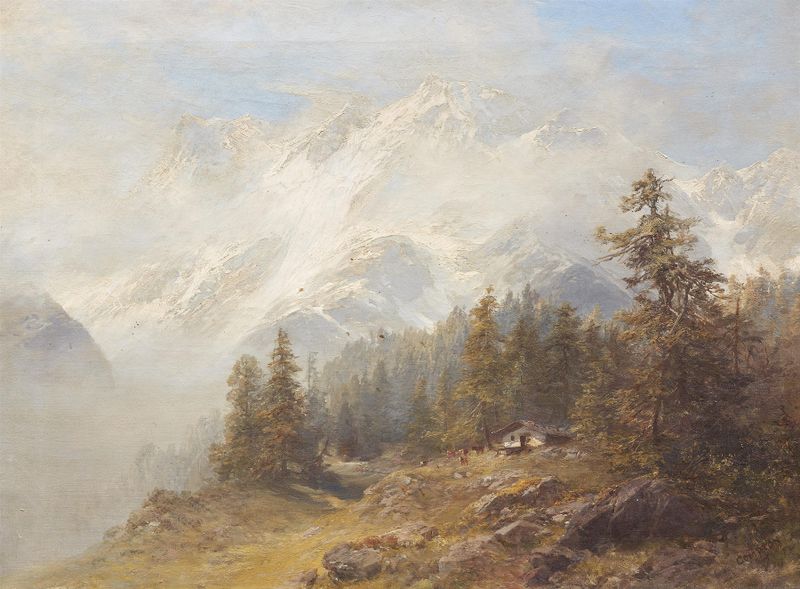
Alpenlandschaft vor schneebedecktem Massiv
Edward Theodore Compton
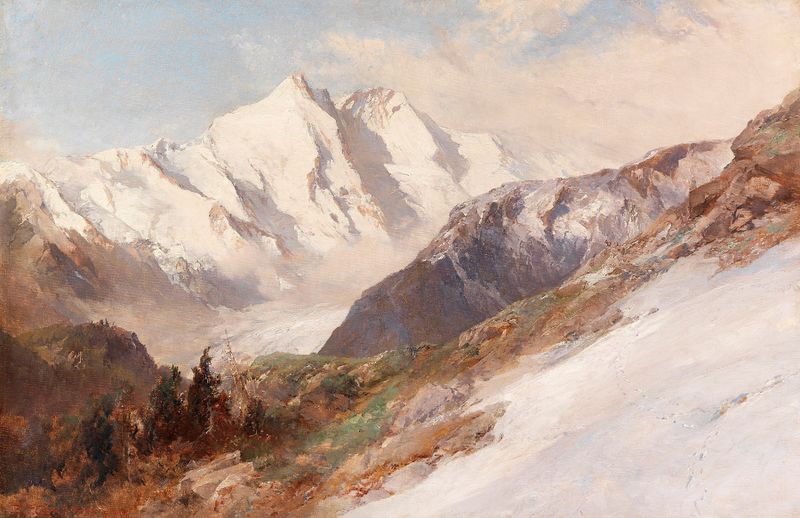
Blick auf die Nordseite des Großglockners
Edward Theodore Compton
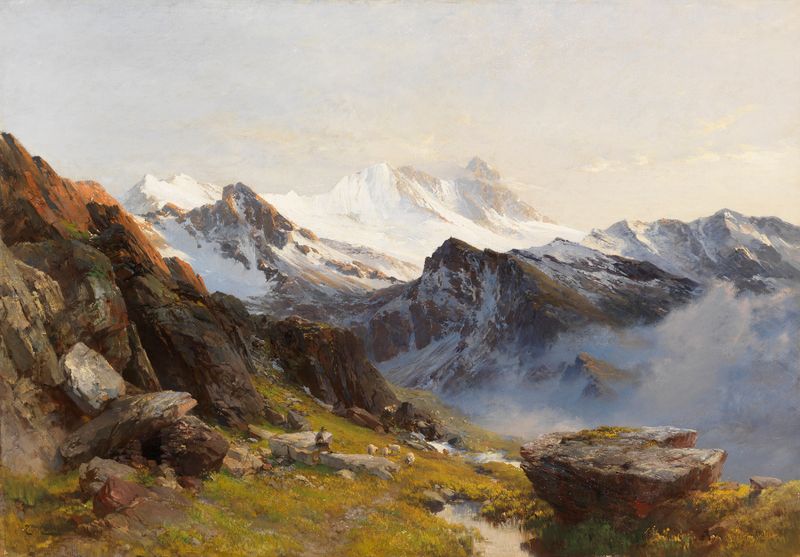
Großglockner von der Prager Hütte aus, früh
Edward Theodore Compton
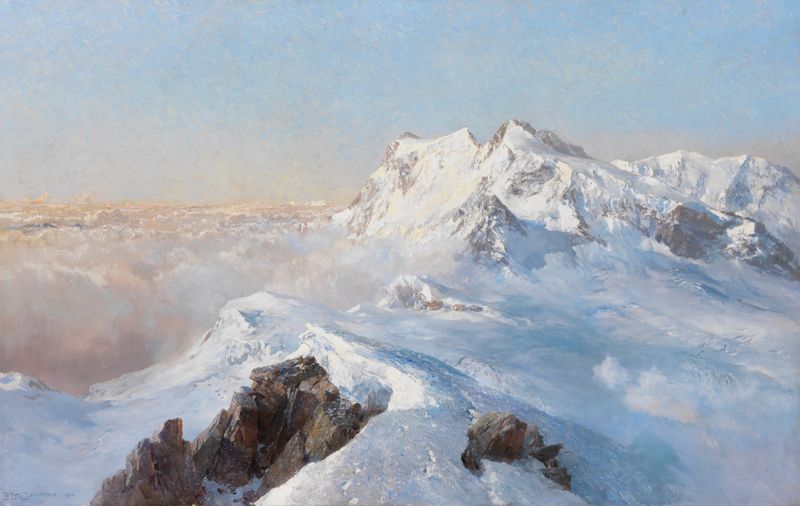
Über dem Nebelmeer (Monte Rosa vom Rimpfischhorn)
Edward Theodore Compton
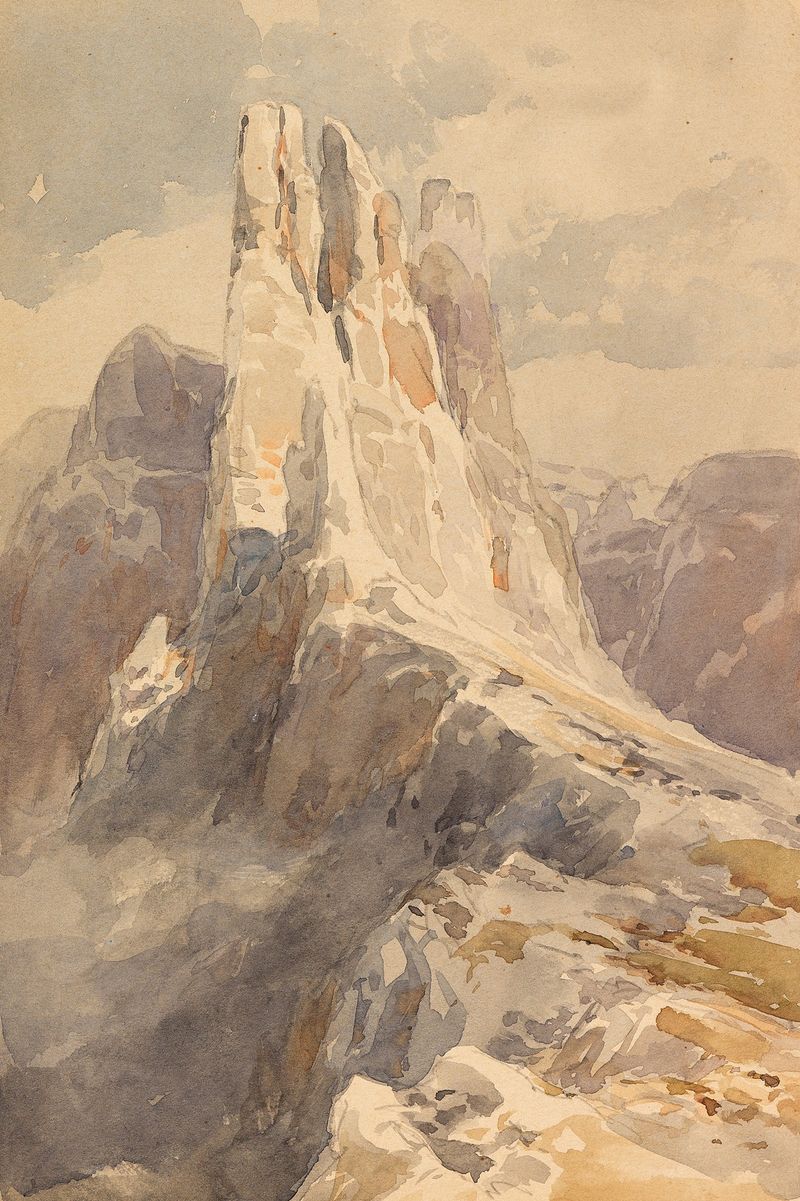
Blick auf die Vajolet-Türme in den Dolomiten
Edward Theodore Compton
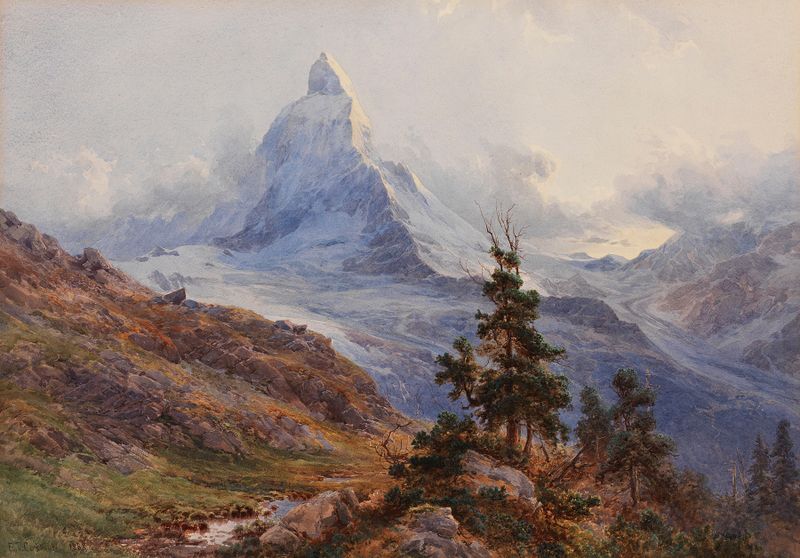
View of the Matterhorn
Edward Theodore Compton
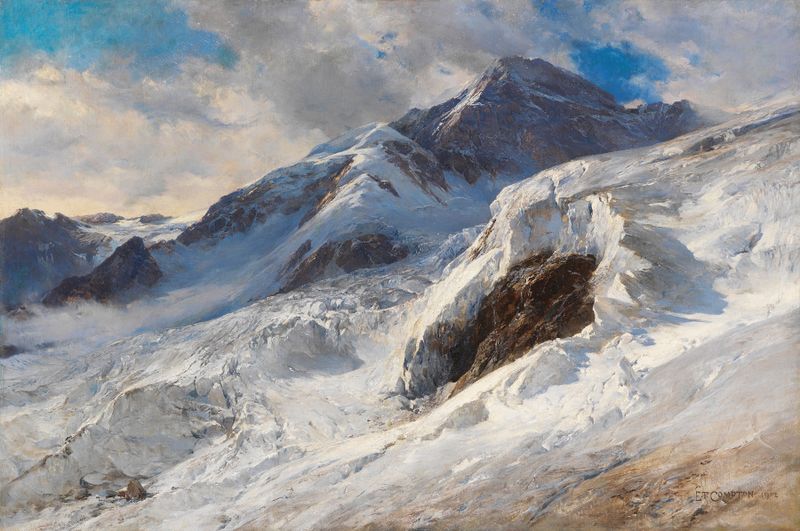
Lyskamm (Monte-Rosa)
Edward Theodore Compton
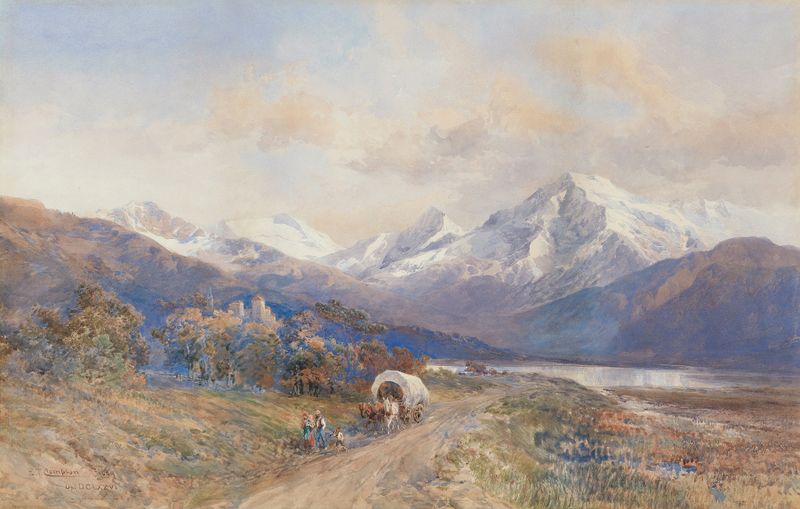
Blick auf den Ortler von St. Valentin
Edward Theodore Compton
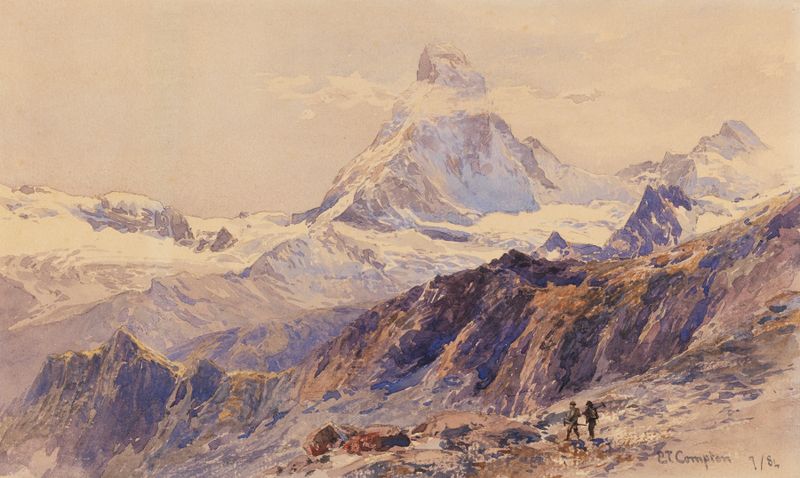
Das Matterhorn von der Triftkumme
Edward Theodore Compton





