
Table Bay — History & Facts
The eye is immediately drawn to the proud Dutch tricolor snapping from the stern of the great ship in the foreground, its billowing sails catching the last golden light as it enters the sweep of Table Bay. The famous flat-topped mountain rises behind, anchoring the scene in a real geography that once marked the edge of the known world for European sailors. Every detail in the water and sky seems designed to heighten the sense of arrival: the clustered ships, each flagged and bustling with activity, the distant white-walled outpost on shore, and the shifting clouds above, all guide the viewer from the restless sea to the promise of landfall.
This is a painting about passage and ambition, the Dutch East India Company’s reach made visible in the careful choreography of vessels and the monumental calm of the landscape. Painted by Aernout Smit around 1680, this view of Table Bay captures a moment when maritime painting was both a record and a celebration of Dutch global power. Such works were often commissioned by merchants or shipping companies to commemorate successful voyages or to decorate the offices of those whose fortunes depended on the sea. The presence of the East Indiaman 'Africa'—named in the source—signals the importance of these ships as lifelines of trade and empire, while the careful rendering of rigging, flags, and distant fortifications speaks to a clientele that prized accuracy as much as artistry.
Little is recorded about the specific journey of this painting, but its survival in a collection today invites us to imagine the hopes and hazards bound up in every sail set for distant shores. Look again at the horizon: it is both a boundary and a beginning.
More Artworks by Aernout Smit

Dutch Men o’war on choppy waters
Aernout Smit
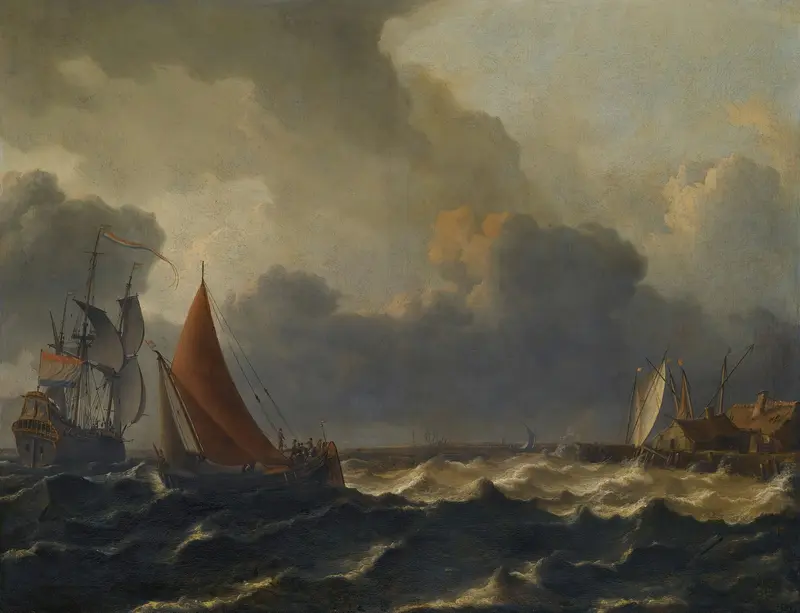
A Smalschip Closed Hauled In A Stiff Breeze With A Flagship Offshore To The Left And A Jetty To The Right
Aernout Smit
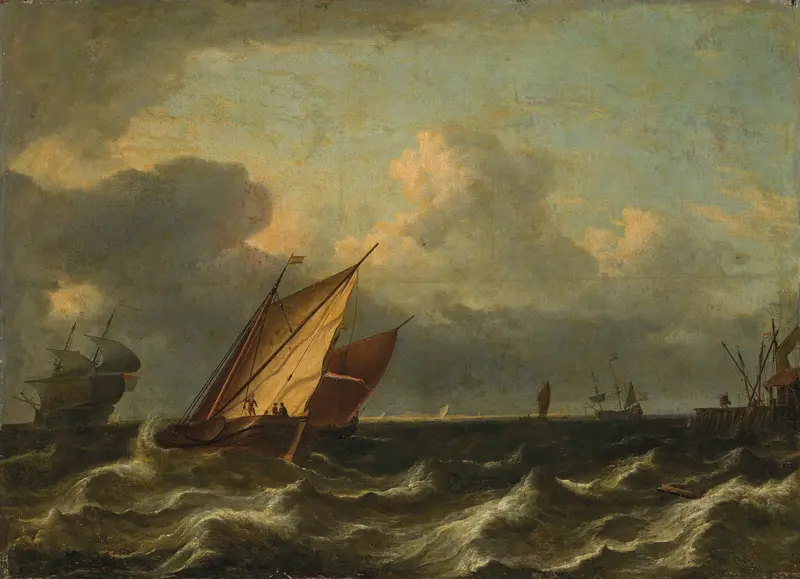
Vessels sailing in choppy waters near a port
Aernout Smit
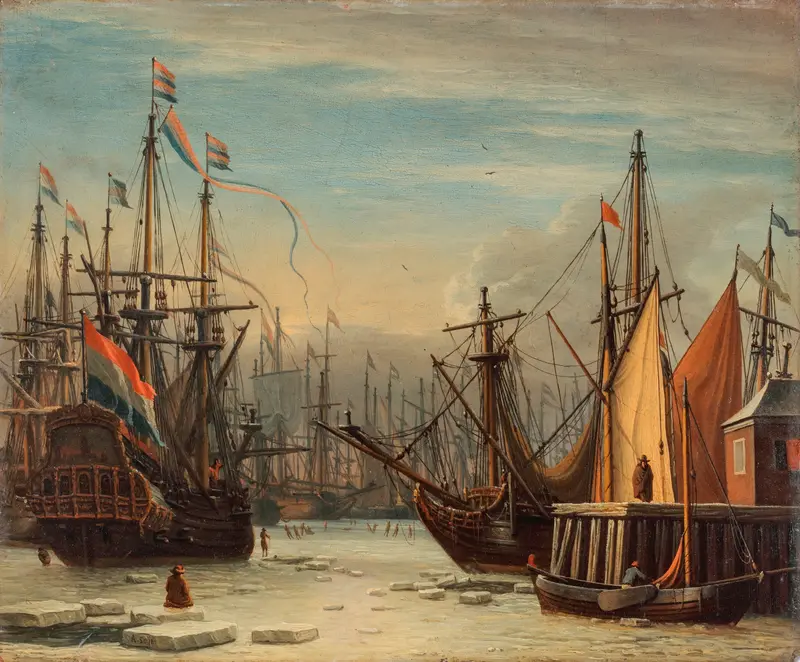
A view of the IJ harbour in winter, Amsterdam, with figures skating between the ships, a figure seated on an ice floe in the foreground
Aernout Smit
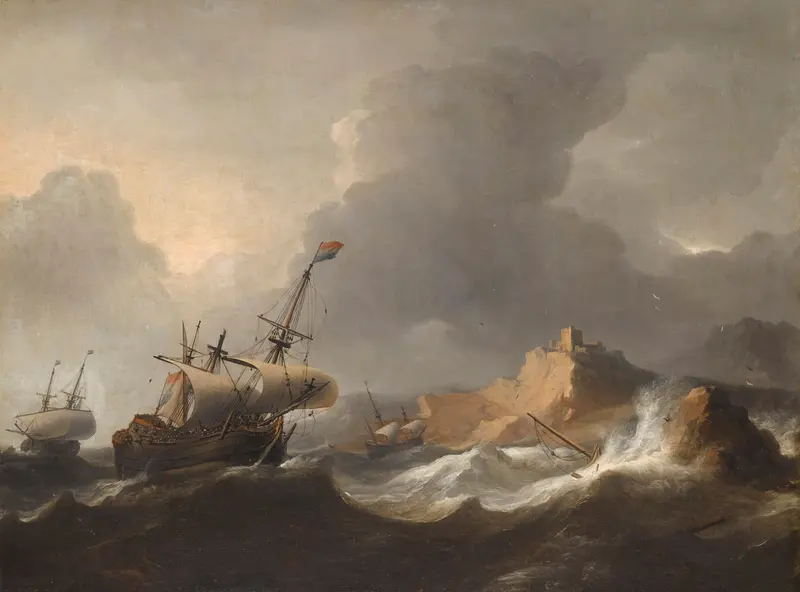
Ships in distress off a rocky coast
Aernout Smit
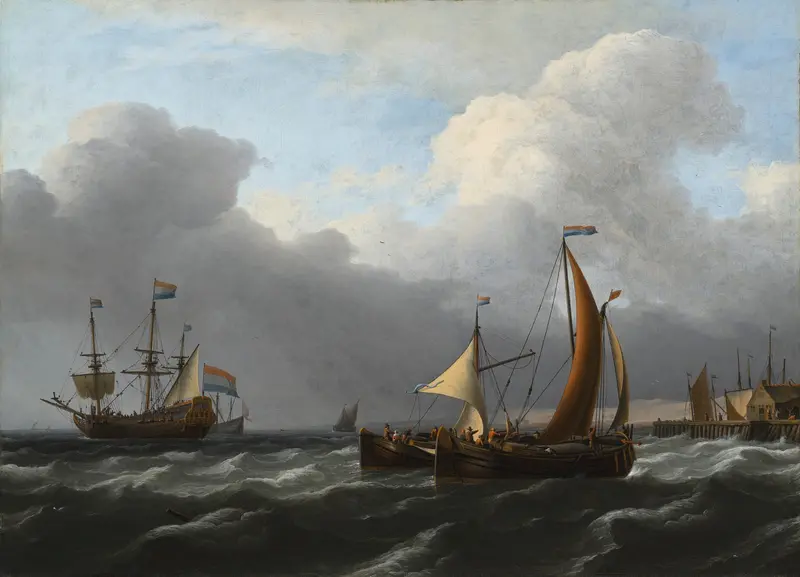
Ships off the coast in choppy waters
Aernout Smit
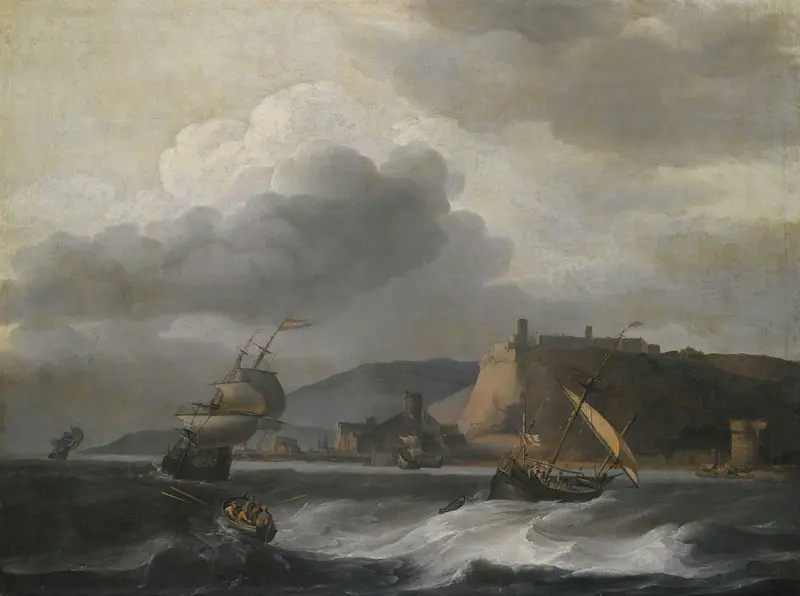
Shipping off a coast in choppy water
Aernout Smit





