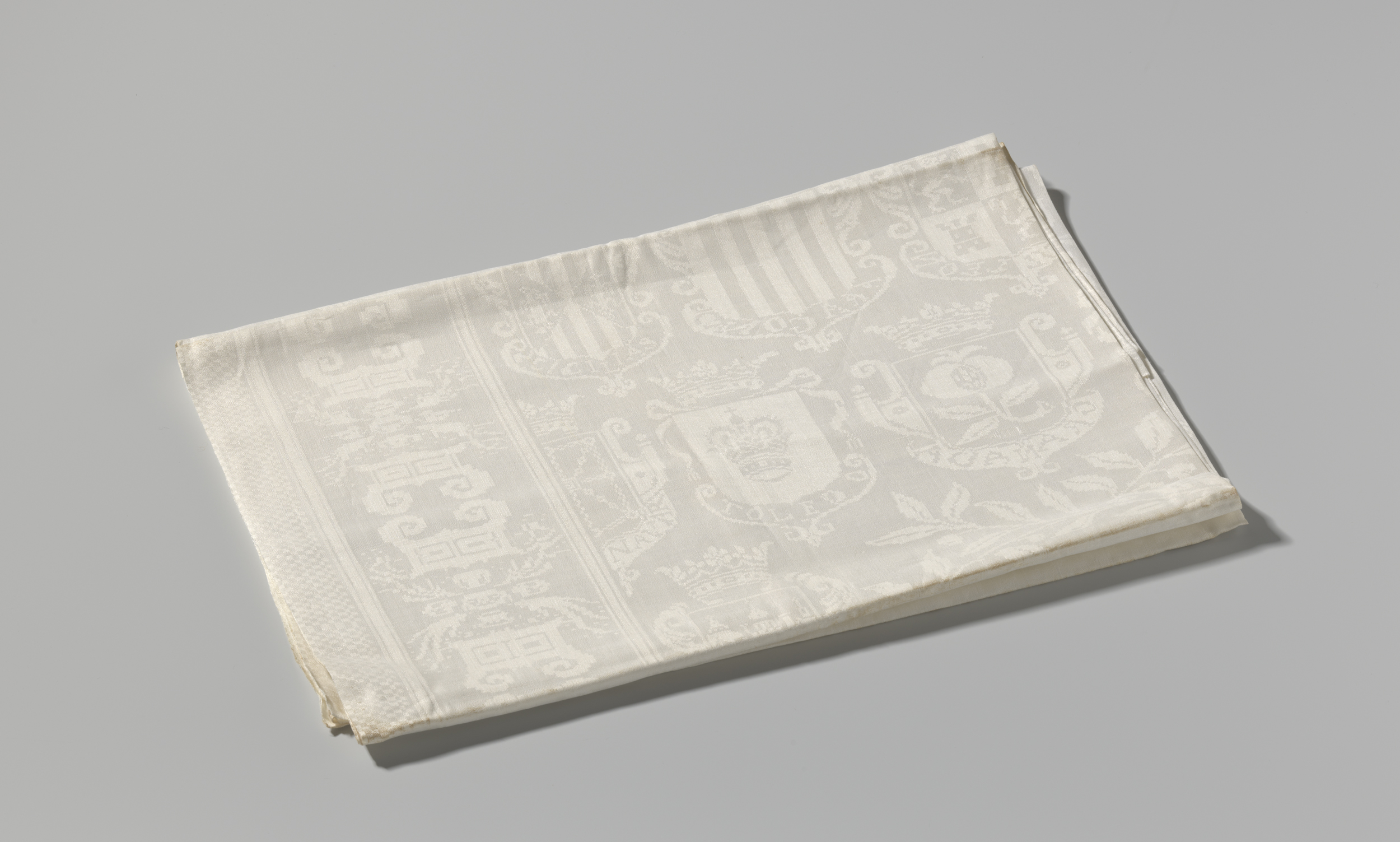
Tafellaken met hommage aan de pretendent van de Spaanse kroon Karel van Habsburg — History & Analysis
Could beauty survive in a century of chaos? This question reverberates through the intricate patterns and muted hues of a 1707 tapestry that pays homage to Karel van Habsburg, a pretender to the Spanish crown, intertwining the threads of art and aspiration. Look closely at the vivid embroidery, where each stitch tells a story through symbols and colors. The soft browns and deep greens draw the eye across the fabric, leading you to the central figure, portrayed with a dignified grace that seems almost ethereal.
Notice how the delicate gold threads shimmer subtly, reflecting the light in a way that breathes life into the historical narrative woven beneath it. The composition balances grandeur with intimacy, a testament to both skill and intent. Amidst the ornate motifs, there's a palpable tension between opulence and fragility, suggesting a world caught between loyalty and ambition. The choice of imagery hints at deeper allegiances and the weight of expectation upon a royal heir.
The tapestry captures a fleeting moment of reverence, yet the shadows that lurk around the edges hint at the inevitable decline of dynasties and the chaotic shifts in power that would follow, reminding us of beauty's inherent vulnerability. Crafted in a time when Europe was rife with political turmoil, the tapestry emerged from an age of uncertainty. Artists were exploring new techniques, grappling with the changing tides of power, and responding to the demands of patrons who sought to immortalize their legacies amidst the chaos. This work reflects not only the artist’s skill but also a collective yearning for stability, embodying faith in beauty, even as the world around it trembled.