
Tal mit Gebirge — History & Facts
What secret hides in the quiet of the canvas? The stillness of nature often echoes with unspoken truths, urging us to reflect in solitude. Focus on the serene valley, bathed in soft, muted tones. Notice how the light caresses the peaks of the distant mountains, creating a gentle contrast against the lush greenery below. The composition leads your eye from the foreground’s delicate flora to the majestic heights, invoking a sense of distance and depth.
Halauska’s brushwork, a blend of precision and fluidity, invites you to linger over the tranquil water’s surface, where the landscape finds its mirrored counterpart, further enhancing the painting's contemplative aura. Delve deeper into the chromatic harmony; the greens and blues create a sense of peace, yet there’s an underlying tension in the dark shadows cast by towering rocks. This interplay of light and dark evokes the dual nature of the landscape, both inviting and isolating. The shimmering surface of the water not only reflects the beauty surrounding it but also suggests introspection, the stillness of the scene urging viewers to confront their own thoughts and emotions amidst the natural grandeur. In 1861, Ludwig Halauska was immersed in the burgeoning Romantic movement, painting from a studio in Vienna.
This period, marked by an exploration of nature and emotion, reflected broader societal changes as artists sought to capture not only beauty but also personal experience. As Halauska translated the enchanting landscape onto canvas, he joined a dialogue with contemporaries who were redefining the relationship between man and environment, portraying not just the seen but the felt.
More Artworks by Ludwig Halauska
Browse all →
Der Schneeberg in Niederösterreich von Gutenstein aus gesehen
Ludwig Halauska

A View of Klamm Castle near Imst in the Inntal in Tyrol
Ludwig Halauska
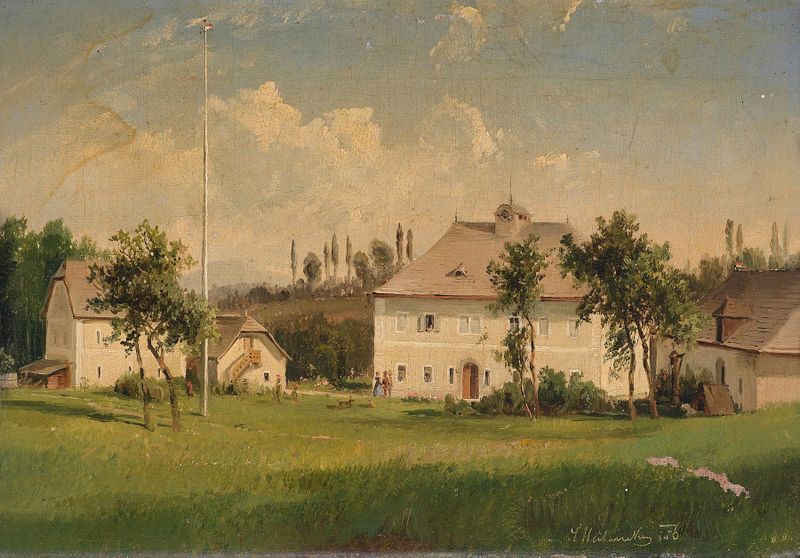
Blick auf einen Gutshof
Ludwig Halauska

Blick auf das Dorf Tutschach bei Aflenz
Ludwig Halauska
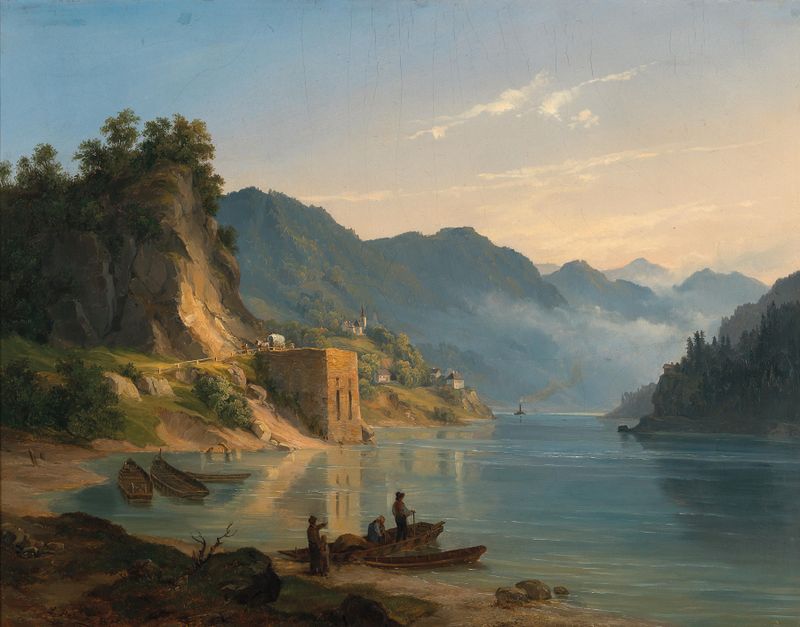
St. Nikola im Strudengau
Ludwig Halauska

Blick auf das Dorf Tutschach bei Aflenz mit dem Jauringbach im Vordergrund
Ludwig Halauska

Landschaft bei Flintsbach am Inn
Ludwig Halauska
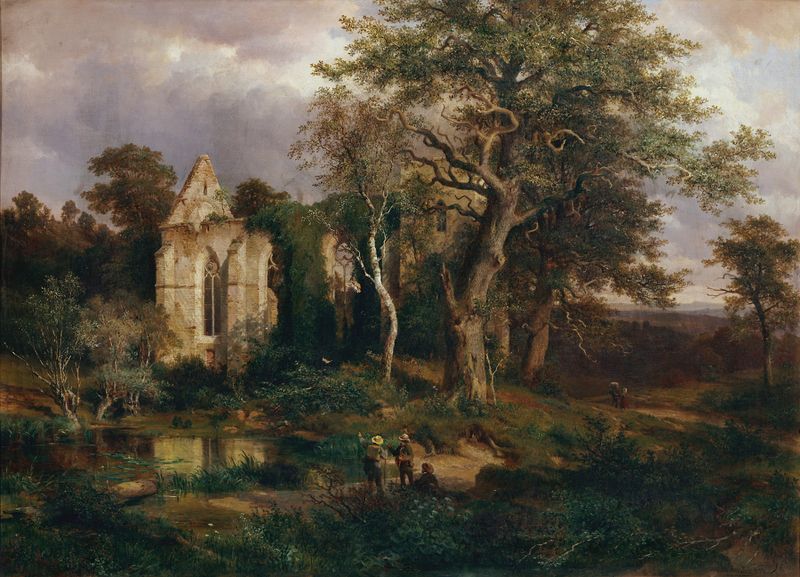
Kirchenruine
Ludwig Halauska

Partie aus Mittenwald am Karwendelgebirge
Ludwig Halauska

Sommerlandschaft
Ludwig Halauska





