
Teglværk Ved Asnæs — History & Facts
In the stillness of Teglværk Ved Asnæs, yearning permeates the air, inviting spectators to linger in its quiet embrace. This landscape speaks of unfulfilled desires, each stroke echoing a story untold. Focus on the left where the warm earth tones of the clay pits beckon, contrasting sharply with the cool, muted blues of the distant sky. The artist’s delicate brushwork brings texture to the foreground, from the rough edges of the terracotta to the smoothness of the water reflecting light.
Notice how the soft, golden sunlight bathes the scene, casting long shadows that hint at the passage of time—the fleeting nature of both labor and landscape. The composition suggests a dialogue between man and nature, with the industriousness of the brickworks symbolizing both creation and destruction. The juxtaposition of the laborers’ toil against the expansive, serene backdrop highlights a subtle tension—human ambition encroaching upon the tranquility of the natural world. Each figure, though solitary, embodies a collective longing for connection, both with each other and with the land they inhabit. In 1847, during a period of burgeoning Romanticism in Denmark, Johan Thomas Lundbye was deeply influenced by the lush landscapes surrounding him.
Painting from his home near Asnæs, he explored themes of nature, industry, and the human condition. The era was marked by a growing appreciation for the lyrical beauty of the countryside, as well as a rising awareness of the socio-economic changes brought on by industrialization, which would shape his artistic perspective.
More Artworks by Johan Thomas Lundbye
Browse all →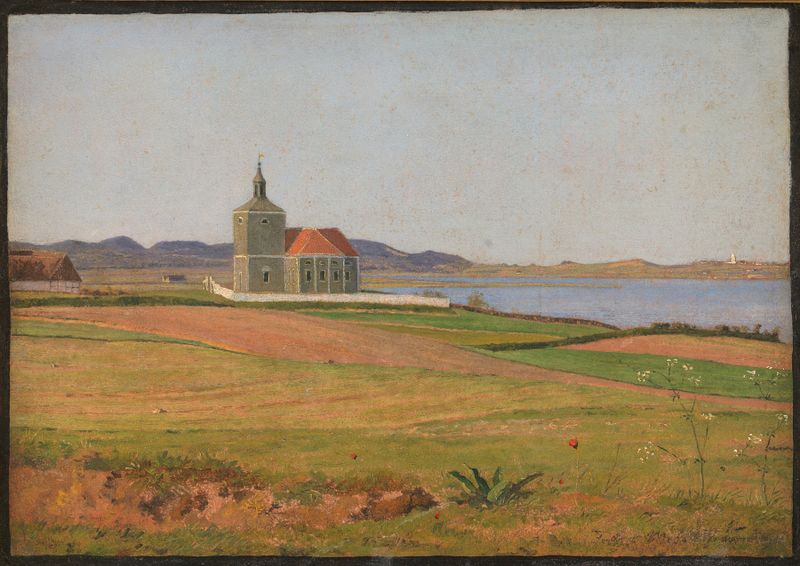
Vinderød Church near Frederiksværk
Johan Thomas Lundbye

Zealand Landscape. View from Bjerresø Mark towards Vejrhøj and Dragsholm Manor
Johan Thomas Lundbye
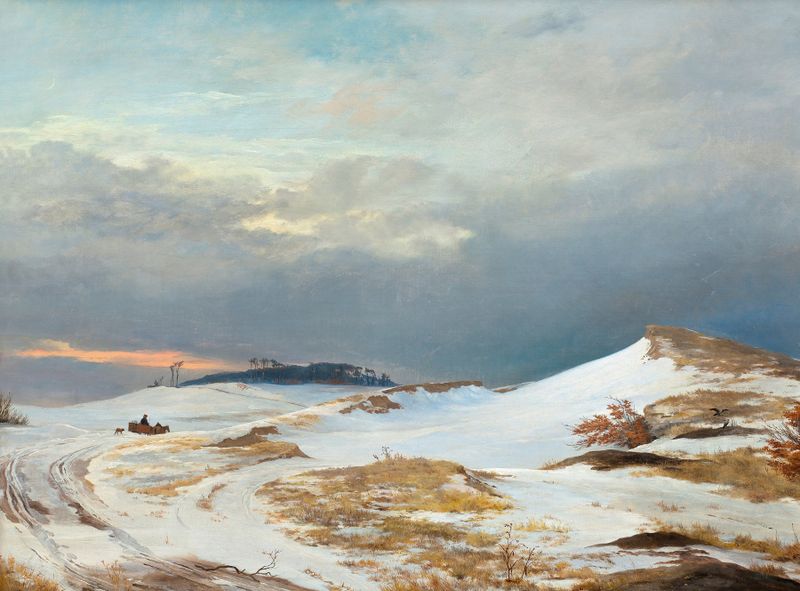
Winter landscape with Northern Zealand character
Johan Thomas Lundbye
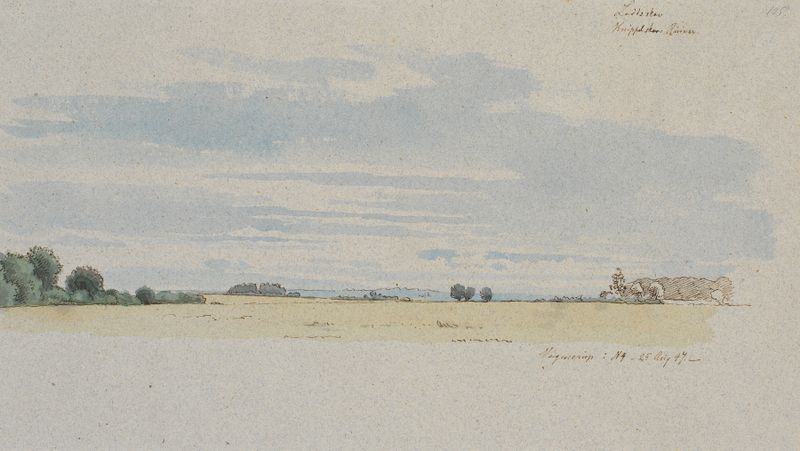
Udsigt over marker mod skove
Johan Thomas Lundbye
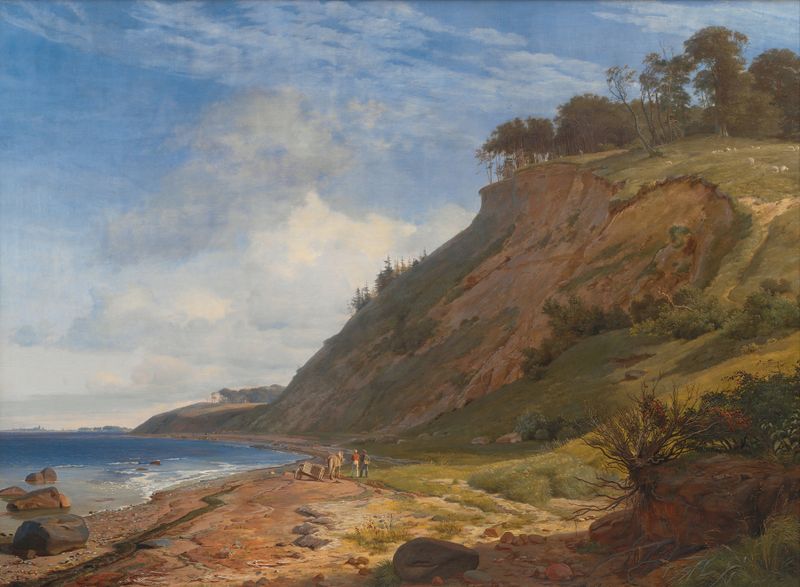
A Danish Coast. View from Kitnæs on Roskilde Fjord. Zealand
Johan Thomas Lundbye

Dolmen At Raklev, Røsnæs
Johan Thomas Lundbye

An Evening beside Lake Arresø
Johan Thomas Lundbye
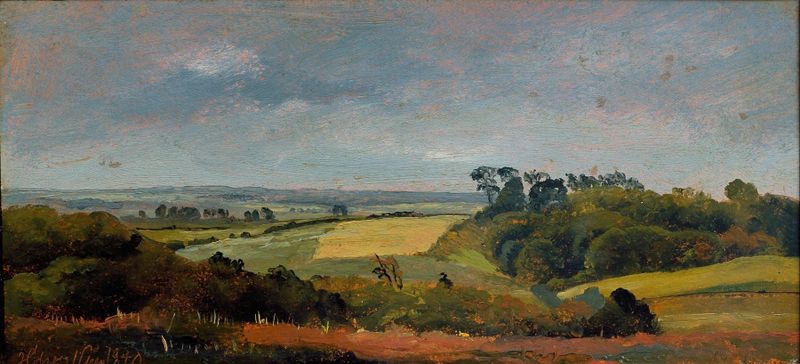
Near Høbjerg. Frederiksværk. Study
Johan Thomas Lundbye

Zealand Landscape. Open Country in North Zealand
Johan Thomas Lundbye
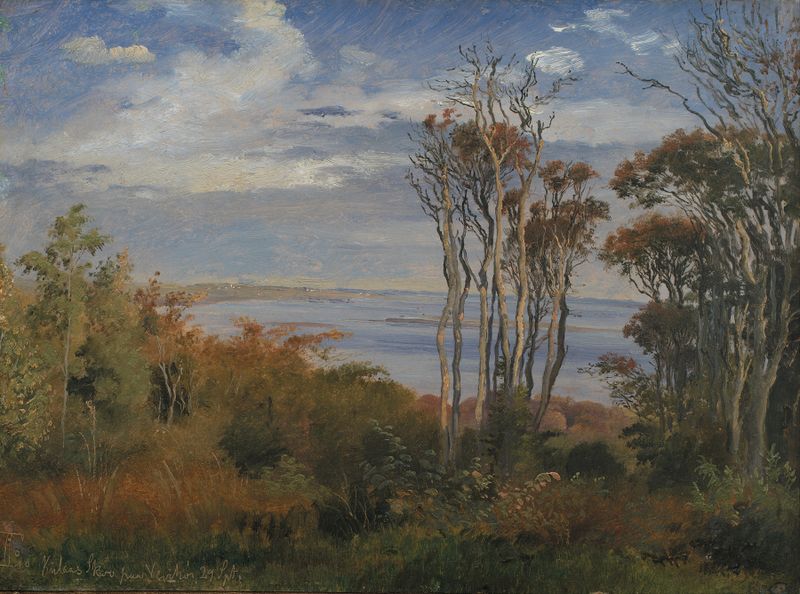
Kolås Wood, Vejrhøj
Johan Thomas Lundbye





