
Terrace near Amalfi — History & Facts
Can paint confess what words never could? In Terrace near Amalfi, the vibrant landscape becomes a vessel for unspoken emotions, inviting contemplation of beauty and the fleeting nature of life. Focus your gaze on the sweeping vista that dominates the canvas. The lush greens and the deep blues of the sea create a harmonious balance, pulling your eyes toward the horizon where sky meets water. Notice how the dappled sunlight filters through the foliage, casting playful shadows on the terrace, hinting at the joys and secrets shared in this idyllic setting.
Each brushstroke conveys a sense of warmth, an invitation to linger where the earth and sky embrace. Yet, beneath this serene exterior lies a subtle tension. The figures, seemingly at ease, are small against the grandeur of nature, evoking a feeling of insignificance in the face of such beauty. The juxtaposition of the vibrant colors of the garden with the calming blues of the sea hints at a fleeting moment, a reminder of both the joy and melancholy that accompanies human experience.
The scene whispers of connection to nature and one another, as if the beauty surrounding them also holds profound truths yet to be understood. Thomas Fearnley created this piece in 1833 while residing in Italy, during a transformative period in the Romantic movement that celebrated emotion and the sublime in nature. Inspired by the picturesque landscapes and the Mediterranean light, he painted this work at a time when artists were beginning to explore emotional depth and personal expression, setting the stage for a greater appreciation of landscape as a complex, communicative art form.
More Artworks by Thomas Fearnley
Browse all →
Norwegian Landscape, Marumfoss
Thomas Fearnley

View of the Oslofjord
Thomas Fearnley

Gudvangen
Thomas Fearnley

Stormy Landscape with a Rider
Thomas Fearnley
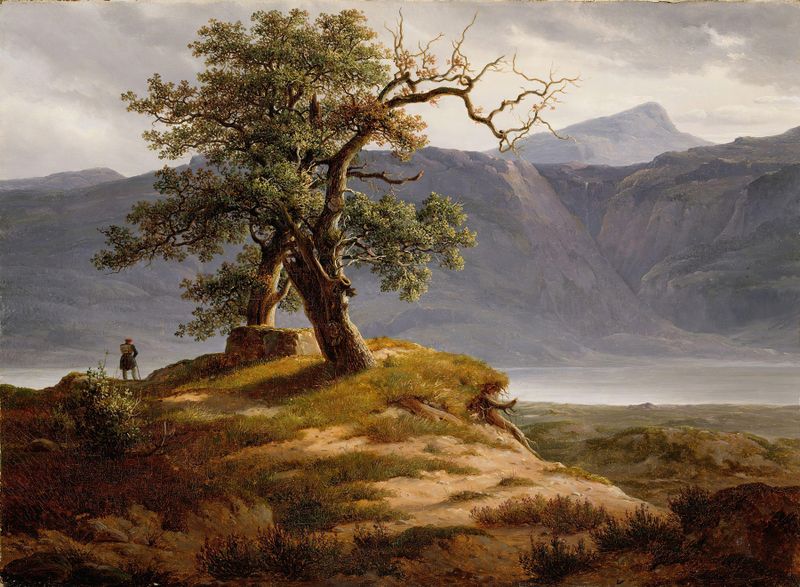
Landscape with a Wanderer
Thomas Fearnley
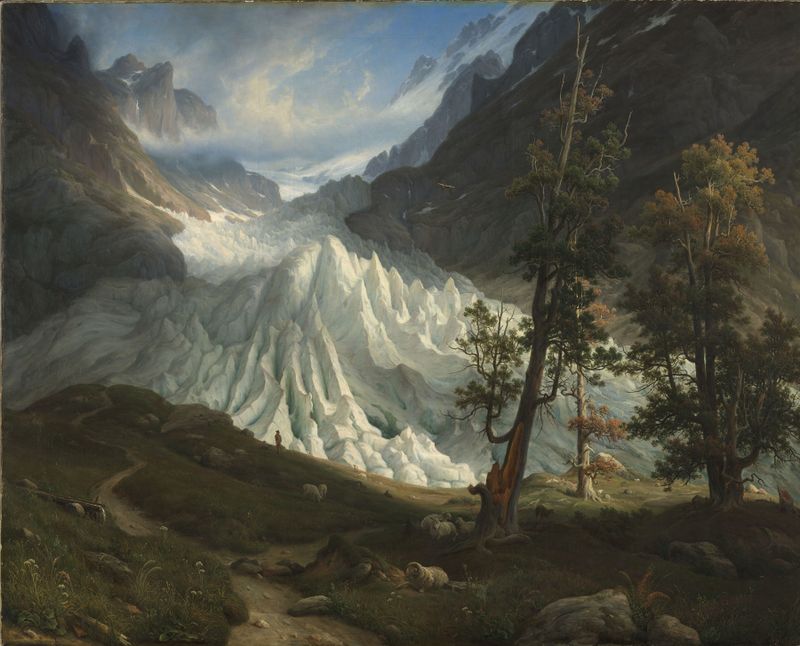
The Grindelwaldgletscher
Thomas Fearnley

Clouds over the Fjord
Thomas Fearnley
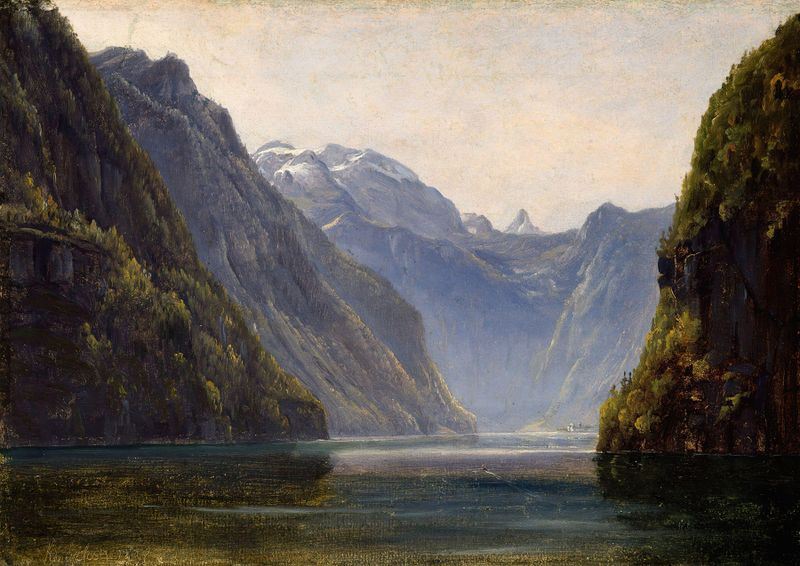
From Königssee
Thomas Fearnley

The Bridge of Hauge outside Arendal
Thomas Fearnley

King Vilhelm II’s ceremonial Processsion in Amsterdam in 1840
Thomas Fearnley





