The Adoration of the Shepherds — History & Facts
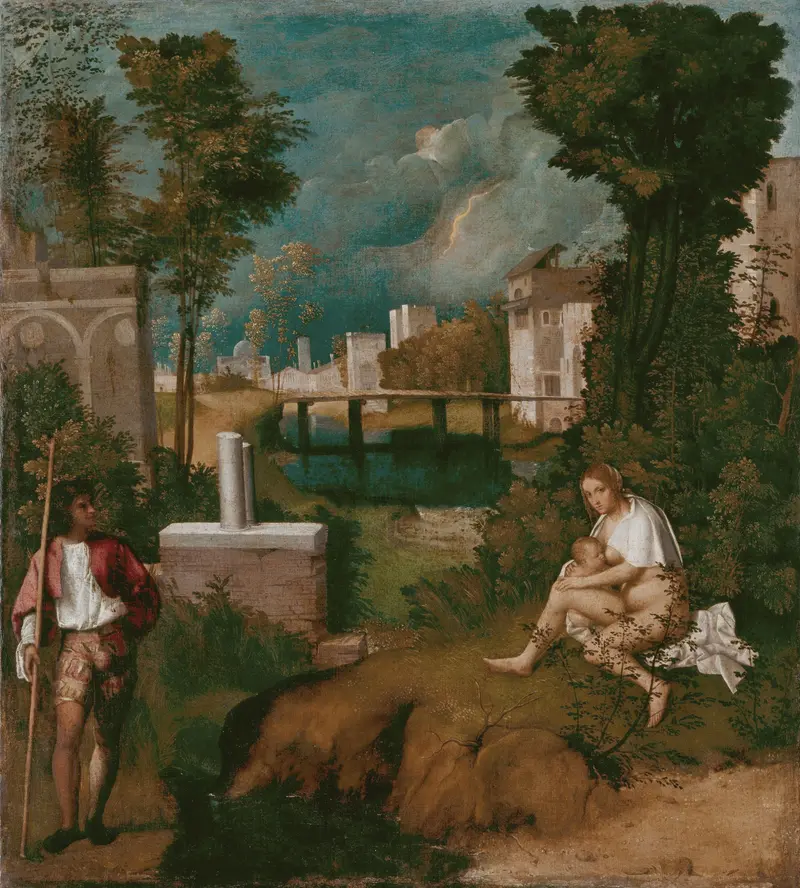
The Adoration of the Shepherds by Giorgione was painted between 1505 and 1510 in oil on panel. The work depicts the biblical scene of the shepherds visiting the newborn Christ, a subject popular in Venetian painting of the early sixteenth century. This painting belongs to the mature period of Giorgione’s career, when he was active in Venice and the surrounding region and had developed a distinctive approach to landscape and narrative. The composition is divided between a rocky grotto on the right, where the Virgin Mary, Joseph, and the infant Christ are placed, and an expansive landscape on the left.
Two shepherds kneel before the child, their gestures expressing humility and devotion. The figures are rendered with soft modeling and luminous color, especially in the blue and red of Mary’s garments and the golden tones of Joseph’s cloak. The landscape is detailed, with winding paths, distant buildings, and a serene sky, showing Giorgione’s interest in atmospheric effects and the integration of figures with their surroundings. This painting is held in the National Gallery of Art, Washington, D.C.
Its provenance includes a documented history in prominent collections before entering the museum. The Adoration of the Shepherds is widely recognized as one of Giorgione’s key works and has been the subject of scholarly study for its innovative composition and poetic treatment of the nativity theme.