
The Amphitheater at Nimes — History & Facts
When did color learn to lie? In a world where the hues of history sometimes obscure the truth, The Amphitheater at Nimes offers a haunting reminder of reality intertwined with art. Look to the left at the grand facade of the ancient amphitheater, a testament to human ambition and endurance. The warm yellows and ochres of the stone contrast beautifully against the cooler blues of the sky, inviting the viewer to explore the structure’s intricate architecture. Notice the play of light across the arches, highlighting the weathered texture of the walls while casting deep shadows that suggest stories untold.
This careful manipulation of light and color draws the eye through the composition, creating a sense of depth and inviting contemplation. Delve deeper into the painting's emotional layers, where nostalgia and decay coexist. The amphitheater, while majestic, is tinged with the melancholy of time’s passage, suggesting a dialogue between past grandeur and present fragility. Small figures, almost ghostly in their scale, populate the scene; they seem lost among the ruins, evoking a sense of the collective memory that lingers in these stone remnants of history.
This contrast between the monumentality of the structure and the insignificance of the human presence speaks volumes about humanity’s ever-changing relationship with its own creations. William Marlow painted this work in the late 18th century, a time when neoclassicism was flourishing in Europe. Living in England, he was captivated by the architectural beauty of ancient Rome and Greece, and his travels on the continent filled his work with a sense of reverence for the past. Although the exact date of this painting remains unknown, it reflects a period marked by both artistic exploration and a burgeoning interest in antiquity, inviting viewers to reflect on the echoes of history in an ever-evolving world.
More Artworks by William Marlow
Browse all →
Whitehall
William Marlow
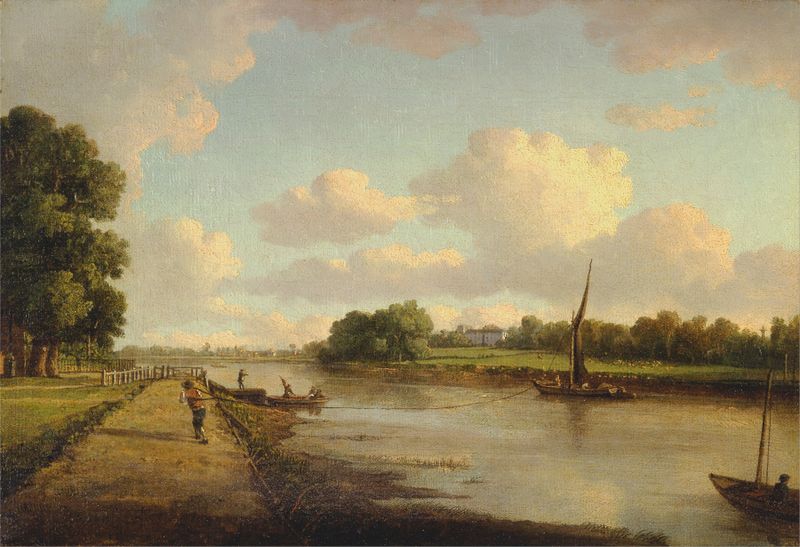
View on the River Thames at Richmond
William Marlow
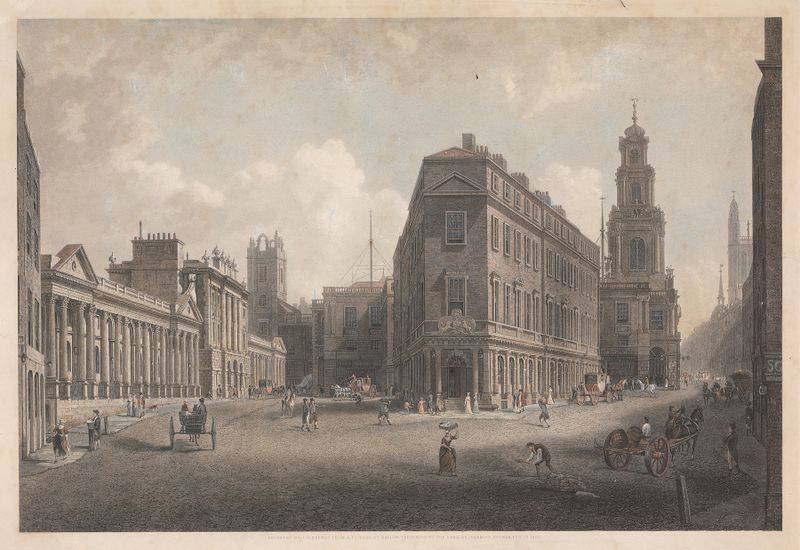
Bank of England Royal Exchange
William Marlow

The Thames At Richmond
William Marlow

The Arno towards the Ponte alle Grigio
William Marlow
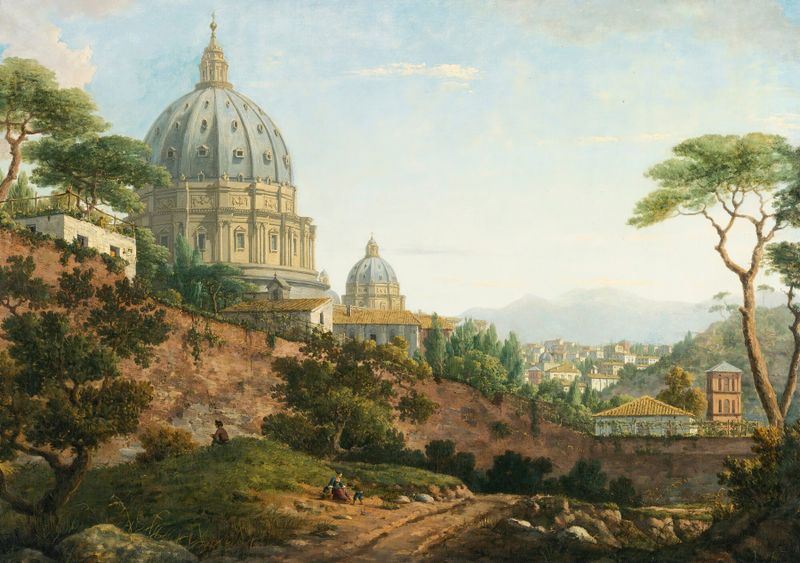
View Of Saint Peter’s, Rome
William Marlow
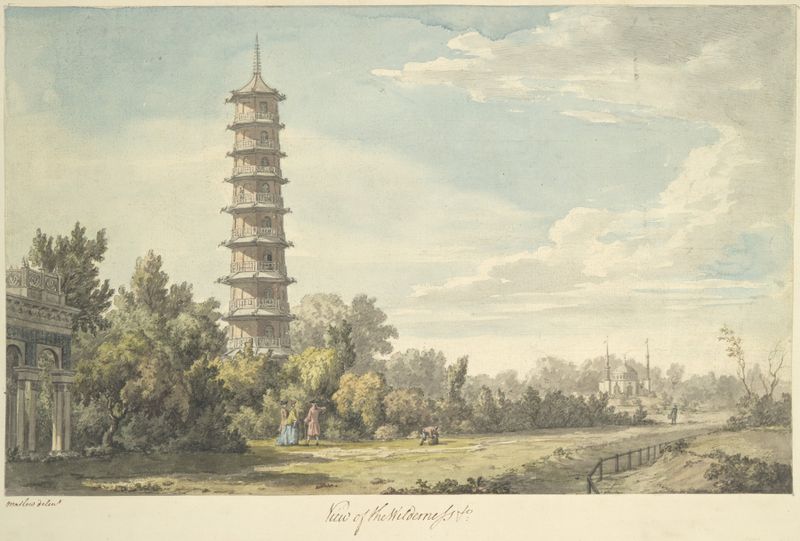
View of the Wilderness at Kew
William Marlow
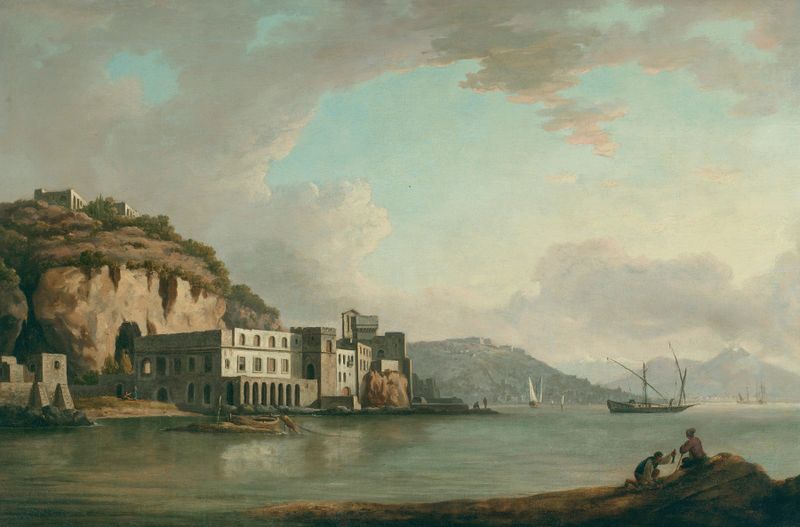
The Bay of Naples with Santa Maria degli Angeli
William Marlow

Nîmes from the Tour Magne
William Marlow

Castle on the Rhône River, France
William Marlow
More Architecture Art
Browse all →
The statue of Liberty
Frédéric Auguste Bartholdi

View of Houses in Delft, Known as ‘The Little Street’
Johannes Vermeer

View of Houses in Delft, Known as ‘The Little Street’
Johannes Vermeer

The Cathedral in Rouen. The portal, Grey Weather
Claude Monet

The yellow house
Vincent van Gogh

The Church in Auvers-sur-Oise, View from the Chevet
Vincent van Gogh