
The Approach to the Acropolis — History & Facts
As we gaze upon the incredible vista, we’re reminded of the delicate balance between grandeur and humility. Look to the left at the sun-drenched path winding toward the imposing Acropolis, where the ancient ruins seem to glow in the warmth of late afternoon light. The vibrant greens of the foreground contrast sharply with the weathered stone, drawing your eye to the intricate details of each column. Notice how the artist’s brushstrokes convey both texture and life, encapsulating a moment suspended in time, where nature and architecture intertwine harmoniously. This composition speaks to the tension between the natural world and human achievement.
The juxtaposition of the lush landscape against the stark, monumental ruins evokes a sense of reverence for history, reminding us of what was once great and what has faded. Furthermore, the soft, diffused light illuminates the scene, suggesting that beauty can be fleeting, urging viewers to reflect on the passage of time and the stories these stones could tell. Francis Hopkinson Smith created this work in the mid 19th to early 20th century, during a period marked by a revival of interest in classical antiquity. At this time, he was deeply engaged in his exploration of landscapes and historical sites, driven by a desire to capture the grandeur of the past.
While the world around him was rapidly changing, his art served as a bridge between eras, embodying both nostalgia and an appreciation for the enduring beauty of cultural heritage.
More Artworks by Francis Hopkinson Smith
Browse all →
The Propylaea – Acropolis
Francis Hopkinson Smith

A Turkish Street Scene
Francis Hopkinson Smith
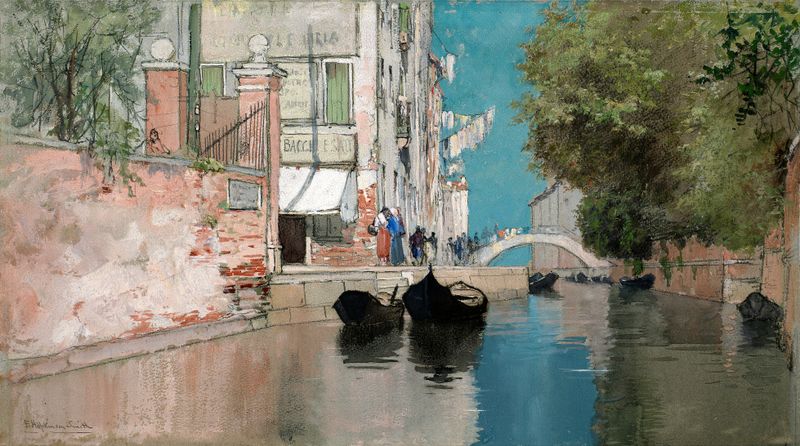
Venice
Francis Hopkinson Smith
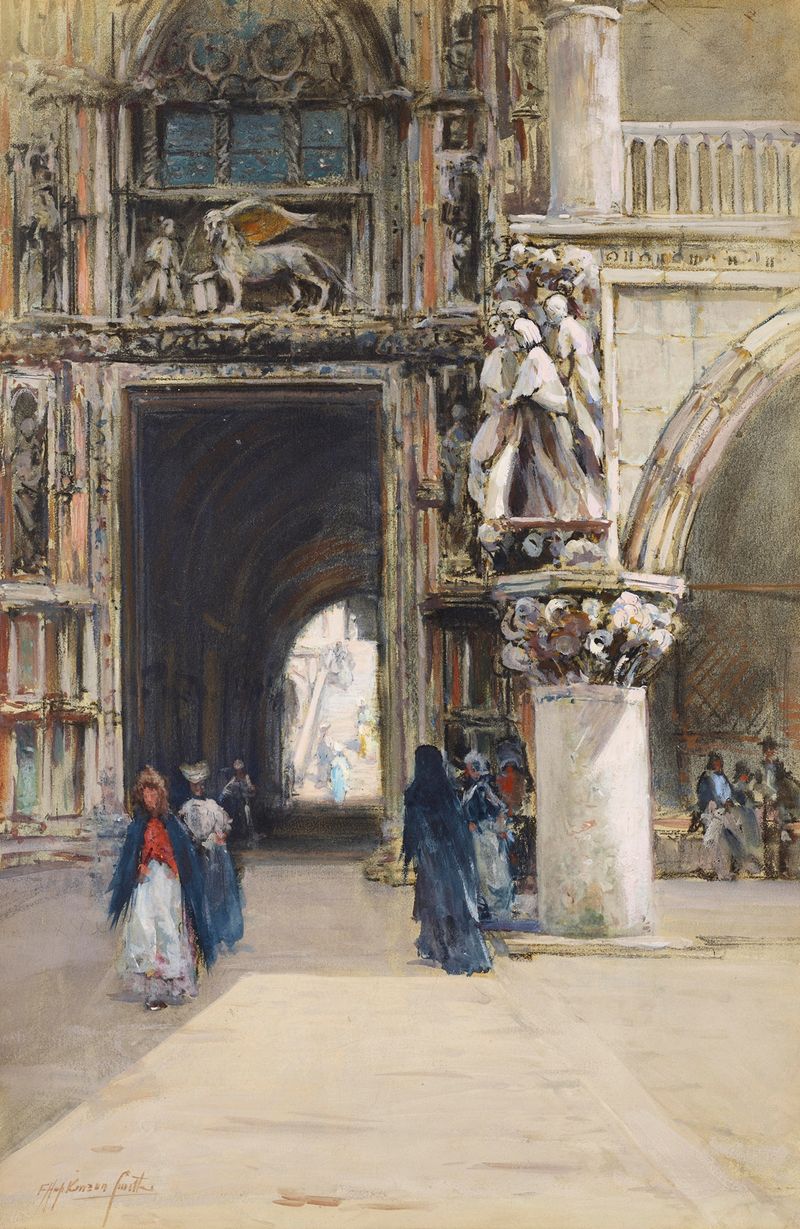
Porta della Carta, Venice
Francis Hopkinson Smith
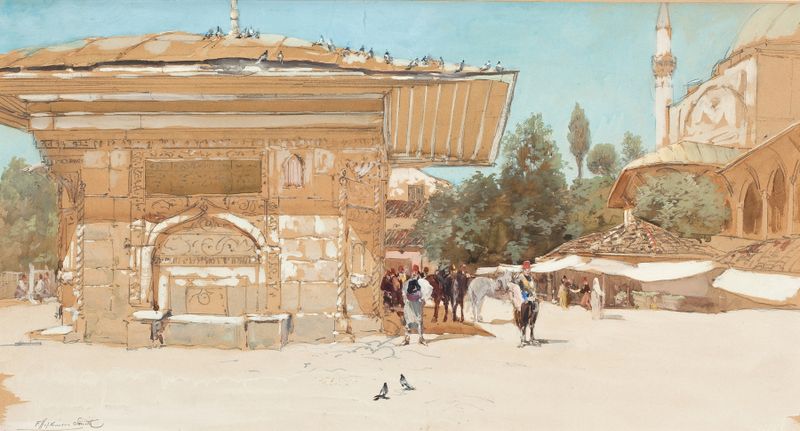
Middle Eastern Scene Outside a Mosque
Francis Hopkinson Smith

Barnyard
Francis Hopkinson Smith
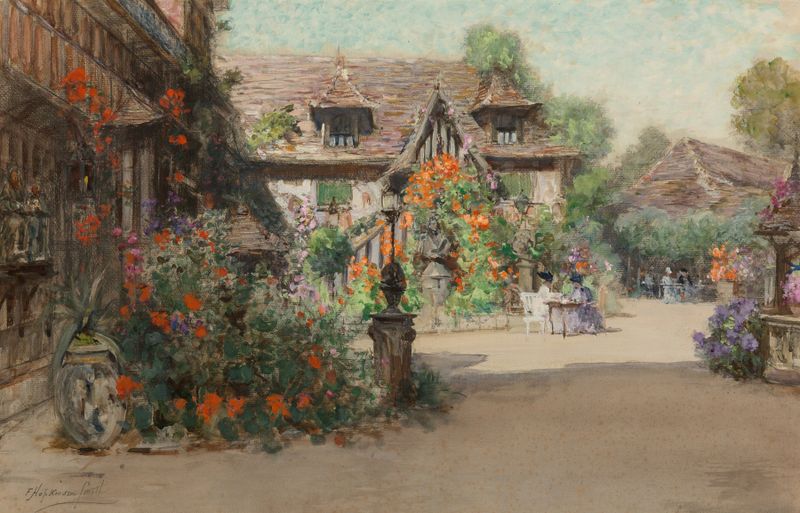
The Inn of Will
Francis Hopkinson Smith
Canal Scene
Francis Hopkinson Smith

Temple of the Wingless Victory
Francis Hopkinson Smith





