
The Propylaea – Acropolis — History & Facts
In a world where memories are often shrouded in the haze of history, the act of awakening to the past becomes a vivid declaration of existence. Look to the left at the majestic Propylaea, standing as a monumental gateway, its marble columns reaching toward the sky. The artist employs a palette of soft earth tones infused with the golden glow of a setting sun, casting a warm light that bathes the structure and evokes a sense of reverence. Notice how shadows deepen the crevices, while delicate brushwork captures the intricate details of the stone, inviting us to explore its storied surface and imbuing the scene with both grandeur and intimacy. Delve deeper into the composition and consider the juxtaposition of the ancient and the contemporary.
The soaring architecture speaks of a timelessness, yet the clear sky hints at a new beginning, a reminder of the constant interplay between memory and renewal. Each column, steadfast and strong, symbolizes not just an entrance, but an invitation to reflect on our own place in history, evoking feelings of nostalgia and hope intertwined. During the mid-19th to early 20th century, the artist found inspiration while traveling through Greece. This was a period marked by a growing fascination with classical architecture and its impact on modern culture.
Smith was part of a broader movement that sought to revive and reinterpret classical themes, capturing the essence of a civilization that has long influenced Western thought and artistry. In this context, the creation of this piece was not merely an artistic endeavor; it was a cultural statement reflecting the artist’s admiration for the past and its enduring legacy.
More Artworks by Francis Hopkinson Smith
Browse all →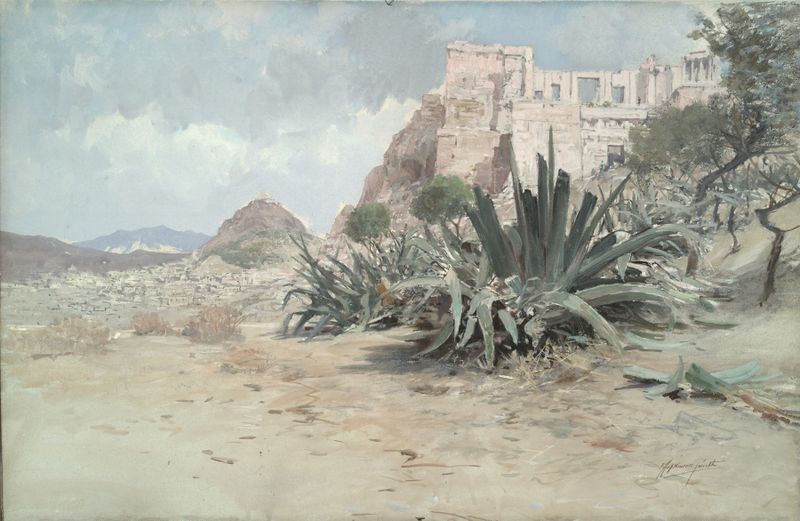
The Approach to the Acropolis
Francis Hopkinson Smith

A Turkish Street Scene
Francis Hopkinson Smith
Venice
Francis Hopkinson Smith
Porta della Carta, Venice
Francis Hopkinson Smith
Middle Eastern Scene Outside a Mosque
Francis Hopkinson Smith

Barnyard
Francis Hopkinson Smith
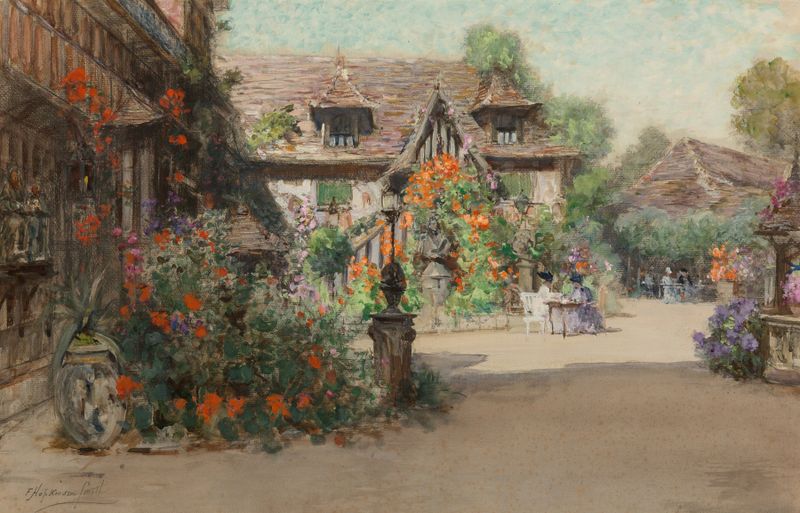
The Inn of Will
Francis Hopkinson Smith
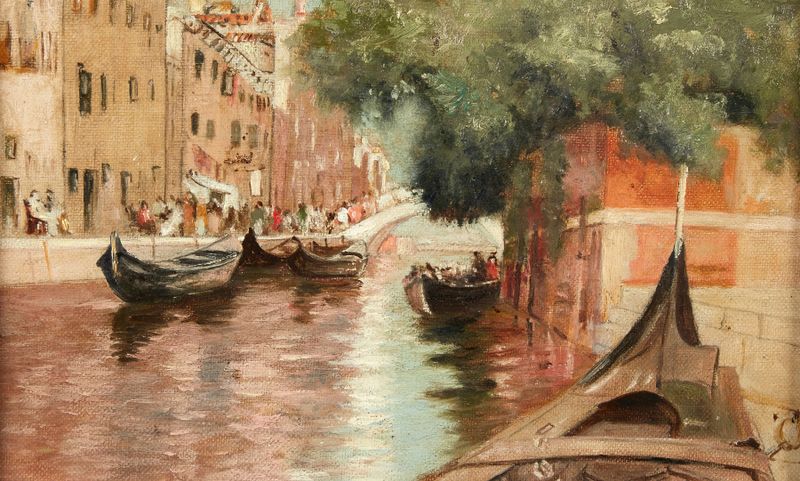
Canal Scene
Francis Hopkinson Smith

Temple of the Wingless Victory
Francis Hopkinson Smith
More Architecture Art
Browse all →
The statue of Liberty
Frédéric Auguste Bartholdi

View of Houses in Delft, Known as ‘The Little Street’
Johannes Vermeer

View of Houses in Delft, Known as ‘The Little Street’
Johannes Vermeer

The Cathedral in Rouen. The portal, Grey Weather
Claude Monet

The yellow house
Vincent van Gogh

The Church in Auvers-sur-Oise, View from the Chevet
Vincent van Gogh