
The Banks of the Ganges — History & Facts
This sentiment echoes through the tranquil waters of the Ganges, where the surface reflects not only light but also deeper truths of existence. In a world where serenity can conceal turmoil, the landscape whispers of betrayal and grace intertwined. Look closely at the horizon, where the warm glow of the setting sun bleeds into the river’s edge, casting a golden hue across the scene. The gentle curves of the river invite your gaze to dance along its banks, revealing lush greenery that cradles distant temples.
Notice how the meticulously painted details of the architecture stand in stark contrast to the vibrant, flowing water, symbolizing the tension between the stillness of faith and the river’s unpredictable nature. As you explore further, the interplay between light and shadow becomes a metaphor for hidden conflicts. The grandeur of the temples, untouched by time, seems to betray the transient beauty of the river, which ebbs and flows, embodying the idea of impermanence. It suggests that even places of worship can harbor secrets, as the vibrant colors hint at life’s bittersweet reality — where moments of joy may mask underlying sorrow. Created during a time of exploration and colonial expansion in the late 18th century, The Banks of the Ganges encapsulates William Daniell's artistic journey while he traveled through India.
Immersed in a world rich with tradition and beauty, his work reflected both admiration for the land and the complex histories that lay beneath its surface. This period marked a transformative moment in art, as artists began to grapple with the dualities of their subjects, setting the stage for future explorations of identity and place.
More Artworks by William Daniell
Browse all →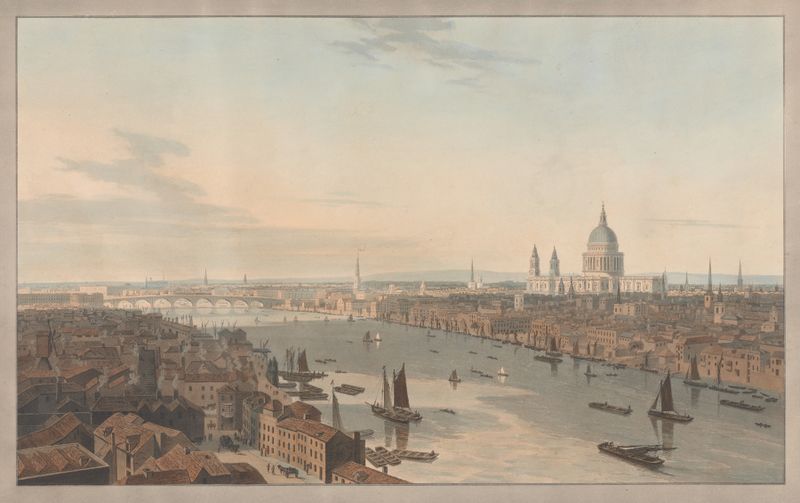
St. Paul’s and Blackfriars Bridge from Southwark
William Daniell
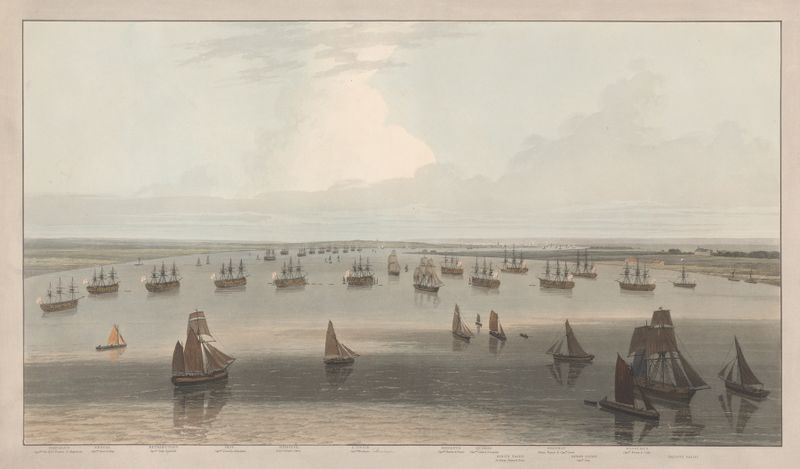
A View of the Frigates Stationed in the Hope under the Command of the Elder Brethen of the Trinity House, Thames Estuary
William Daniell

Main Entrance of the Jami Mosque, Jaunpur
William Daniell

London Bridge
William Daniell

London from Greenwich Park
William Daniell
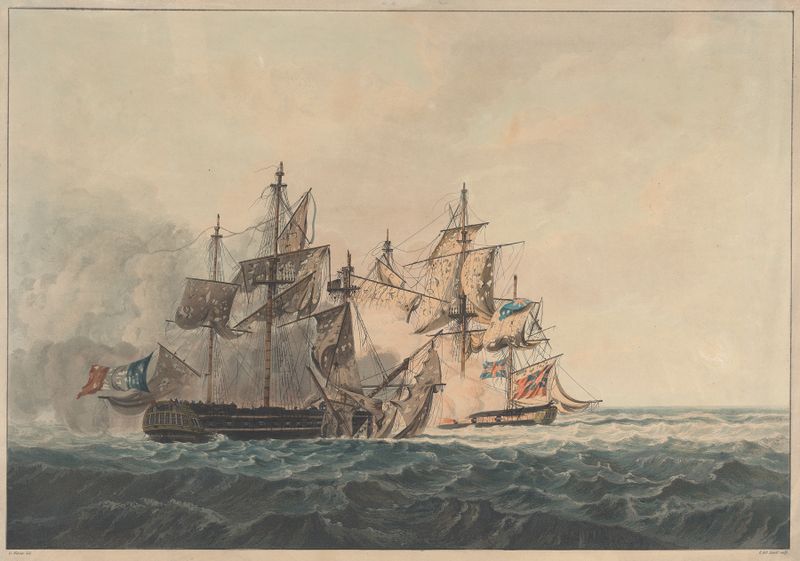
The Action between his Majesty’s Sloop ‘Bonne Citoyenne’ and the French Frigate ‘La Furieuse’
William Daniell
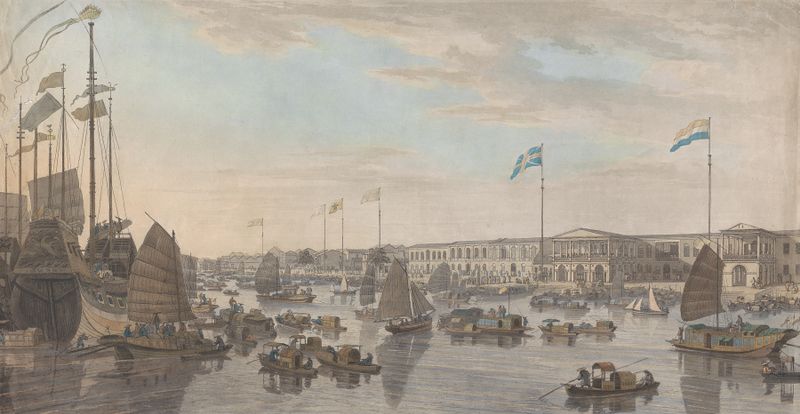
The European Factories at Canton in China
William Daniell

View of London Bridge and St. Paul’s Cathedral
William Daniell
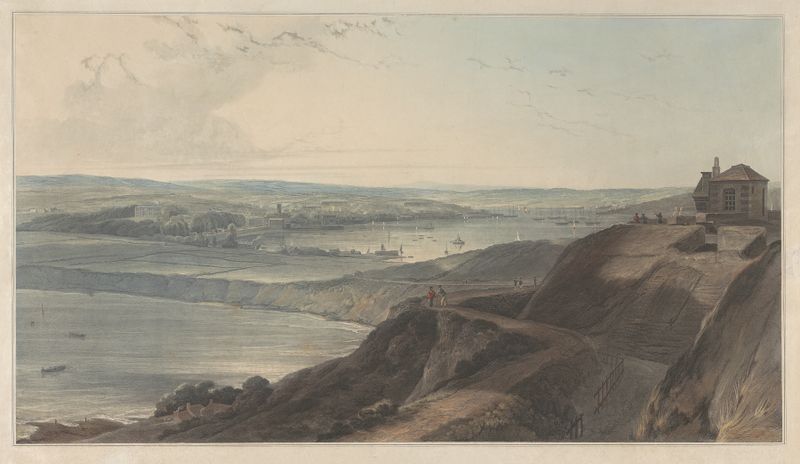
View of the Town and Part of the Harbour of Falmouth from Pendennis Castel, Cornwall
William Daniell

Madras, or Fort St. George, in the Bay of Bengal — A Squall Passing Off
William Daniell





