
The Banqueting House and the Holbein Gate, Whitehall, with the Equestrian Statue of King Charles I — History & Facts
When Canaletto arrived in London in the 1740s, he found a city eager to see itself reflected through the eyes of a Venetian master. Among the works he produced during this period, The Banqueting House and the Holbein Gate, Whitehall, with the Equestrian Statue of King Charles I stands out for capturing not only a famous London landmark, but also two structures—Holbein Gate and the equestrian statue—that would soon be altered or lost to history. The Holbein Gate, a Tudor relic, was demolished just a few years after this painting was completed, in 1759, making Canaletto’s view one of the last visual records of its presence. The scene is alive with the bustle of mid-eighteenth-century London.
At the heart of the composition, the Banqueting House gleams with its classical façade, a legacy of Inigo Jones, while to the right, the ornate Holbein Gate anchors the old palace complex. The equestrian statue of King Charles I, cast by Hubert Le Sueur in 1633, stands sentinel at the traffic roundabout, a silent witness to the king’s execution just yards away in 1649. Canaletto arranges the figures and carriages with his usual clarity, using strong sunlight to pick out architectural details and the play of shadows on the street.
Unlike Antonio Joli’s more theatrical London views, Canaletto’s eye lingers on the daily life: merchants, pedestrians, and the gentle chaos of urban movement. This painting was likely commissioned by one of Canaletto’s English patrons, eager to possess a grand view of the city’s political heart. Its precise early provenance is uncertain, but works from this London period were much sought after by British collectors, including members of the aristocracy and the burgeoning merchant class. Over the centuries, as the physical landscape changed—the Holbein Gate vanished, the Banqueting House survived, and the statue endured—Canaletto’s painting became a valuable historical document.
Today, it serves not only as a testament to his time in England, but also as a record of a vanished London, preserved in the artist’s meticulous hand.
More Artworks by Canaletto

The Grand Canal, Venice, looking north-west from the Ca' Corner to the Ca' Contarini degli Scrigni, with the campanile of Santa Maria della Carità
Canaletto

Venice, Bacino di San Marco on Ascension Day
Canaletto

Windsor Castle
Canaletto

The Grand Canal looking North-East from the Palazzo Dolfin-Manin to the Rialto Bridge
Canaletto

Venice: The Campo SS. Giovanni e Paolo
Canaletto

Venice: The Grand Canal from the Rialto to the Palazzo Foscari
Canaletto
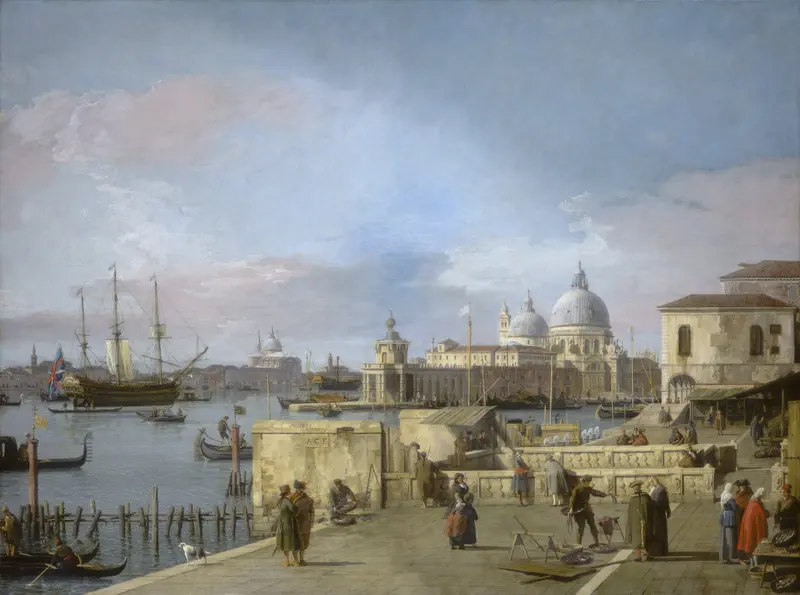
Venice: The Molo towards the Dogana and Santa Maria della Salute
Canaletto

Venice: The Piazzetta
Canaletto
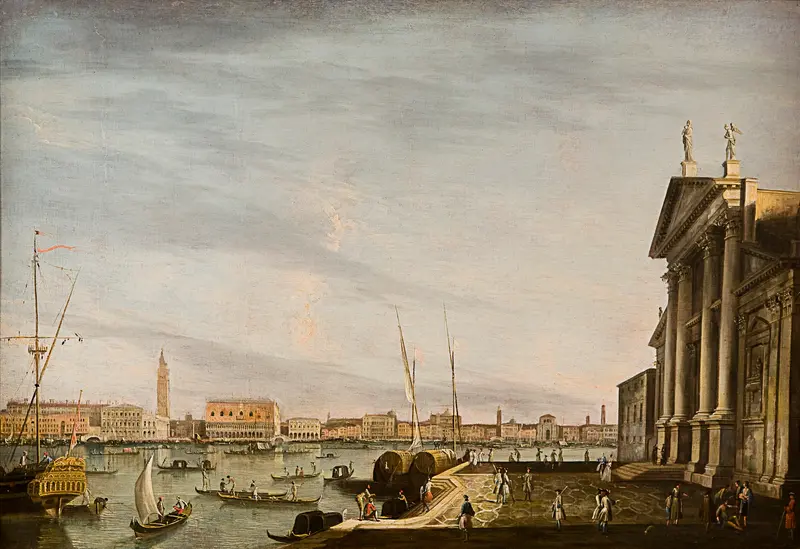
Venice, View of San Giorgio Maggiore
Canaletto

London: The Thames from Somerset House Terrace towards Westminster
Canaletto


