
The Bath, Jávea — History & Facts
A young nude woman steps into shallow, sunlit water, her back to the viewer and her hair tied with a red ribbon. She stands in the foreground, her left arm slightly extended as she moves forward through swirling currents painted with loose, energetic strokes of yellow, cream, and lavender. To the right, two more women are visible in the water, one in a bright pink garment and the other in pale tones, both partially submerged and holding hands as they face each other.
Their gestures suggest movement and play, with the woman in pink turning her head toward the central figure and the other reaching out, her body angled as if in mid-motion. The rocky shoreline frames the upper part of the painting, with rough, textured forms painted in shades of ochre, green, and purple, creating a sense of enclosure and depth. Light floods the scene from above, catching on the water's surface and casting shimmering reflections that ripple across the figures and rocks.
The color palette shifts from the golden, sunlit shallows in the foreground to cooler blue and violet tones in the deeper water beyond the rocks. Sorolla uses rapid, visible brushstrokes to capture the movement of the water, the play of sunlight, and the contours of the bodies, giving the surface a lively, almost vibrating texture. Small details, such as the red ribbon in the foreground figure's hair and the pink dress swirling in the water, provide vivid accents within the composition. The Bath, Jávea was painted by Joaquín Sorolla in 1905.
The painting depicts women bathing and swimming, with the central figure rendered nude and others engaged in the water nearby.
Sources: Metropolitan Museum of Art, record 09.71.2 · Wikidata Q19912406
More Artworks by Joaquín Sorolla

Sad Inheritance
Joaquín Sorolla
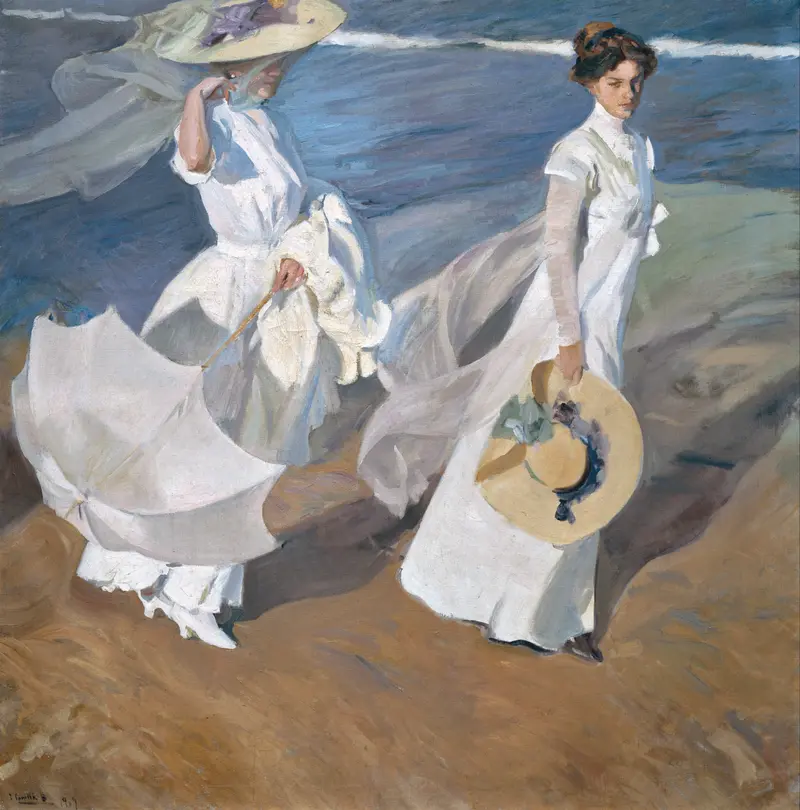
Walk on the Beach
Joaquín Sorolla

Mother
Joaquín Sorolla
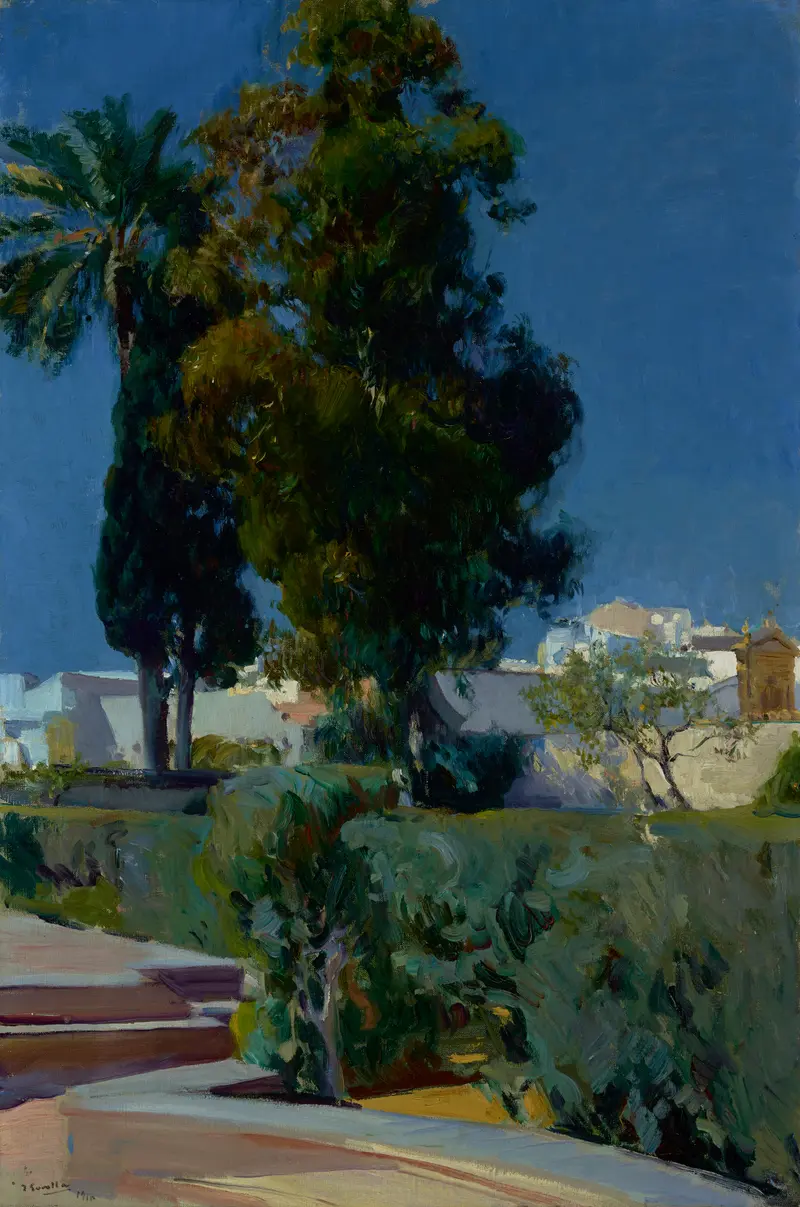
Corner of the Garden, Alcazar, Sevilla
Joaquín Sorolla

Fishing Boats On The Beach, Valencia
Joaquín Sorolla
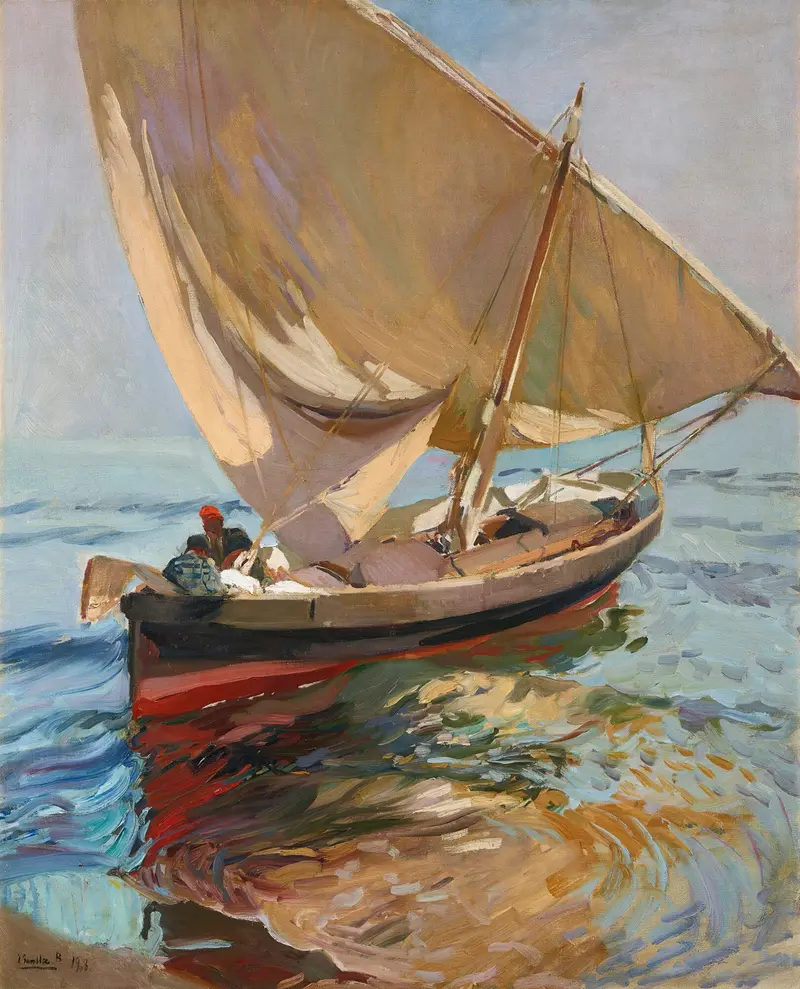
Camino De La Pesca. Valencia (Setting Out To Sea. Valencia)
Joaquín Sorolla
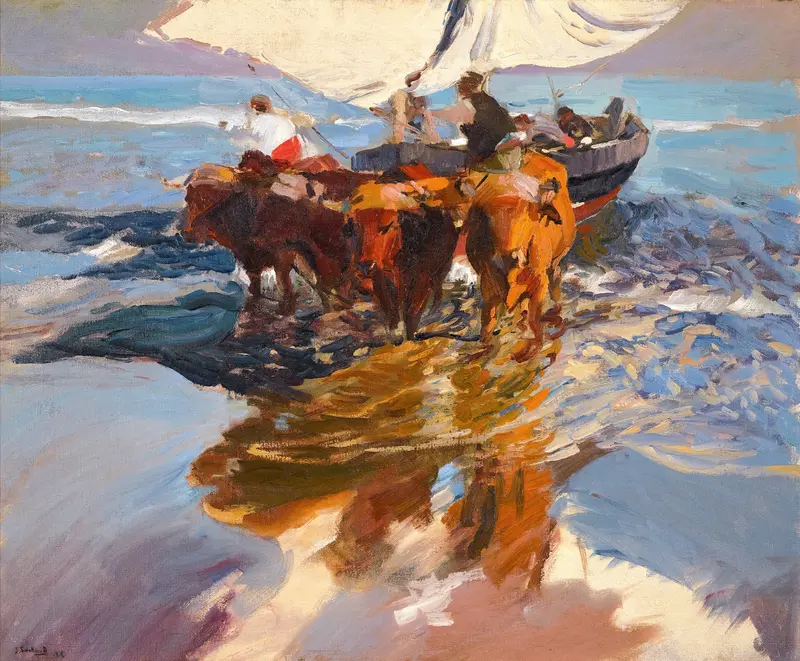
Vuelta De La Pesca. Playa De Valencia (The Return From Fishing, Valencia Beach)
Joaquín Sorolla
The Gardens at the Sorolla Family House
Joaquín Sorolla
Monte Ulía, San Sebastián
Joaquín Sorolla

Barcas En La Playa
Joaquín Sorolla





