The Beginning of Spring — History & Facts
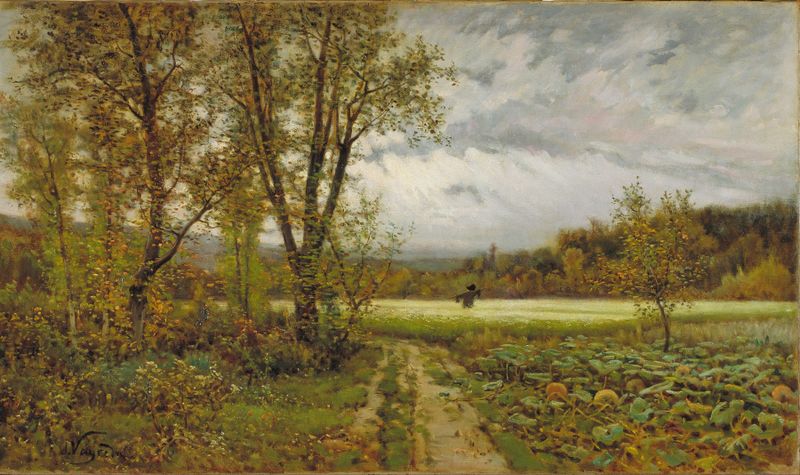
Could a single brushstroke hold eternity? In The Beginning of Spring, Joaquim Vayreda captures the bittersweet essence of renewal intertwined with the shadows of loss, revealing a world reborn yet forever marked by absence. Look to the left at the delicate blossoms, each petal a promise of warmth and vibrancy. The brushstrokes suggest a tender caress, as light dances across the scene, illuminating the fresh greens of new life. Notice how the pale sky, tinged with soft pinks and blues, envelops the horizon, inviting viewers to immerse themselves in the unfolding narrative of nature's revival.
The composition leads your eye through the blooming foreground and into the expansive, yet serene, background, creating a harmonious balance of detail and spaciousness. In this work, the contrast between the vibrant life of spring and the hint of lingering winter evokes a poignant tension. The blossoms symbolize hope and rebirth, yet their fleeting beauty serves as a reminder of what has passed. Such duality reflects the cyclical nature of existence, where joy and sorrow coexist, inviting contemplation on the transient moments that define our experiences.
Each element carries the weight of memory, suggesting that the joy of new beginnings often comes hand in hand with the ache of what has been lost. Joaquim Vayreda painted this piece in 1877 while residing in the picturesque landscapes of Catalonia, a time when he was deeply influenced by the Impressionist movement. The artist sought to convey the beauty of the natural world through vibrant color and light, aligning with the artistic currents of his era. During this period, Vayreda’s exploration of landscape painting marked a significant step in his career, as he began to embrace a style that celebrated both the fleeting qualities of nature and the emotional depth they invoke.