The Scarecrow — History & Facts
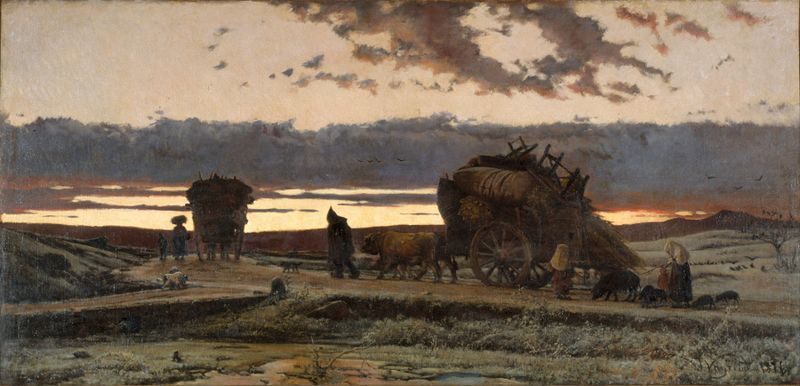
Who listens when art speaks of silence? In The Scarecrow, the weight of stillness clings to the air, inviting contemplation and reflection on the unseen dialogues of the natural world. Look to the left at the figure of the scarecrow, stark against the lush green of the field. The tattered clothing, painted with meticulous care, seems to sag under the burden of its role — a sentinel holding vigil over the crops. Notice how the light falls upon the straw, illuminating the textures that give life to an otherwise inanimate guardian.
This delicate interplay of shadow and sunlight draws your gaze deeper into the canvas, revealing the tasteful palette of earthy browns and vibrant greens that evoke a sense of peace yet hint at an underlying tension. As you explore further, observe the juxtaposition between the lifeless figure and the vibrant surroundings, a poignant reminder of nature’s relentless cycle. The scarecrow, intended to protect, becomes an emblem of solitude, a voice echoing the stillness of a rural landscape. In this serene environment, one can sense the haunting absence of the very life it is meant to safeguard, embodying a profound reflection on purpose and existence within the natural order. Joaquim Vayreda created this piece between 1883 and 1885, during a period when he was deeply engaged with capturing the beauty of Catalonia's landscapes.
Emerging from the influence of the Impressionist movement, Vayreda sought to unite representation and emotion, reflecting both the charm and solitude found in rural life. His work at this time contributed to the broader dialogue of Spanish art, balancing realism with a burgeoning appreciation for light and atmosphere.