Terrace — History & Facts
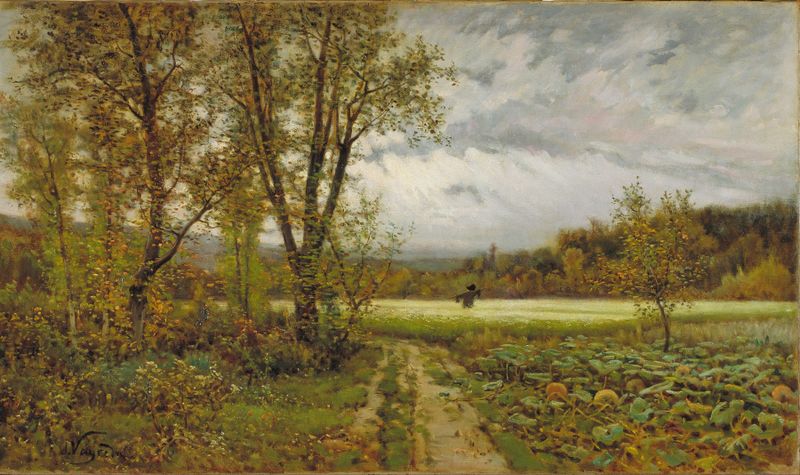
What secret hides in the quiet of the canvas? The stillness of Terrace invites a meditative reflection on memory, echoing the whispers of a sunlit afternoon and the passages of time. Look to the left at the dappled light filtering through the leaves, casting soft patterns across the terrace’s surface. The warm palette of ochres and greens creates an inviting atmosphere, drawing the viewer into an intimate space. Notice how the confident brushstrokes render the texture of the bricks and foliage, making them almost palpable, while the subtle interplay of shadow and light enhances the depth and dimensionality of the scene. The composition reveals a rich tapestry of contrasts—the stark solidity of the terrace juxtaposed with the fleeting, ephemeral quality of nature.
Each blade of grass and leaf tells a story of life and growth, hinting at memories that linger, while the stillness of the architecture suggests a pause in the day. This serenity invites contemplation, as if time stands still, urging us to ponder what moments have unfolded here, unheard and unseen. In 1891, Joaquim Vayreda found inspiration in the tranquil surroundings of his native Catalonia, where he painted Terrace. During this period, the artist was associated with the modernist movement, capturing the beauty of landscapes and intimate settings through a blend of realism and impressionism.
His exploration of light and color reflected the broader shifts in the world of art, as artists sought to evoke emotion through the depiction of everyday scenes.