Reaping — History & Facts
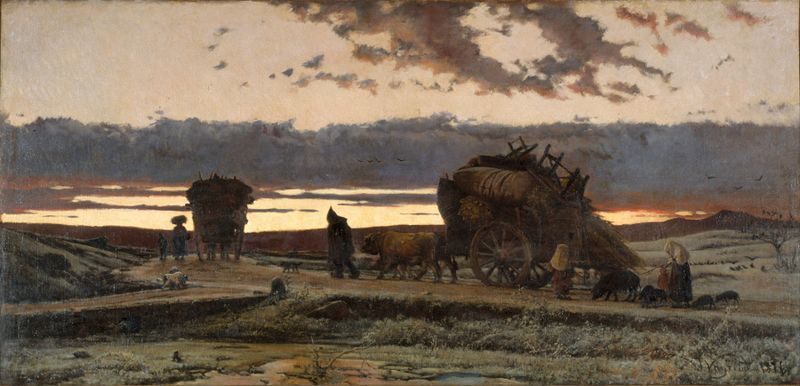
Where does light end, and longing begin? In the quiet embrace of Reaping, tranquility dances between the golden fields and the soft, fading sun, inviting introspection amid the simplicity of labor. Look to the left at the figure bent low, the gentle arc of their back echoing the curves of the rolling hills. Notice the intricate strokes of golden wheat, each blade captured with a delicate realism that brings the scene to life. The warm palette of ochres and soft browns intertwines with hints of deep greens, reflecting the serenity of a late afternoon as light spills across the composition, illuminating the toil of the harvest with a sacred glow. Within this pastoral tableau lies a profound contrast: the serenity of nature against the labor of man.
The laborer’s posture suggests both fatigue and devotion, a silent testament to the dignity of hard work. There's a poignant stillness in the air, suggesting not just the end of a day's toil but an echo of life cycles—the bending of wheat matched by the bending of human spirit in the face of nature's rhythms. In 1881, Joaquim Vayreda painted Reaping during a period marked by the revival of traditional themes in Spanish art, where the rustic and the romantic intertwined. Living in Catalonia, he was deeply influenced by the natural landscapes surrounding him and the simplicity of peasant life.
This work reflects Vayreda's commitment to portraying the beauty of everyday labor, encapsulating the essence of a shifting artistic landscape while celebrating the profound connection between man and nature.