
The Bridge at Llangollen — History & Facts
What if beauty was never meant to be finished? The fleeting nature of memory holds within it a magic that invites us to linger and reflect. In The Bridge at Llangollen, an ethereal scene unfolds, capturing a moment suspended between the past and the present. Look to the left, where the arching bridge forms a graceful curve over the shimmering waters. Notice how the interplay of light and shadow dances across the surface, revealing the smooth, worn stones that speak of time's passage.
The palette of earthy greens and soft blues creates a calm, harmonious atmosphere, drawing your eye toward the distant hills that cradle the scene, inviting you to wander deeper into this tranquil realm. Beneath this picturesque surface lies a tension between permanence and impermanence. The bridge, a sturdy symbol of human engineering, contrasts with the ephemeral reflections rippling in the water, suggesting a fragile connection to memory and place. The quiet figures in the foreground, their gestures gentle, evoke a sense of nostalgia, as if they too are caught between the allure of the landscape and the ephemeral nature of their existence within it. William James Müller crafted this scene in the mid-19th century, a period marked by a growing interest in the picturesque and romantic landscapes of Britain.
While he lived in Bristol, the evolving art world was embracing both realism and impressionism, and Müller sought to capture the sublime beauty of nature, reflecting a personal journey through a world in transition.
More Artworks by William James Müller
Browse all →
Cleeve, Somerset, with Bridgewater Bay in the Distance
William James Müller

Cairo Bazaar
William James Müller
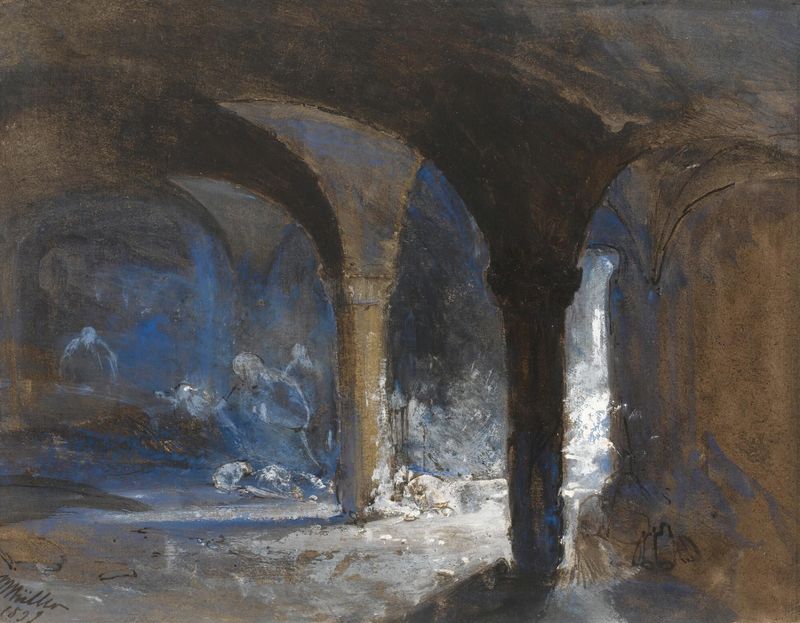
Crypt of the bishop’s palace during the Bristol riots
William James Müller

Near the Caravan Bridge, Smyrna
William James Müller
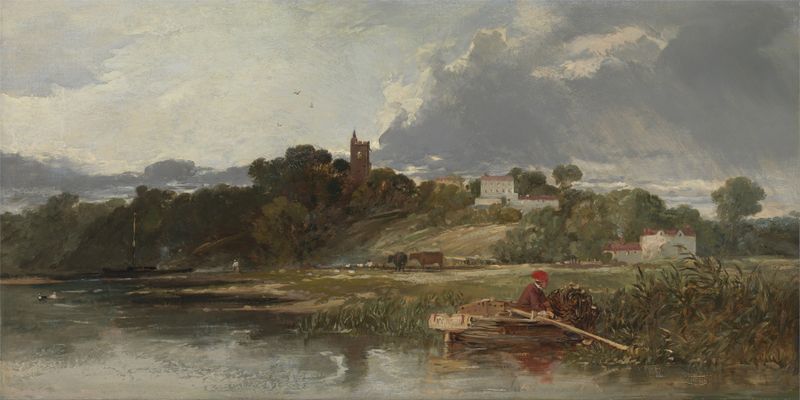
Gillingham on the Medway
William James Müller

The Church of the Holy Sepulchre
William James Müller

A View of Eton and the Fellows Eyot
William James Müller

Tripoli
William James Müller

A Mountain Torrent
William James Müller

Gezicht in Stapleton Wood, bij Bristol
William James Müller





