
Cairo Bazaar — History & Facts
What if beauty was never meant to be finished? In the intricate dance of light and shadow, Cairo Bazaar unfurls a tapestry of life, beckoning the viewer to lose themselves in its rich colors and bustling forms. Look to the vibrant foreground, where merchants and shoppers converge amidst a melting pot of textiles and wares. The interplay of deep ochres and fiery reds captures the warmth of the sunlit market, while the brown and green tones in the background hint at a world beyond. Notice how the delicate brushstrokes create an illusion of movement, as if the figures might leap from the canvas into our reality, each engaged in their own stories. Amidst the bustle, subtle contrasts emerge: the stillness of an observer resting against the wall, juxtaposed against the lively trading of goods.
There’s a palpable tension between the vibrant chaos of commerce and the quietude of human experience, reflecting the beauty found in both action and stillness. Each detail, from the intricate patterns on the fabrics to the expressions on the figures’ faces, draws attention to the complexity of life in the bazaar, suggesting that beauty often resides in the moment of transition. William James Müller painted Cairo Bazaar during the mid-19th century, a period marked by growing fascination with the Middle East among Western artists. Living in England, he was influenced by the Romantic movement and the burgeoning trend of Orientalism, which sought to capture the allure and mystique of foreign landscapes and cultures.
This painting reflects his keen observation of life and his ability to weave intricate narratives through rich visual language.
More Artworks by William James Müller
Browse all →
Cleeve, Somerset, with Bridgewater Bay in the Distance
William James Müller

The Bridge at Llangollen
William James Müller
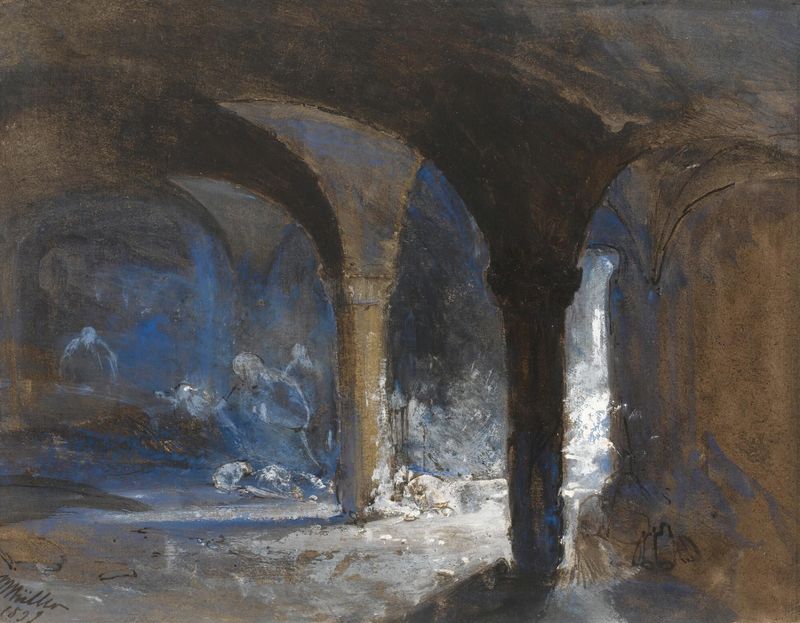
Crypt of the bishop’s palace during the Bristol riots
William James Müller

Near the Caravan Bridge, Smyrna
William James Müller
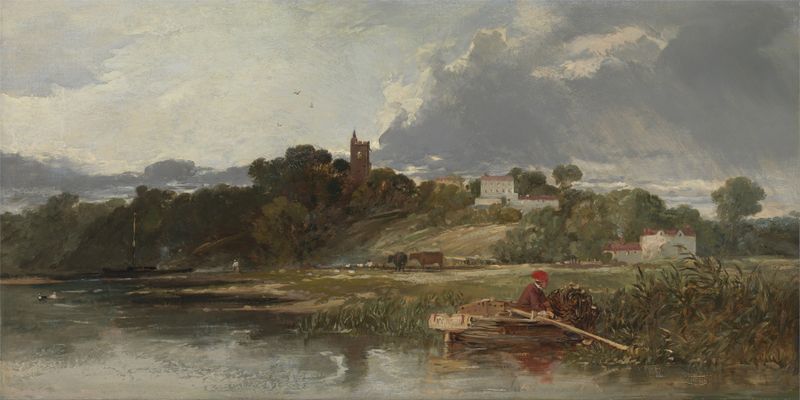
Gillingham on the Medway
William James Müller

The Church of the Holy Sepulchre
William James Müller

A View of Eton and the Fellows Eyot
William James Müller

Tripoli
William James Müller

A Mountain Torrent
William James Müller

Gezicht in Stapleton Wood, bij Bristol
William James Müller





