
The Building of the Dam — History & Facts
In the realm of creation, each stroke of paint serves as a testament to human ambition, a communion between nature and endeavor. Look to the left at the vivid interplay between the water and the rising structure, where currents swirl and clash with raw material. Notice how the artist’s brushwork mirrors the chaos of labor; rough-hewn stone and timber are captured in meticulous detail, each texture palpable under the sunlight that bathes the scene in a golden glow. The contrasting hues of earthy browns and rich blues draw the eye toward the determined figures, laboring tirelessly, their silhouettes framed against the expansive sky. Delve deeper into the emotional currents flowing through this composition; the juxtaposition of man against nature reveals both the fragility and strength of human will.
The laborers, though small within the vast landscape, embody a steadfast resolve, while the river, with its relentless flow, serves as the ultimate symbol of nature’s enduring power. The tension between their actions and the serenity of the surrounding environment invites reflection on the interplay of creation and destruction, progress and preservation. In 1908, Weir painted this piece during a time of great change in America, as industrialization began reshaping the landscape. Living in Connecticut, he was influenced by the Naturalist movement, seeking to capture the American experience through his work.
This painting reflects his commitment to both realism and a deep appreciation for the natural world, demonstrating how art can serve as a bridge between humanity's ambitions and the environment that sustains it.
More Artworks by Julian Alden Weir
Browse all →
My Back Yard no. 1
Julian Alden Weir
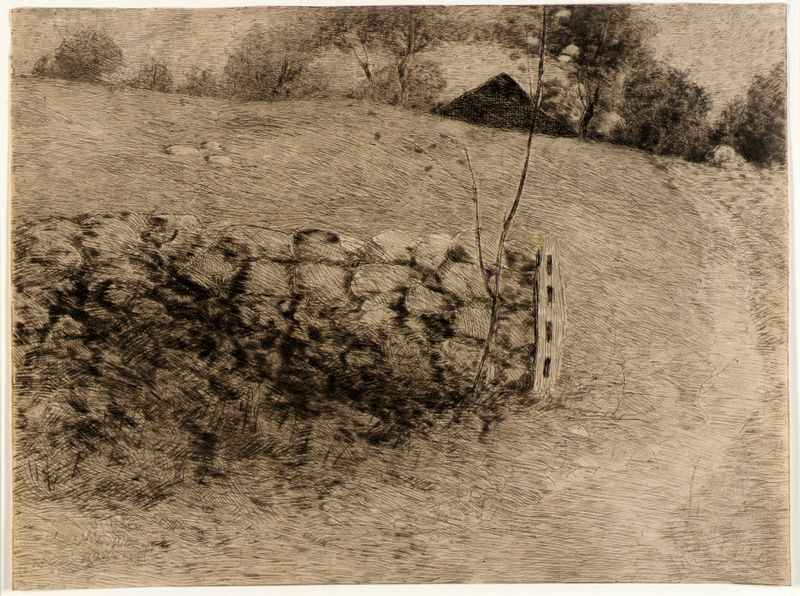
The Barn Lot
Julian Alden Weir

The Webb Farm
Julian Alden Weir
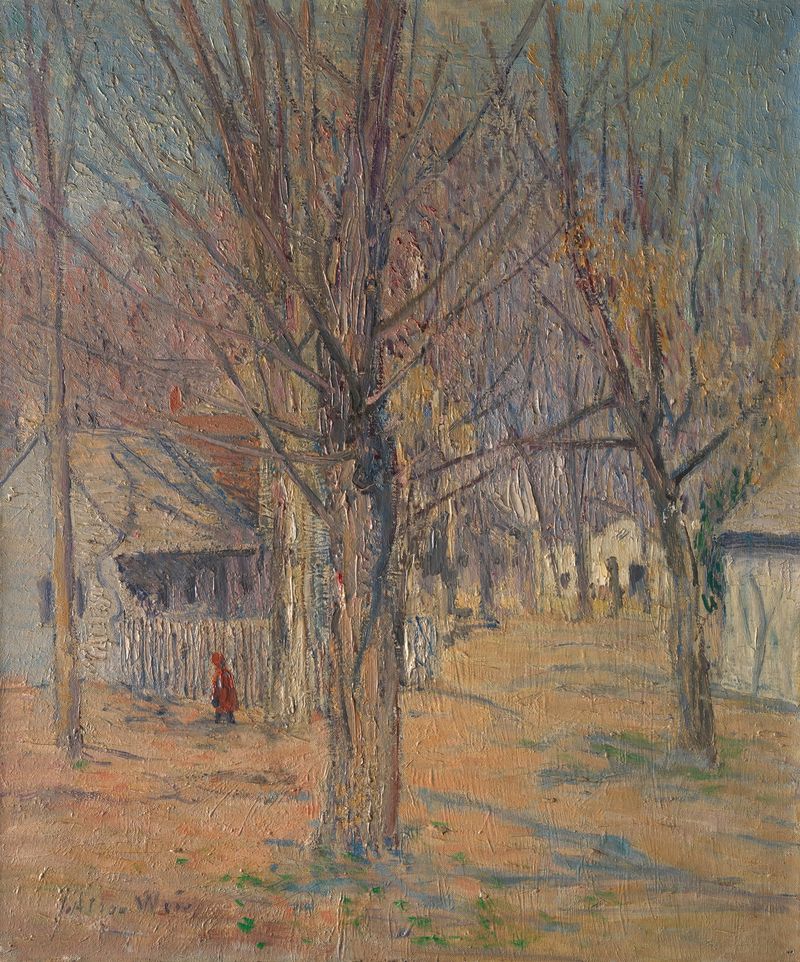
Connecticut Village (Going to School)
Julian Alden Weir

The Stone Bridge
Julian Alden Weir

The Webb Farm 2
Julian Alden Weir
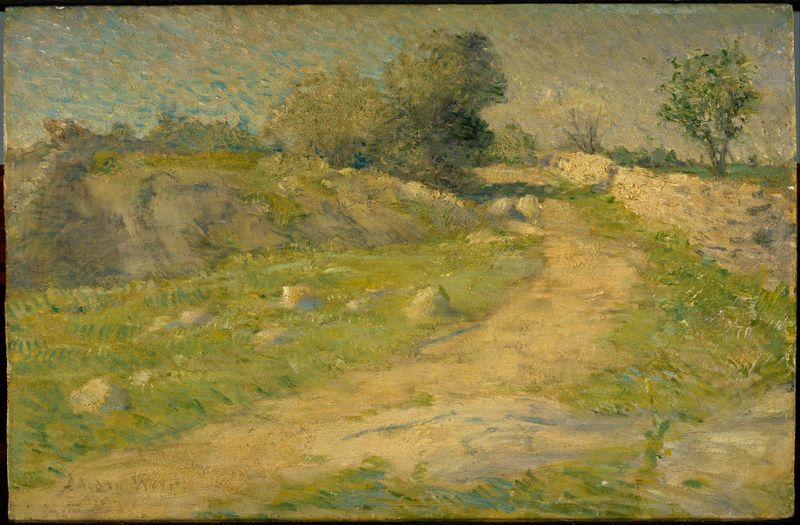
The Lane
Julian Alden Weir
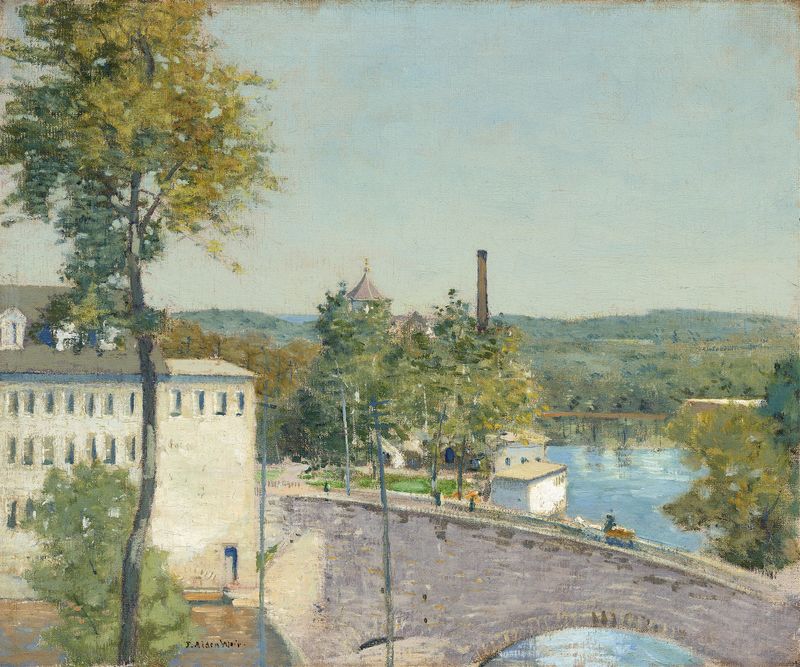
U.S. Thread Company Mills,Willimantic,Connecticut
Julian Alden Weir

Neighboring Farm
Julian Alden Weir

Coon Alley
Julian Alden Weir
More Architecture Art
Browse all →
The statue of Liberty
Frédéric Auguste Bartholdi

View of Houses in Delft, Known as ‘The Little Street’
Johannes Vermeer

View of Houses in Delft, Known as ‘The Little Street’
Johannes Vermeer

The Cathedral in Rouen. The portal, Grey Weather
Claude Monet

The yellow house
Vincent van Gogh

The Church in Auvers-sur-Oise, View from the Chevet
Vincent van Gogh