
The Burg in Bruges — History & Facts
Did the painter know this moment would outlive them? In The Burg in Bruges, the divine harmony of architecture and life resonates through time, capturing an eternal beauty that invites contemplation. Look to the center of the canvas, where the majestic buildings rise, their intricate facades bathed in the golden glow of a late afternoon sun. Notice how the light dances along the rooftops and illuminates the bustling figures below, each gesture a testament to daily life. The rich palette of ochres and umbers contrasts with the azure sky, creating a visually striking interplay that draws the eye and envelops the viewer in the vivid atmosphere of Bruges. As you explore further, consider the juxtaposition of the serene architecture against the busy foreground.
The solemnity of the towering structures suggests permanence, while the lively crowd hints at the transience of human activity. This contrast underscores a poignant tension between the divine nature of the city’s heritage and the fleeting moments of its inhabitants, suggesting a deeper narrative about the passage of time and the quest for meaning within it. In 1696, Jan Baptist van Meunincxhove painted this work in the thriving cultural landscape of Bruges, a city that was an artistic hub during the Dutch Golden Age. At this time, he was influenced by the Baroque movement, which emphasized grandeur and emotional depth in art.
The piece reflects the careful balance of light and shadow characteristic of the era, while also embodying a sense of community and identity that was vital to the city’s spirit.
More Artworks by Jan Baptist van Meunincxhove
Browse all →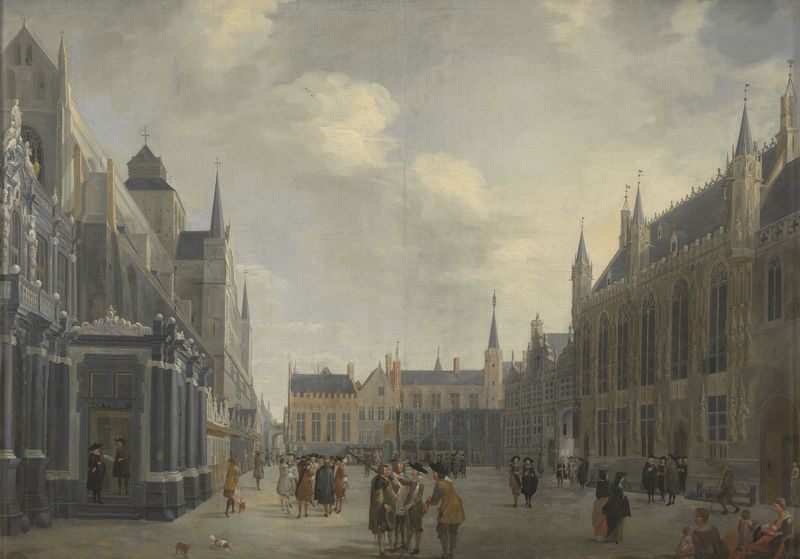

More Architecture Art
Browse all →
The statue of Liberty
Frédéric Auguste Bartholdi

View of Houses in Delft, Known as ‘The Little Street’
Johannes Vermeer

View of Houses in Delft, Known as ‘The Little Street’
Johannes Vermeer

The Cathedral in Rouen. The portal, Grey Weather
Claude Monet

The yellow house
Vincent van Gogh

The Church in Auvers-sur-Oise, View from the Chevet
Vincent van Gogh