The Market Square in Bruges — History & Facts
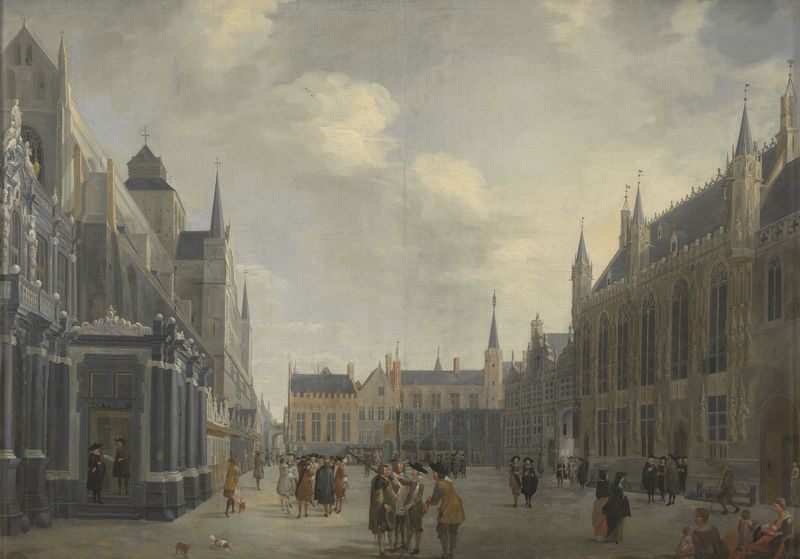
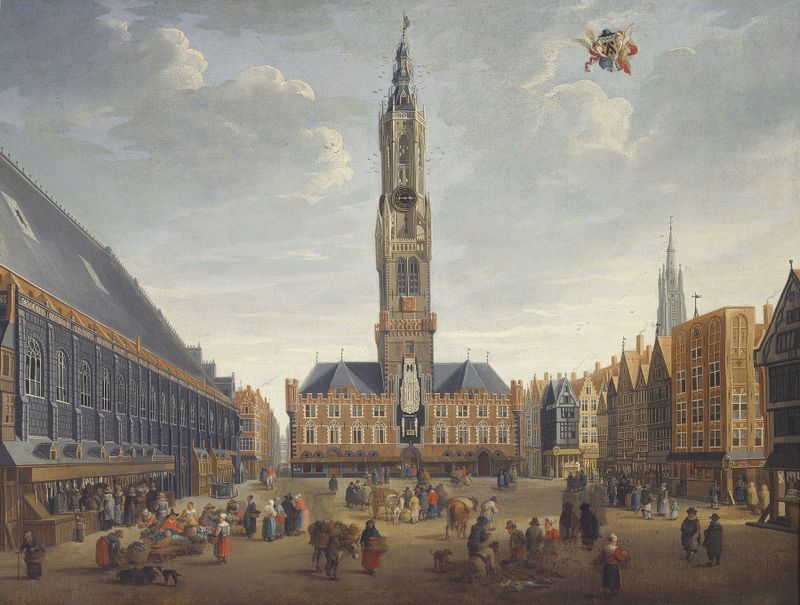
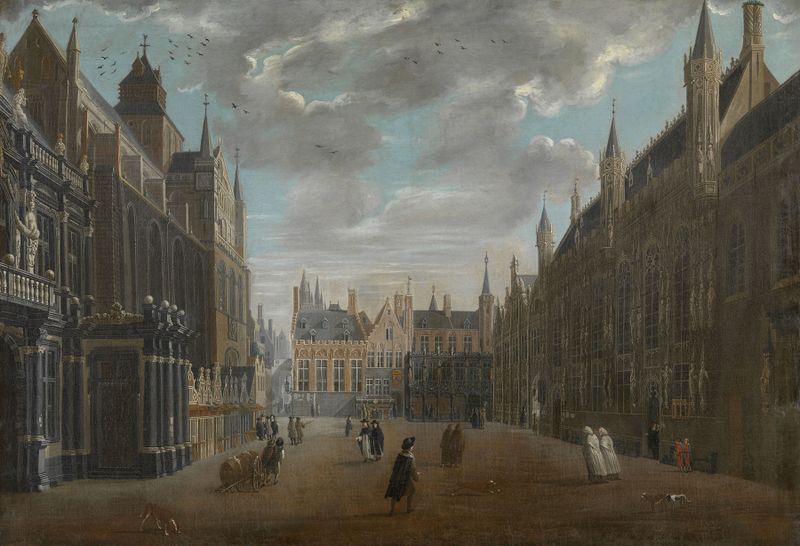
Who listens when art speaks of silence? In a world bustling with noise, the quiet depths of The Market Square in Bruges invite us to ponder the truth that lies beneath the surface. Look to the center of the canvas, where a gentle play of light reveals the cobblestone square, glistening as if kissed by a recent rain. The palette, awash with muted earth tones, blends seamlessly with the soft blues of the sky, framing the architecture that stands resolutely against time. Notice how the figures, seemingly lost in their mundane tasks, create a rhythmic harmony that draws your eyes across the expanse, while the delicate brushwork captures an ethereal stillness, as if the moment is suspended in time. Beneath this tranquil façade, there lies a profound commentary on community and existence.
The interplay of shadow and light symbolizes the balance of joy and sorrow in daily life, urging the viewer to consider the hidden stories of those who populate this space. Each solitary figure, though engaged in their own pursuits, collectively contributes to the tapestry of human experience—echoing the unspoken connections that bind us all. In 1696, the artist worked in Bruges, a city known for its rich history and commerce, reflecting a time when the Baroque movement was reaching its zenith. Van Meunincxhove painted this scene amidst a backdrop of social and cultural change as Flemish art embraced the quiet introspection that would later influence generations.
His ability to capture the essence of daily life through a lens of stillness marked a significant moment in the evolution of art, revealing a deep understanding of the human condition.