The Market Square in Bruges — History & Facts
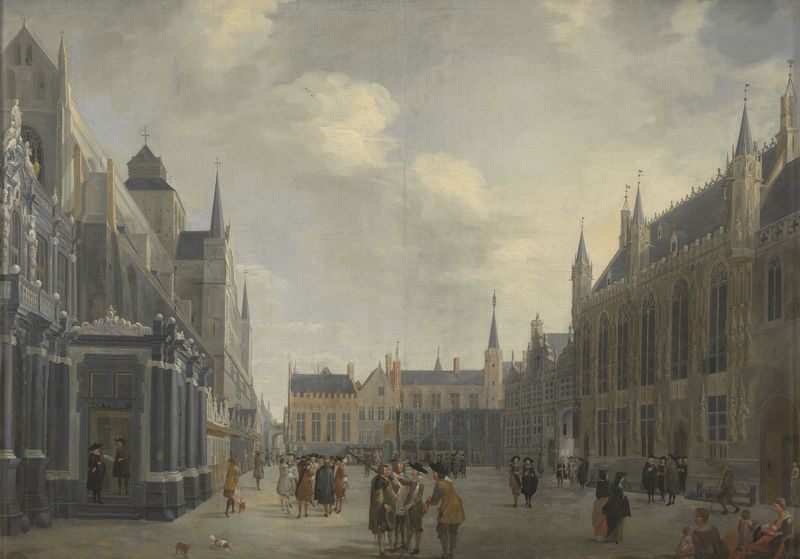
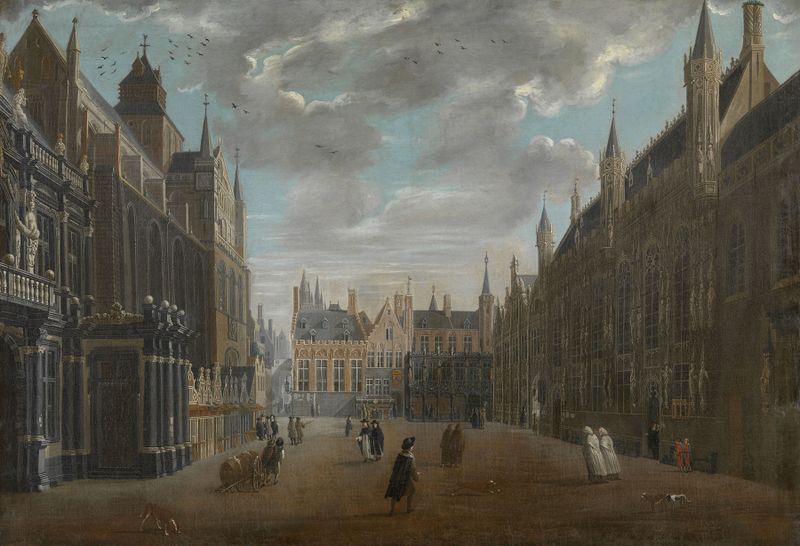
Could beauty survive in a century of chaos? This question resonates deeply within the vibrant hues and carefully rendered forms of the market square, where life unfolds amidst the backdrop of a tumultuous era. Look to the left at the bustling figures animatedly engaging with one another, their postures alive with the energy of commerce and community. Notice how the artist employs a rich palette, layering ochres and deep greens, which not only infuse the scene with warmth but also evoke the lively spirit of daily life. The architecture, with its intricate details, frames the square, drawing the viewer’s gaze inward to the heart of the composition where people interact, creating a palpable sense of motion and connection. The contrasts in The Market Square in Bruges are striking.
The vibrancy of the colors juxtaposes the somber undertones of the historical period, hinting at the resilience of human spirit amidst uncertainty. The market, with its lively exchanges, becomes a sanctuary where hope flickers, while the stillness of shadowed corners suggests moments of introspection and solitude. Each character, from the vendor to the child, represents a facet of society, weaving a narrative that speaks to communal strength amid the chaos of the late 17th century. Jan Baptist van Meunincxhove painted this work between 1691 and 1700, during a time when Europe was grappling with political upheaval and artistic transition.
Residing in Bruges, he was influenced by the Baroque style, focusing on realism and emotional depth. This painting reflects not only his skill in capturing the essence of daily life but also serves as a testament to the enduring beauty found in communal spaces, even when shadows loom large.