The Capuchin Monastery at La Cava (Salerno) — History & Facts
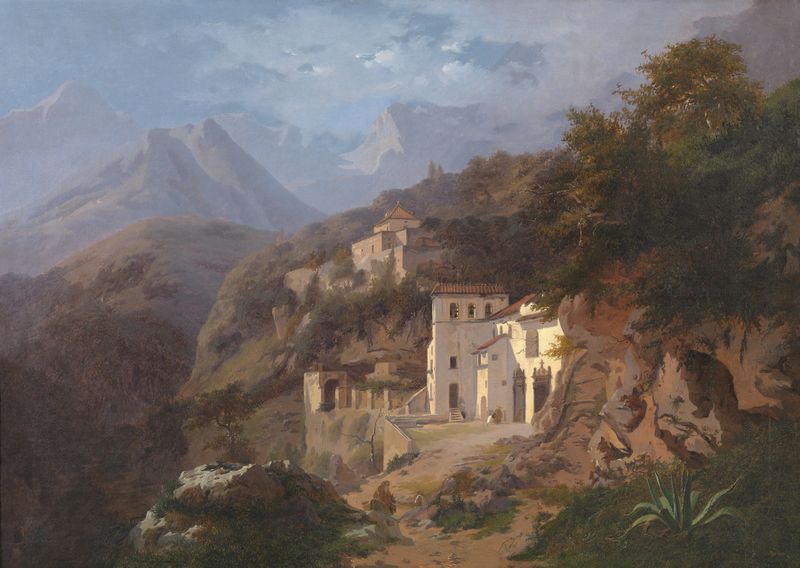
Could a single brushstroke hold eternity? In The Capuchin Monastery at La Cava, Edouard De Vigne captures not just a place, but a moment suspended in time, echoing the serenity of nature and the tranquility of spirituality through his masterful use of color. Look to the foreground, where the monastery emerges from the surrounding greenery, basking in soft hues of ochre and cream. Notice how the warm light bathes the stone façade, creating a sense of warmth and solace. Further back, vibrant greens intertwine with the cool blues of the sky, inviting the viewer to wander into this serene landscape.
The gentle brushwork conveys a sense of fluidity, with colors merging seamlessly, evoking the natural rhythm of the world around the monastery. Beyond the facade, contrasts of light and shadow reveal deeper meaning within the painting. The juxtaposition of the sturdy, steadfast architecture against the ephemeral quality of the landscape speaks to the balance between humanity's creations and nature's wonders. The subtle interplay of colors not only highlights the physical beauty of the scene but also hints at a spiritual harmony, suggesting the monastery’s role as a sanctuary amid life's fleeting moments. In 1838, De Vigne painted this work during a period of artistic exploration in Europe, where Romanticism was profoundly influencing the art landscape.
Living in Paris, he was immersed in a culture that celebrated emotion and nature, as artists sought to convey the sublime through their works. The painting reflects not only his personal journey but also the broader currents of art and philosophy that were redefining the relationship between humanity and the natural world.