Italian Landscape with Dancing Figures — History & Facts
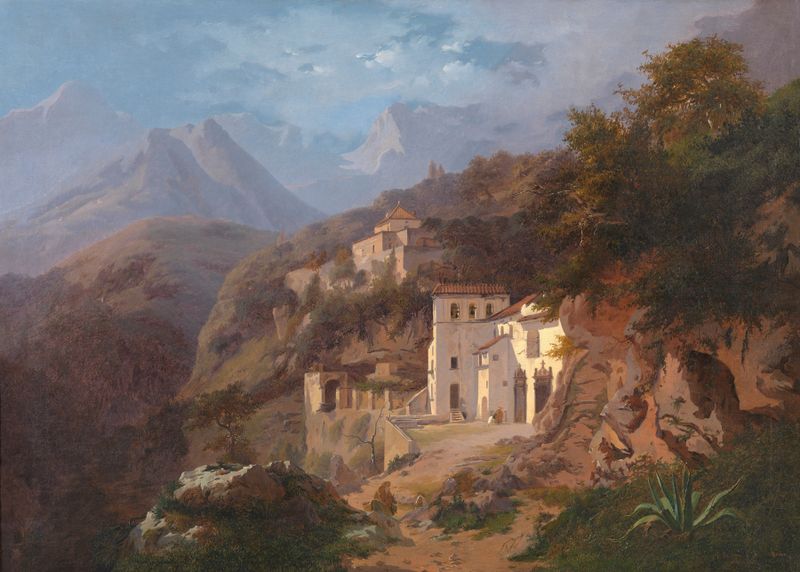
Can paint confess what words never could? Within the canvas of Italian Landscape with Dancing Figures, a deep void beckons, promising both joy and melancholy in equal measure. Focus first on the figures, their bodies captured mid-dance, faces alight with an ineffable joy against the backdrop of rolling hills and a sun-streaked sky. Notice how the swirling forms create a rhythm that draws your eye across the canvas, while the warm palette of ochres and muted greens envelops the scene in a nostalgic embrace. The brushwork is fluid, almost musical, giving life to the figures as they seem to leap from the canvas, inviting viewers into their embrace. Yet beneath the surface, there lies a poignant contrast.
The vibrant celebration of movement and life starkly juxtaposes the stillness of the landscape, suggesting a fleeting moment that is both exhilarating and ephemeral. The figures’ exuberance hints at a joyous escape from reality, while the vast, empty expanse of nature around them suggests solitude, an unspoken longing. The duality of connection and isolation weaves an intricate emotional tapestry, urging viewers to reflect on their own moments of joy against the backdrop of life's inevitable void. In the 19th century, Edouard De Vigne was crafting his vision amidst a burgeoning interest in landscape painting and romantic interpretations of nature.
Working in Italy during a time when artists were deeply influenced by the classical traditions and the picturesque, he sought to capture not just a scene, but the very essence of human emotion entwined with the natural world. This artwork stands as a testament to that era's exploration of joy, freedom, and the inexorable pull of emptiness.