
The Capuchin Monastery in Cava (Salerno) — History & Facts
In the shadows of a monastery, silence envelops the air, holding the weight of history and hope. A moment of rebirth emerges through the cracked façade, where nature begins to reclaim its space amidst the stone. Look to the center of the composition, where the soft light enters through the arched windows, casting gentle shadows on the aged walls. The painter’s brushwork reveals a delicate interplay between the earthy tones of the stone and the vibrant greens creeping in from outside.
Notice how the structure stands resilient, yet humble—its grandeur hinting at both glory and decay, inviting viewers to ponder the stories hidden behind those weathered walls. As you delve deeper, consider the contrast between nature's persistent growth and the monastery's steadfastness. The creeping vines symbolize renewal, a stark reminder that life flourishes even in the most austere settings. The juxtaposition of the serene architecture against the wild tendrils of flora evokes a sense of duality—a reverence for the past intertwined with the promise of tomorrow. In 1838, Edouard De Vigne painted this piece while living in Cava de' Tirreni, Italy.
The art world was witnessing a transition from neoclassicism to romanticism, and De Vigne was influenced by the picturesque landscapes of the region. This work reflects his engagement with the natural world, capturing the spirit of a time marked by both nostalgia and the exploration of a new aesthetic vision.
More Artworks by Edouard De Vigne
Browse all →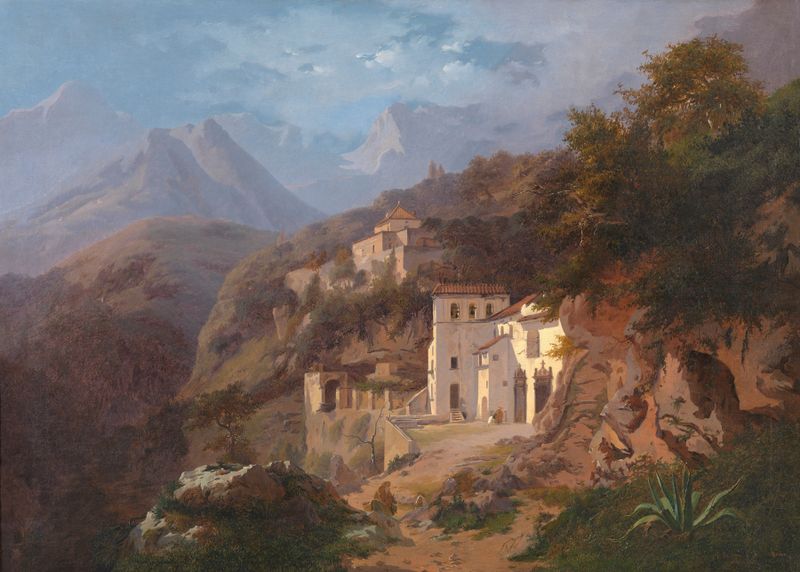
More Architecture Art
Browse all →
The statue of Liberty
Frédéric Auguste Bartholdi

View of Houses in Delft, Known as ‘The Little Street’
Johannes Vermeer

View of Houses in Delft, Known as ‘The Little Street’
Johannes Vermeer

The Cathedral in Rouen. The portal, Grey Weather
Claude Monet

The yellow house
Vincent van Gogh

The Church in Auvers-sur-Oise, View from the Chevet
Vincent van Gogh