Berglandschap met doorwaadbare plaats — History & Facts
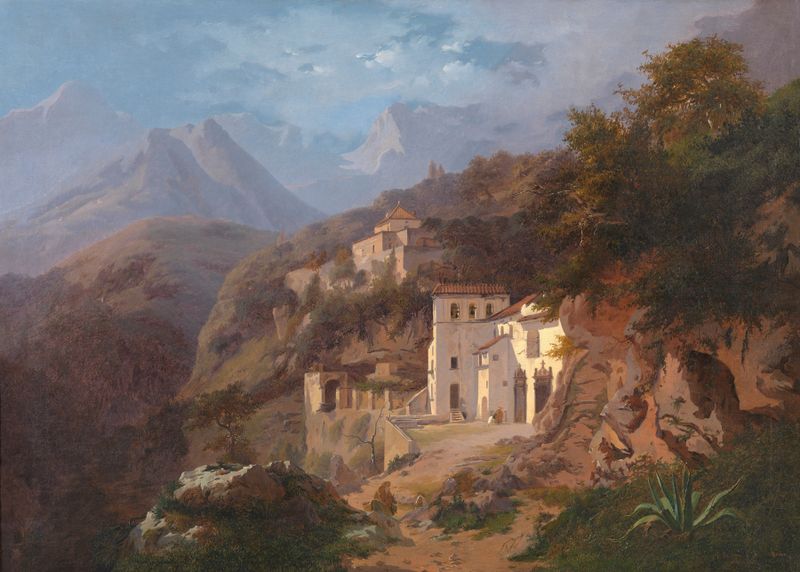
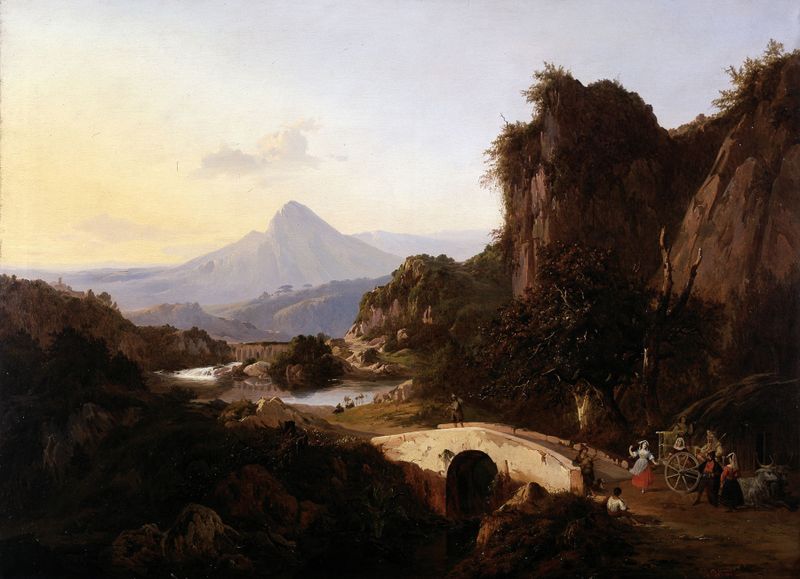
Could a single brushstroke hold eternity? In the ethereal landscape presented, every stroke weaves a narrative of longing and exploration, as if the essence of desire itself has been captured on canvas. Look to the lower left where the gentle curve of the river invites your eyes to travel further into the scene. Notice how the soft blues and greens blend seamlessly, creating a harmonious balance between the tranquil sky and the lush earth. The delicate interplay of light and shadow breathes life into the foliage, while the dappled sunlight casts a serene glow across the water, emphasizing its reflective surface, which mirrors the world above.
Each element is meticulously rendered, revealing the artist's commitment to capturing the sublime beauty of nature. Within this idyllic setting lies a tension between serenity and yearning. The winding river symbolizes a journey, perhaps an unfulfilled desire for freedom or escape. The distant mountains stand as silent witnesses to transient moments, hinting at the infinite possibilities that lie beyond the horizon.
Subtle details like the wispy clouds and the rustling leaves evoke a sense of peace, yet they also underscore an emotional depth, reminding viewers of the transient nature of beauty and fulfillment. Edouard De Vigne created this piece between 1818 and 1866, a time when Romanticism flourished in the art world. Living in Belgium, he was deeply influenced by the sweeping landscapes of his homeland, which often reflected themes of exploration and introspection. This period saw artists pushing the boundaries of emotional expression, seeking to evoke feelings of desire and longing in their work, which De Vigne embodies with remarkable finesse in this landscape.