
The Catskill Valley — History & Facts
The first thing to catch the eye in The Catskill Valley is the way the sun hovers low above the horizon, its pale disk diffusing a gentle light that washes the entire landscape in gold. The viewer’s gaze is drawn from the luminous sky down to the reflective surface of the river, which curves softly through the valley. A lone figure walks along a path at the left, dwarfed by the towering trees, their presence a quiet reminder of human life set against the vastness of nature.
The careful gradation of light and shadow, from the sunlit water to the darker, denser foliage, guides the eye through a scene that feels both intimate and expansive. Every detail, from the texture of the rocks in the foreground to the distant haze of the mountains, is orchestrated to create a sense of calm and possibility. Painted in 1863, this work belongs to the era when American artists like Asher Brown Durand were helping to define the Hudson River School—a movement that celebrated the grandeur and promise of the American landscape. Such paintings were often commissioned or collected by those who saw in these vistas a symbol of national identity and manifest destiny, even as the Civil War was reshaping the country’s future.
The Catskills, with their rolling hills and serene waterways, became a favored subject for artists seeking to capture the spirit of a rapidly changing nation. While history has kept few traces of this specific painting’s journey, its presence in a digital collection today invites us to linger, to follow the river’s path, and to imagine the world as Durand saw it—full of quiet drama and endless horizons.
More Artworks by Asher Brown Durand

A Sycamore Tree, Plaaterkill Clove (The Sycamore, Kaaterskill Clove)
Asher Brown Durand
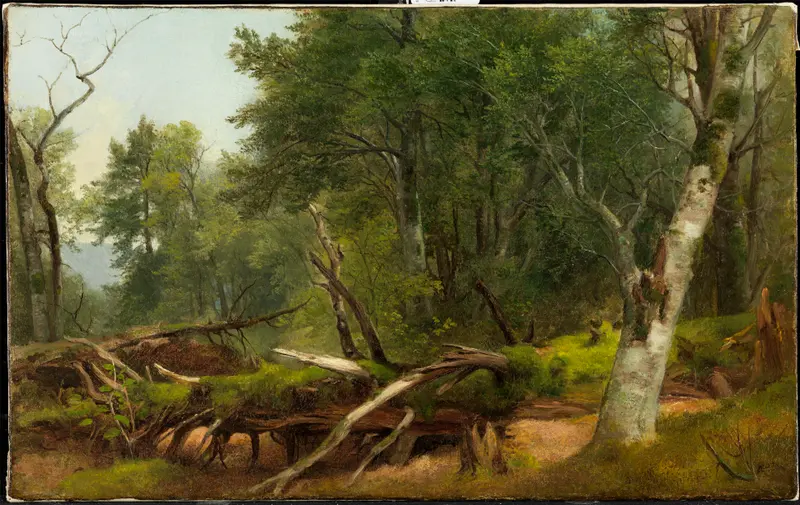
Forest Scene in the Catskills
Asher Brown Durand
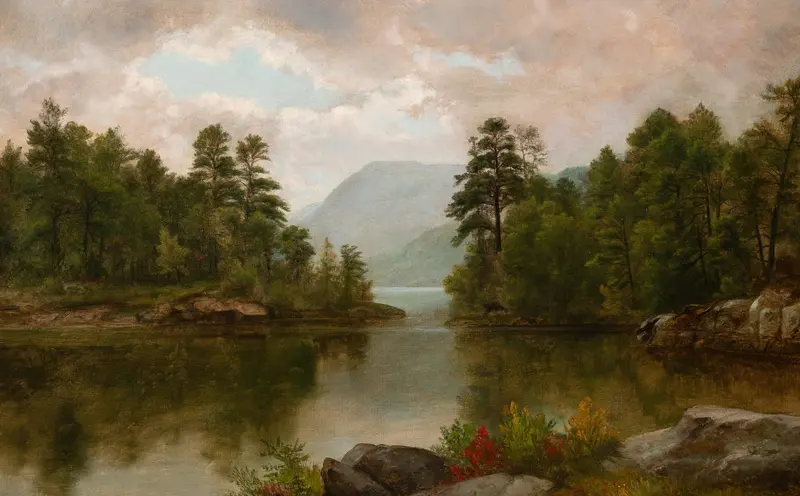
The Narrows, Lake George
Asher Brown Durand
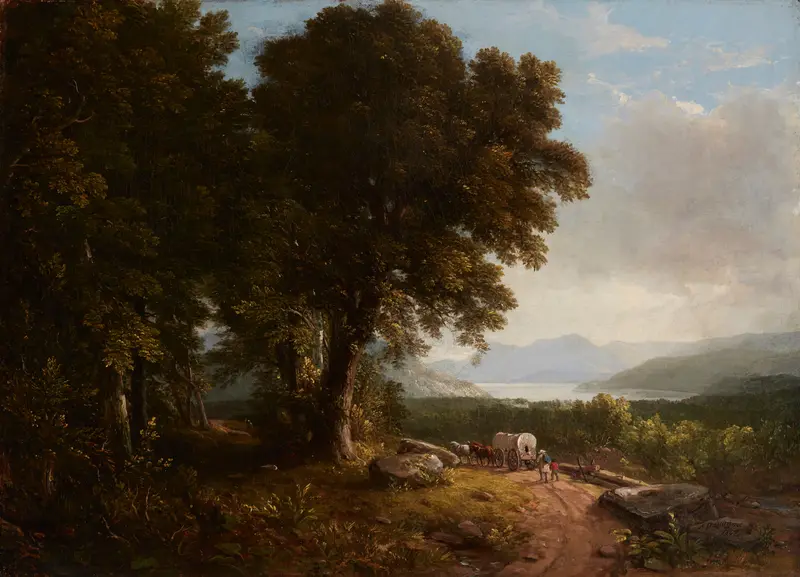
Landscape with Covered Wagon
Asher Brown Durand
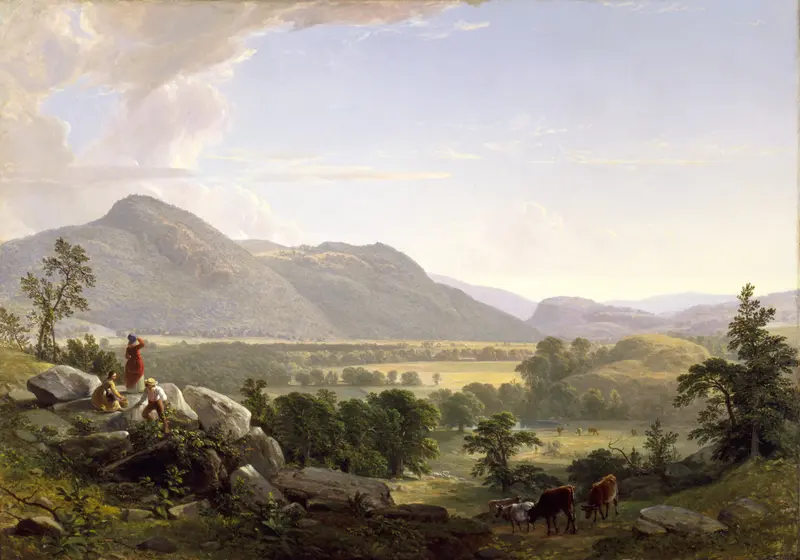
Dover Plains, Dutchess County, New York
Asher Brown Durand
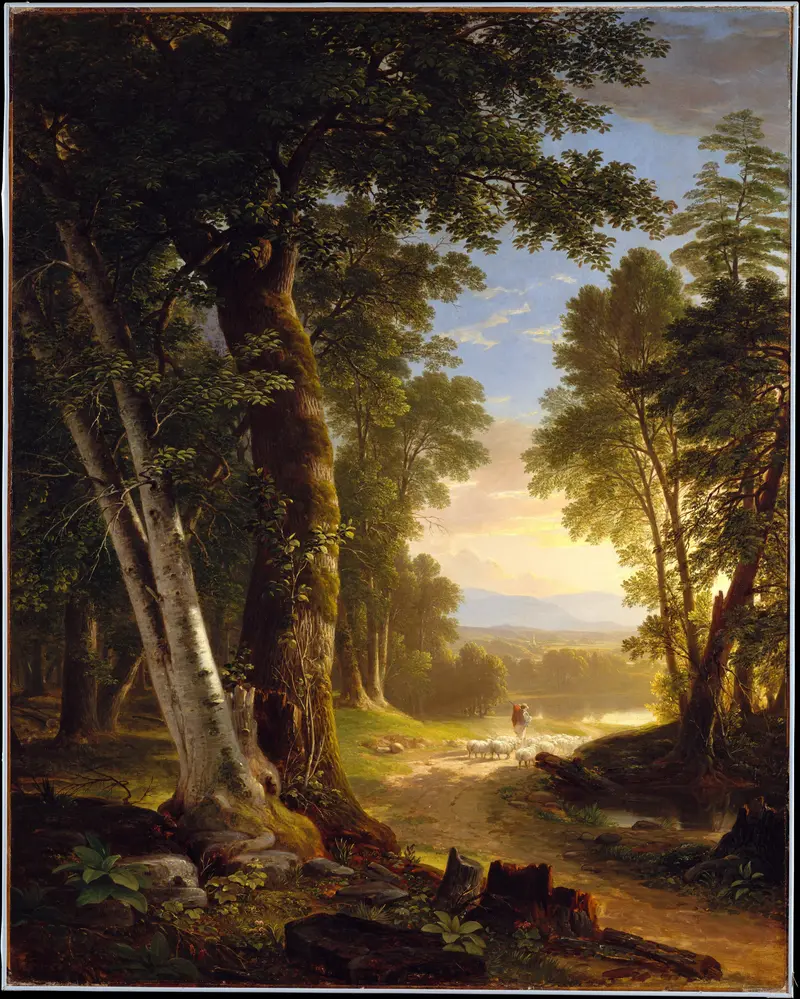
The Beeches
Asher Brown Durand

Kaaterskill Landscape
Asher Brown Durand
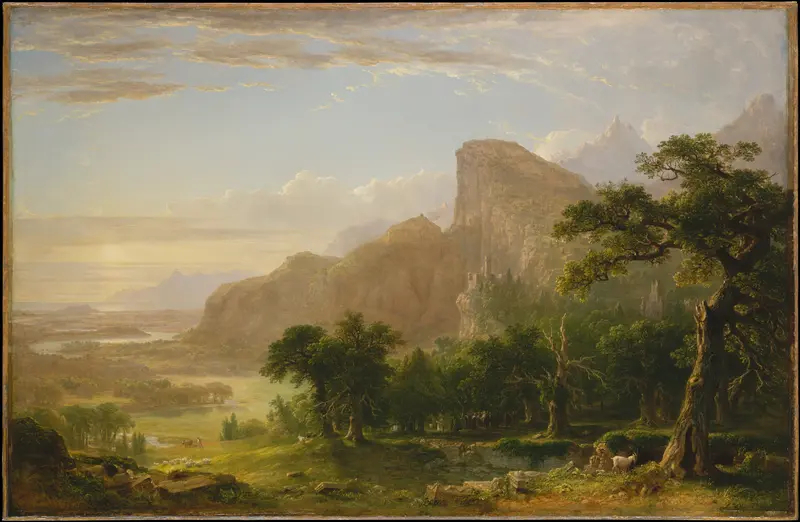
Landscape—Scene from ‘Thanatopsis’
Asher Brown Durand
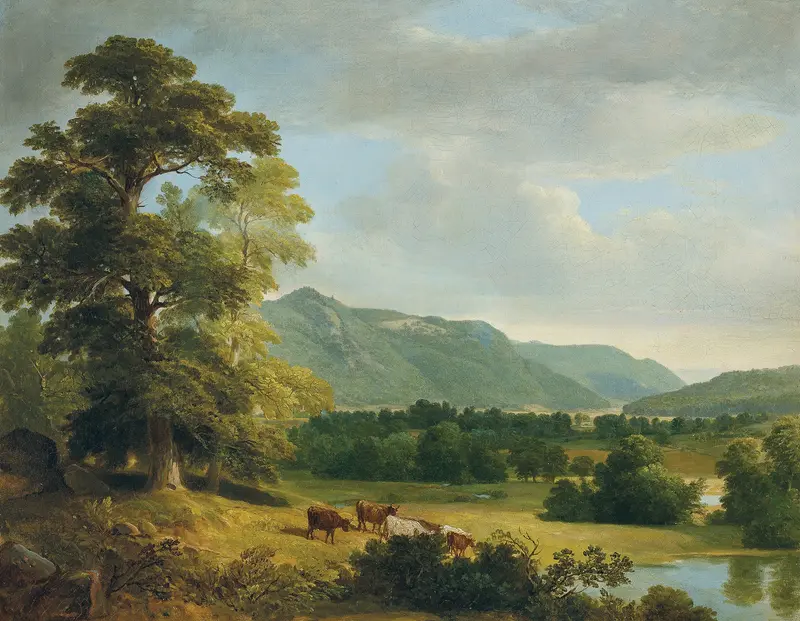
Landscape Study, Dover Plains, New York
Asher Brown Durand
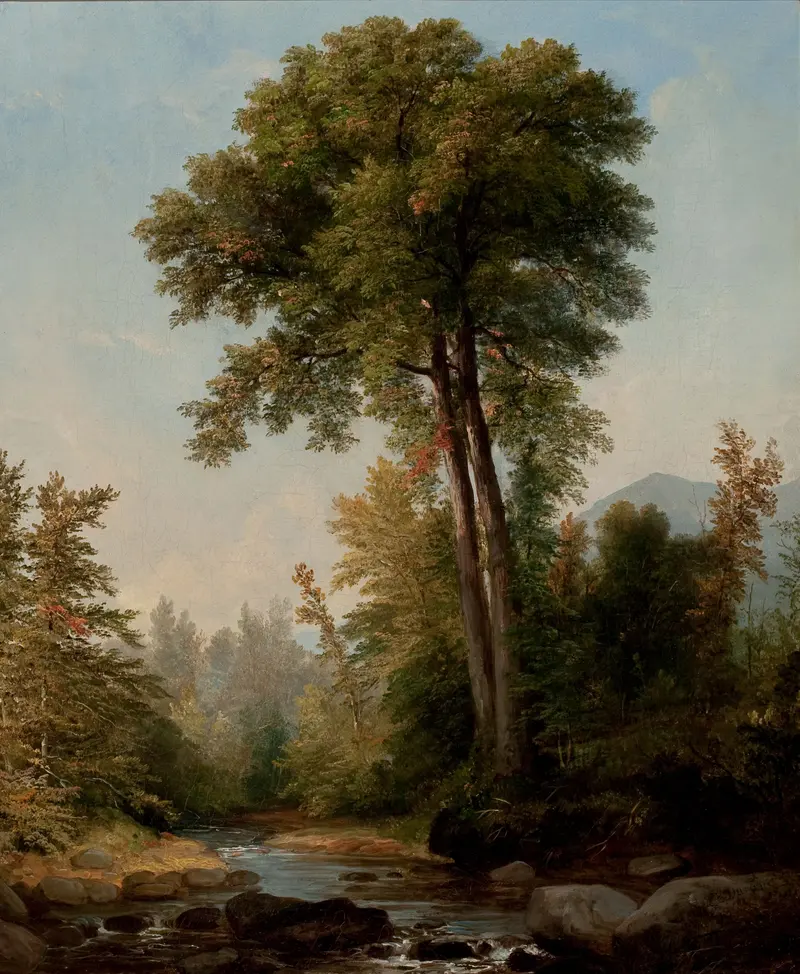
A Natural Monarch
Asher Brown Durand
More Landscape Art

The Starry Night
Vincent van Gogh

View of Delft
Johannes Vermeer

Water Lilies
Claude Monet

The Grand Canal, Venice, looking north-west from the Ca' Corner to the Ca' Contarini degli Scrigni, with the campanile of Santa Maria della Carità
Canaletto

Windsor Castle
Canaletto

The Grand Canal looking North-East from the Palazzo Dolfin-Manin to the Rialto Bridge
Canaletto