
The cave beneath the Holy rock, Jerusalem — History & Facts
In the depths of Jerusalem, light and shadow dance, revealing the whispers of history hidden beneath the surface. Each brushstroke captures movement, suggesting that the very stones of this sacred site pulse with life and memory. Look to the center of the canvas where the cave’s entrance opens wide, inviting the viewer to venture in. Haag balances deep, earthy tones with hints of golden light, creating a striking contrast that pulls your gaze forward.
Notice how the subtle play of light illuminates the jagged edges of the rock, enhancing the texture and inviting an exploration of the contours that define this ancient space. The composition draws you in, yet the darkness lurks just beyond, hinting at secrets that remain unspoken. As you delve deeper into this work, a sense of tension emerges between the sacred and the mundane. The cave, often seen as a refuge, here becomes a symbol of human experience, sheltering stories of faith, struggle, and endurance.
The movement suggested by the brushstrokes conveys a connection to the past, as if one could step into the narrative and feel the weight of centuries pressing down upon them. The interplay of light and shadow serves as a reminder of the duality that exists in all sacred places—hope intertwined with sorrow. In 1859, Haag created this piece while exploring the Holy Land, a period when Western artists were increasingly captivated by the East. This fascination was marked by a desire to capture the essence of biblical narratives and ancient landscapes.
The artist's journey was intertwined with the romanticism of the time, as he sought to bring forth the allure and mystique of Jerusalem, forever changing perceptions of this storied city.
More Artworks by Carl Haag
Browse all →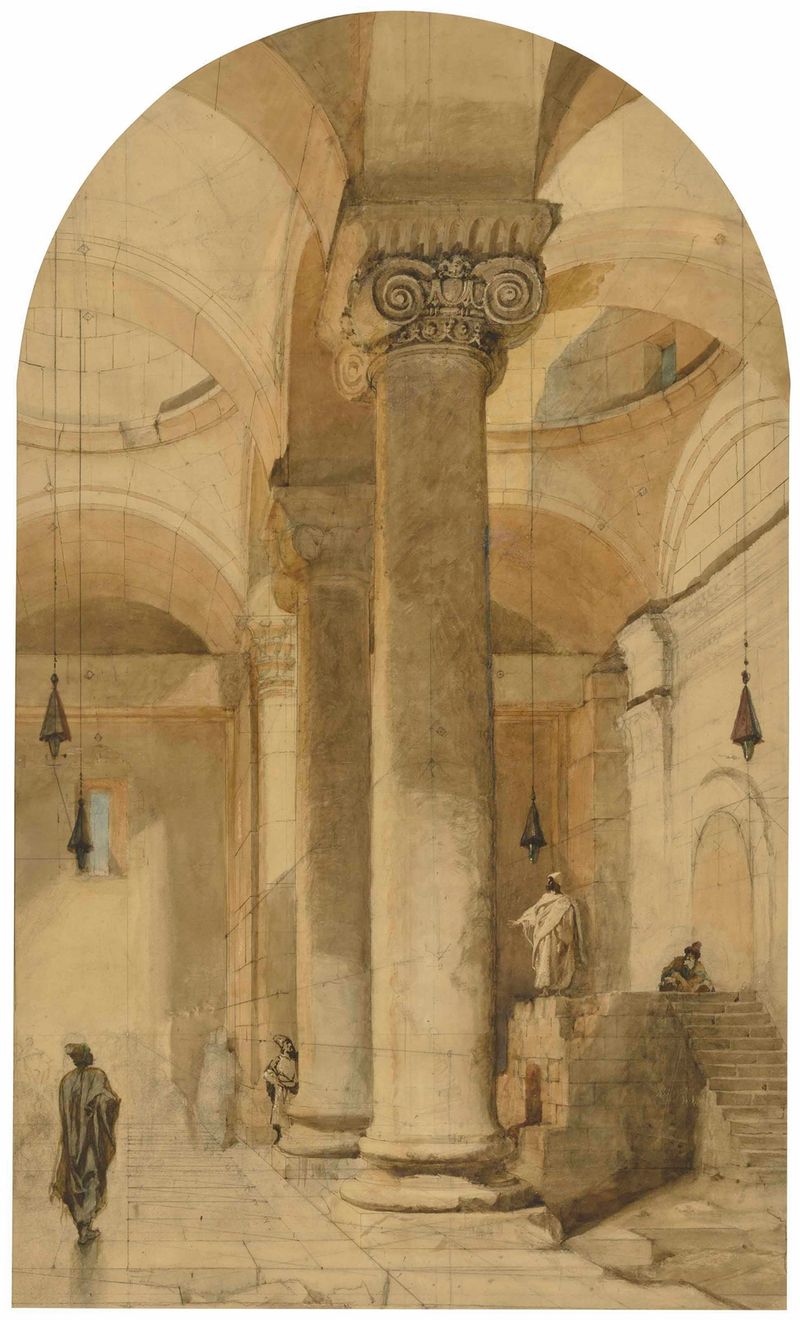
Interior of the Golden Gateway in the Temple area of Jerusalem
Carl Haag
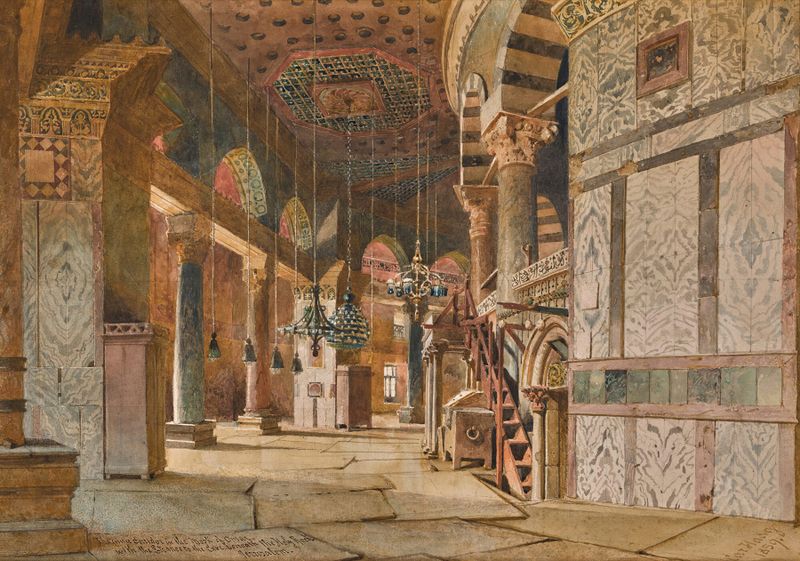
The inner corridor of the dome of the rock, Jerusalem
Carl Haag
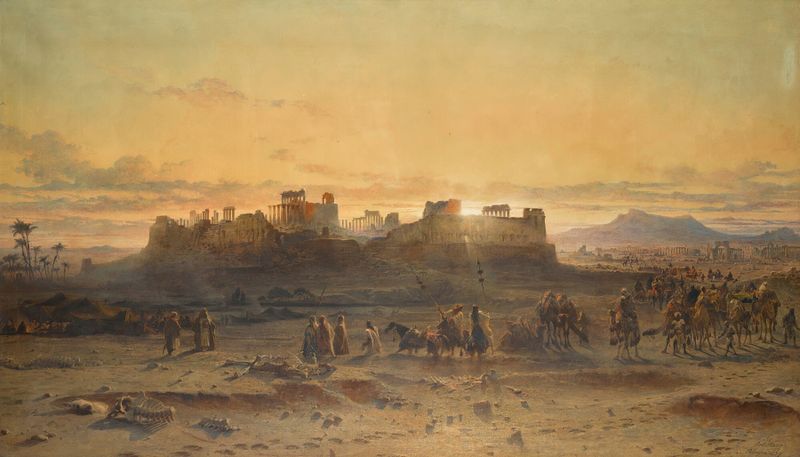
The ruins of the temple of the sun, Palmyra
Carl Haag
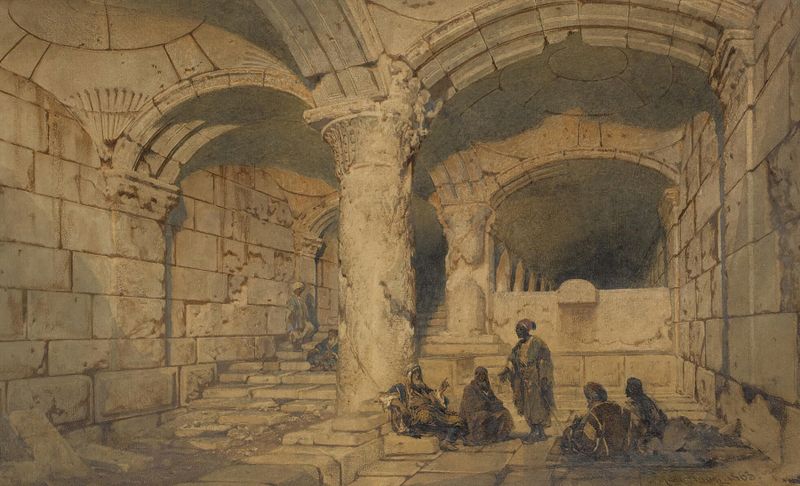
Arab figures in a vault within the Al-aqsa mosque, Jerusalem
Carl Haag
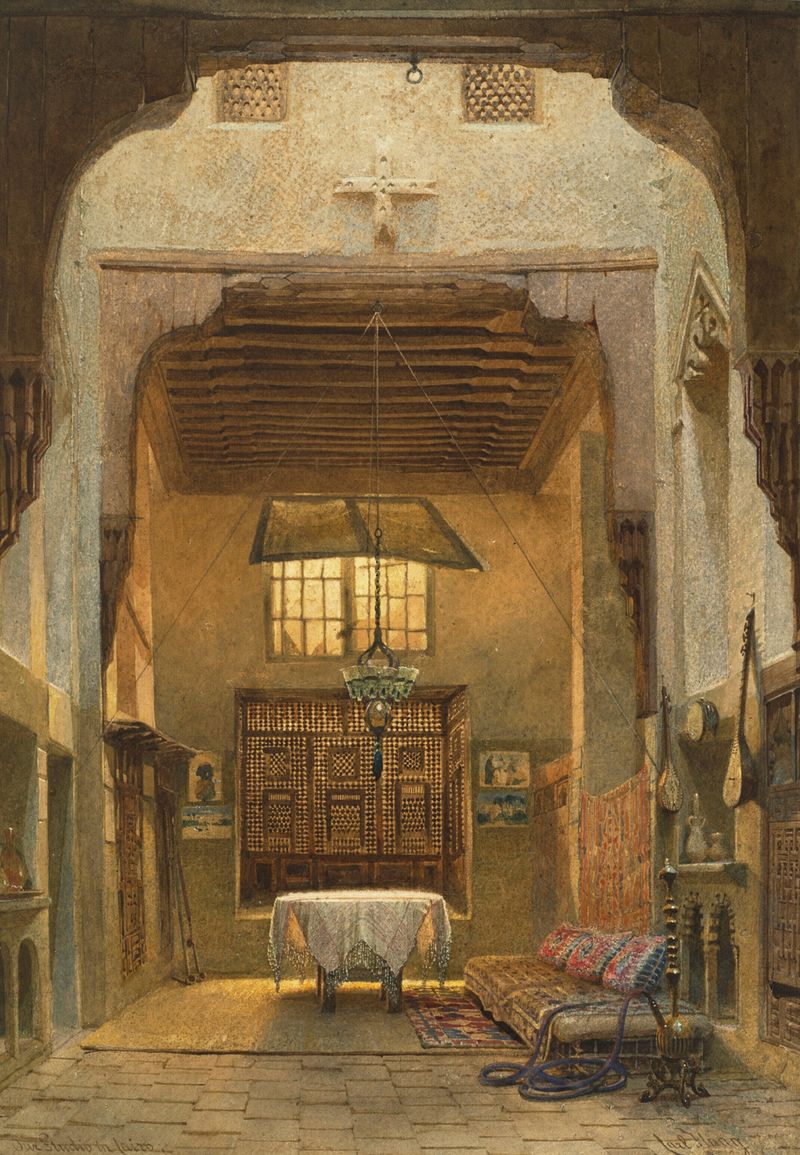
The artist’s studio in Cairo
Carl Haag
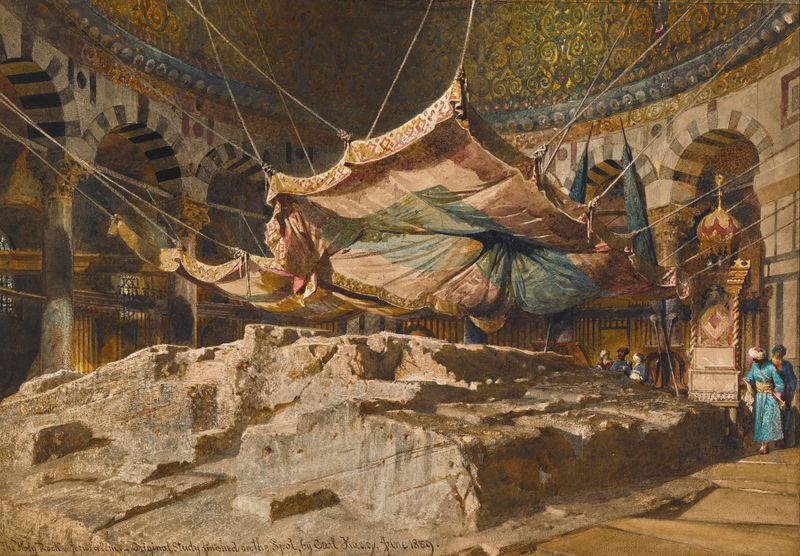
The Holy rock, Jerusalem
Carl Haag
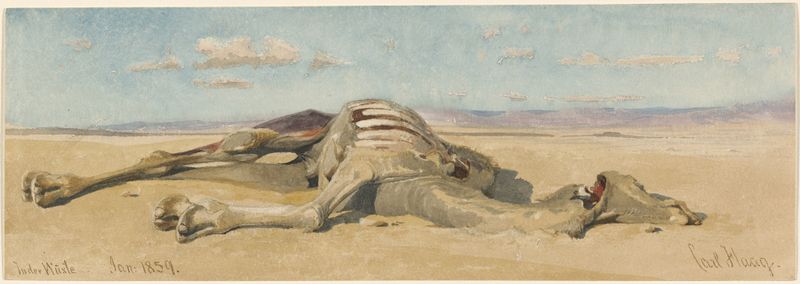
In der Wüste (In the Desert)
Carl Haag





