
The ruins of the temple of the sun, Palmyra — History & Facts
Who listens when art speaks of silence? In the echoes of ancient ruins, the divine whispers through time, inviting us to ponder what once was. Look to the foreground, where the crumbled columns stand like sentinels, mute but majestic against the backdrop of an expansive sky. The muted earth tones of the stone contrast with the luminous blues and golden hues of the atmosphere, creating a meditative interplay of light and shadow. Notice how Haag skillfully captures the texture of the stones, each chisel mark a testament to the artistry of a forgotten civilization, while the gentle play of light suggests the passage of time itself. The painting evokes a sense of loss and reverence, inviting contemplation on the transience of both human ambition and natural beauty.
The towering ruins, partially engulfed by the desert, embody contrasts between strength and fragility, permanence and decay. This duality resonates deeply, hinting at the resilience of memory and the sacredness of places once vibrant with life. In 1859, Haag painted this piece amidst a growing fascination with the Near East, a time when archaeological discoveries were igniting imaginations across Europe. Having traveled extensively in the region, the artist captured not only the visual essence of Palmyra but also the broader cultural dialogues surrounding antiquity and its enduring impact on contemporary thought.
His work serves as a bridge to understanding our shared past, urging us to consider the divine narratives woven into the fabric of history.
More Artworks by Carl Haag
Browse all →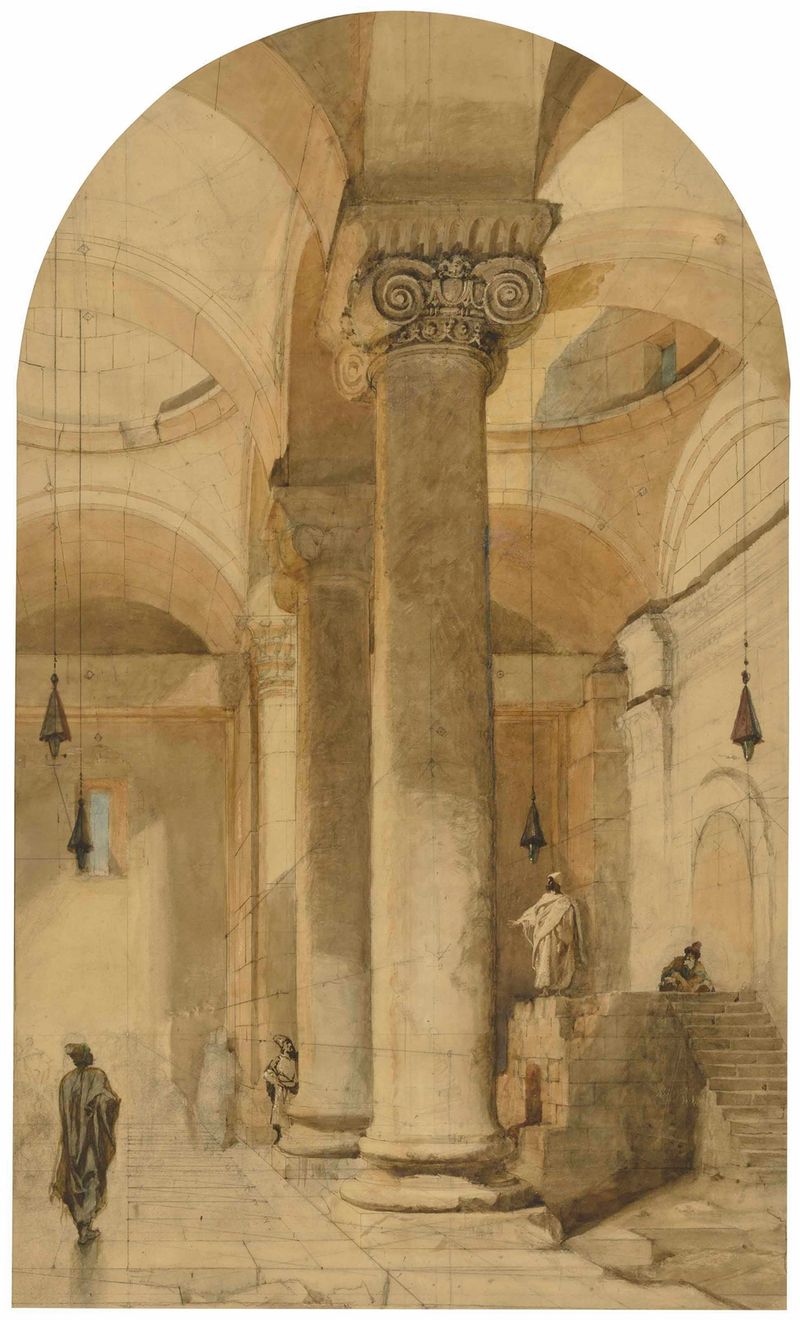
Interior of the Golden Gateway in the Temple area of Jerusalem
Carl Haag
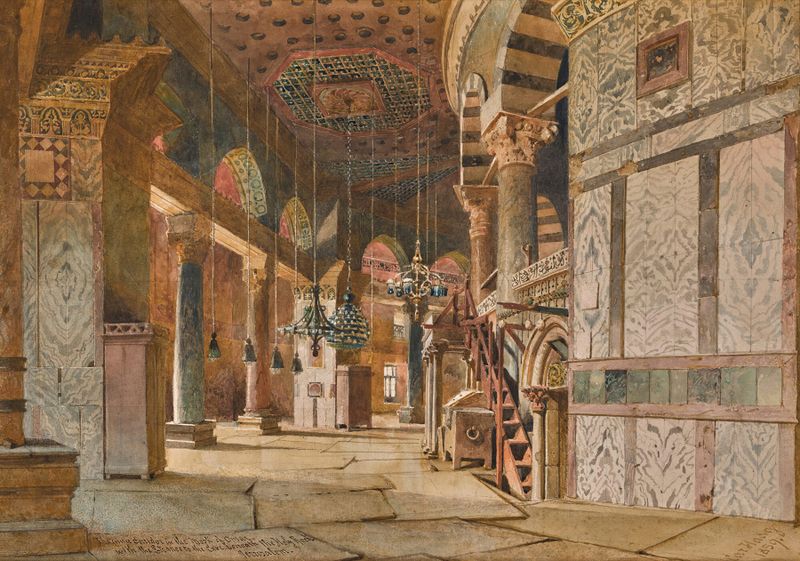
The inner corridor of the dome of the rock, Jerusalem
Carl Haag
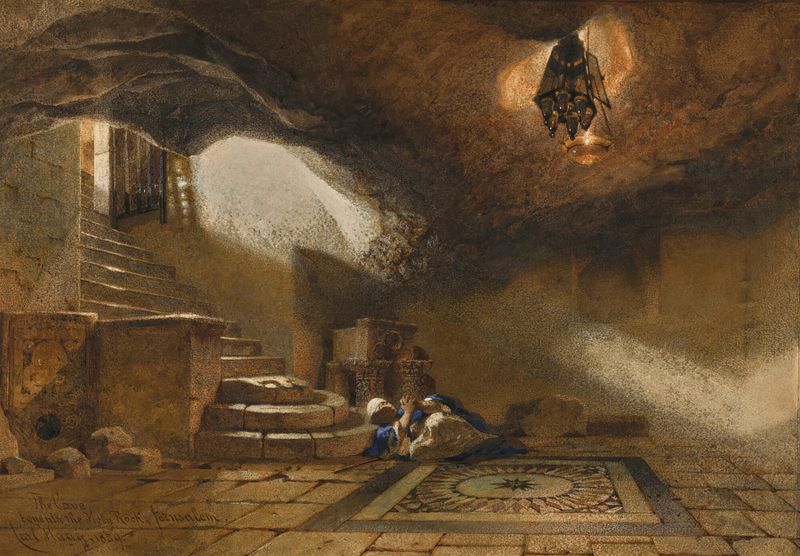
The cave beneath the Holy rock, Jerusalem
Carl Haag
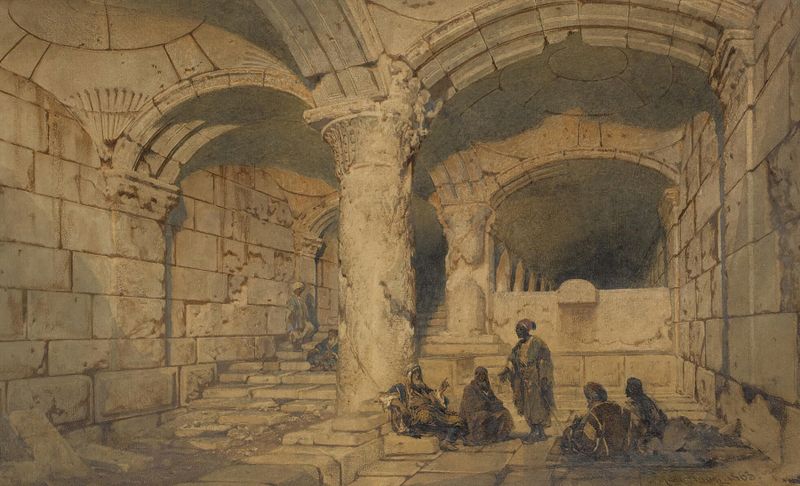
Arab figures in a vault within the Al-aqsa mosque, Jerusalem
Carl Haag
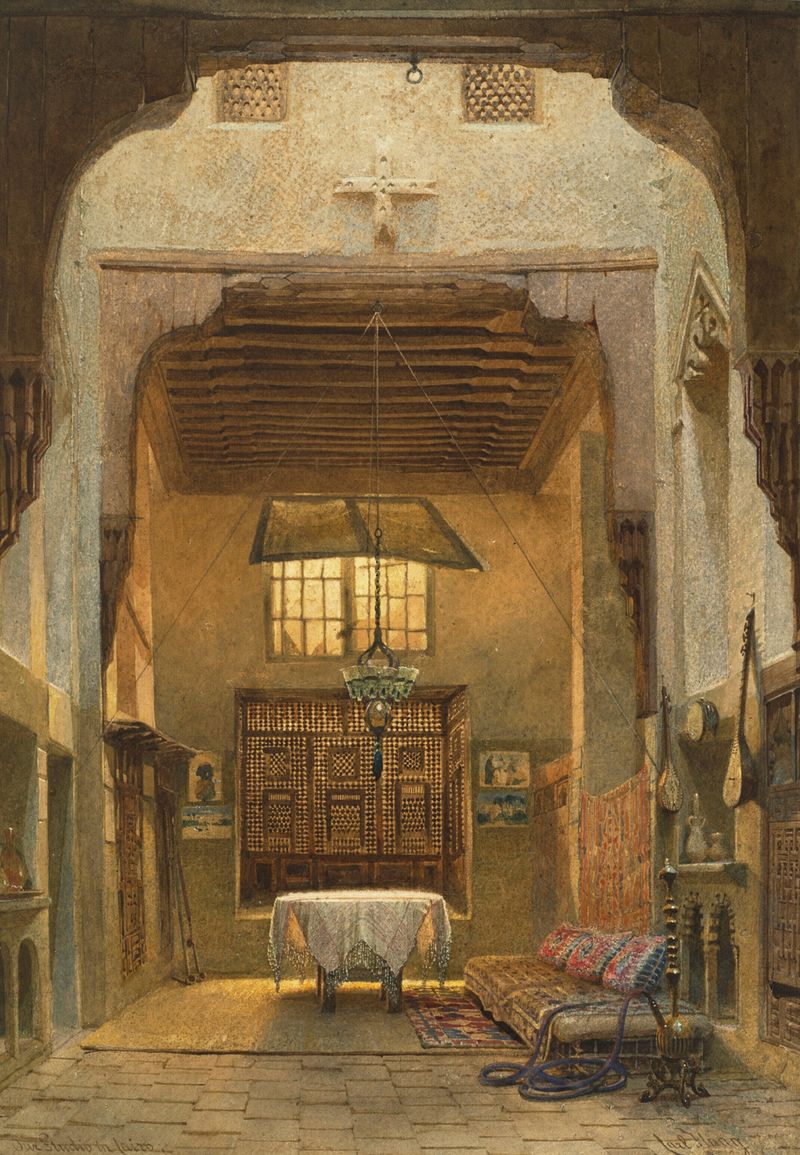
The artist’s studio in Cairo
Carl Haag
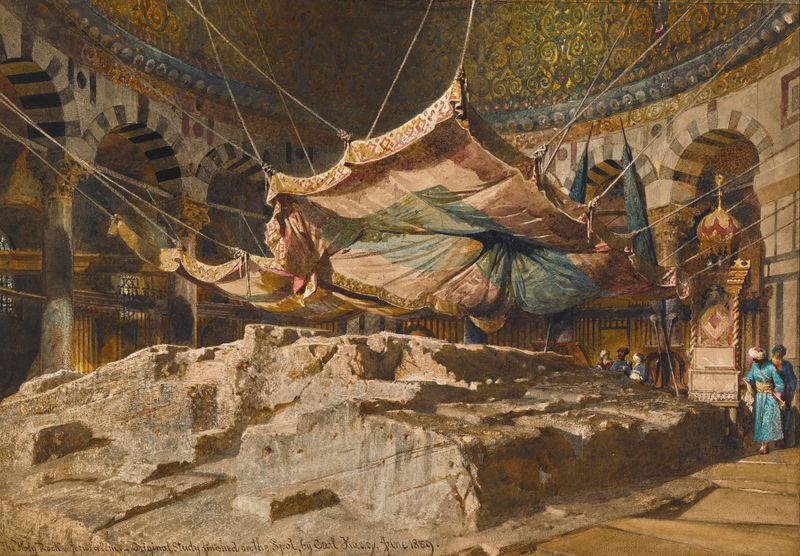
The Holy rock, Jerusalem
Carl Haag
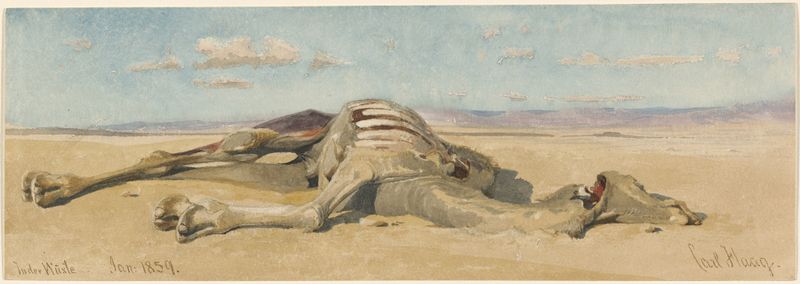
In der Wüste (In the Desert)
Carl Haag
More Architecture Art
Browse all →
The statue of Liberty
Frédéric Auguste Bartholdi

View of Houses in Delft, Known as ‘The Little Street’
Johannes Vermeer

View of Houses in Delft, Known as ‘The Little Street’
Johannes Vermeer

The Cathedral in Rouen. The portal, Grey Weather
Claude Monet

The yellow house
Vincent van Gogh

The Church in Auvers-sur-Oise, View from the Chevet
Vincent van Gogh