
The château of Pupetière — History & Facts
In the quiet embrace of its hues and strokes, longing lingers, an unfulfilled desire woven into the very fabric of the scene. Look to the left, where the soft glow of the setting sun cascades over the château's weathered facade, illuminating its intricate details and casting deep, contemplative shadows. The gentle brushwork captures the delicate interplay of light and color, inviting you to trace the contours of the building with your eyes. Notice how the vibrant greens of the surrounding trees juxtapose with the earthy tones of the structure, creating a sense of harmony and nostalgia, as if time itself has paused in reverence. Delve deeper into the painting, and you'll find whispers of untold stories hidden in the stillness.
The château stands not merely as an architectural marvel but as a symbol of aspiration, representing desires unfulfilled, dreams of grandeur, and the passage of time. The still water in the foreground mirrors the sky, reflecting both the beauty and transience of life, while lingering details—like a lone bird in flight—hint at the yearning for freedom beyond the confines of this serene yet static moment. In 1873, Jongkind painted this evocative piece in France, amidst the burgeoning Impressionist movement. He found himself at a crossroads, influenced by the changing tides of art and his own quest for recognition.
This work encapsulates not only his deep appreciation for landscape but also a desire to capture fleeting moments of beauty and emotion, reflecting both personal aspirations and the broader artistic currents of his time.
More Artworks by Johan Barthold Jongkind
Browse all →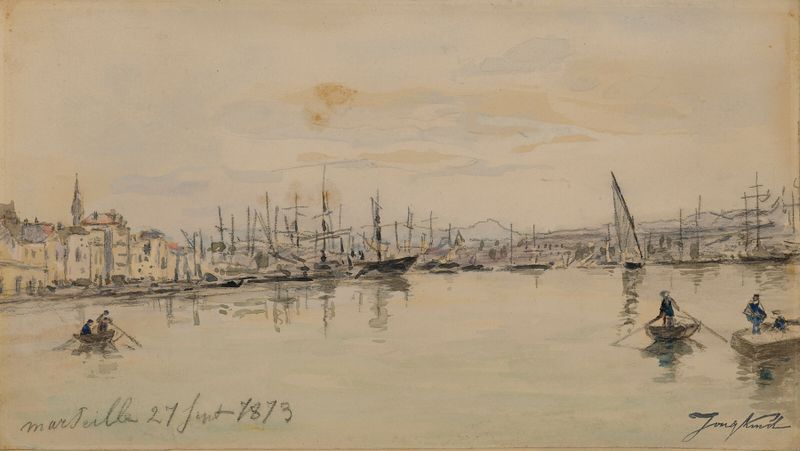
Le Port de Marseille
Johan Barthold Jongkind

Canal Saint-Martin
Johan Barthold Jongkind

Countryside near Brezins, between Grenoble and Vienne
Johan Barthold Jongkind

Notre-Dame vue du quai de la Tournelle
Johan Barthold Jongkind

Environs de Grenoble
Johan Barthold Jongkind

Clair de lune à Overschie (environs de Rotterdam)
Johan Barthold Jongkind

Port de Honfleur
Johan Barthold Jongkind
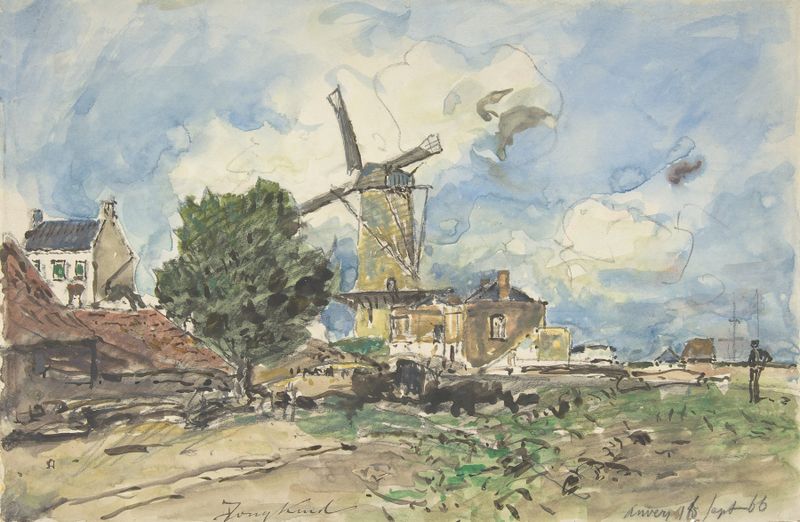
Wind Mill at Antwerp
Johan Barthold Jongkind

Le Havre
Johan Barthold Jongkind

The Church of Overschie
Johan Barthold Jongkind
More Architecture Art
Browse all →
The statue of Liberty
Frédéric Auguste Bartholdi

View of Houses in Delft, Known as ‘The Little Street’
Johannes Vermeer

View of Houses in Delft, Known as ‘The Little Street’
Johannes Vermeer

The Cathedral in Rouen. The portal, Grey Weather
Claude Monet

The yellow house
Vincent van Gogh

The Church in Auvers-sur-Oise, View from the Chevet
Vincent van Gogh