
The Clearance Of The Louvre Colonnade, During The Demolition Of The Ruins Of The Hôtel Du Petit Bourbon — History & Facts
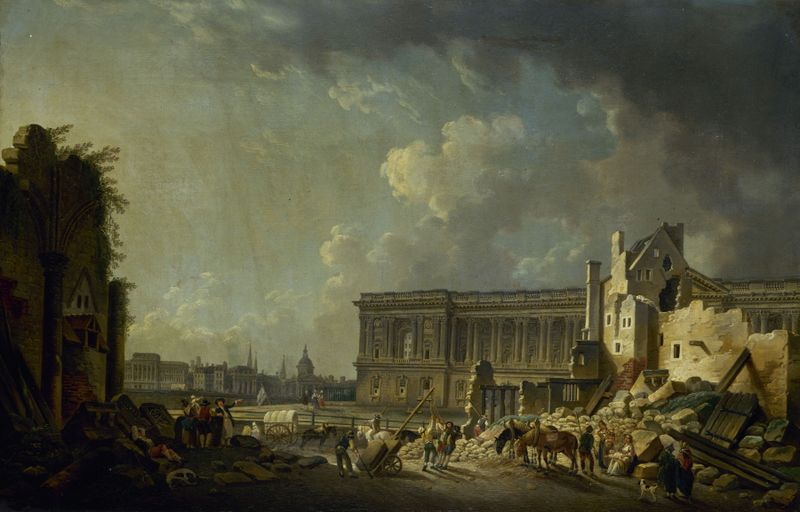
Can paint confess what words never could? In The Clearance Of The Louvre Colonnade, During The Demolition Of The Ruins Of The Hôtel Du Petit Bourbon, the canvas sings a tale of transformation, where the past and present collide in an exquisite dance of loss and rebirth. Look to the left at the towering colonnade, its grand architectural lines both strong and softened by the gentle light filtering through the clouds. The artist employs a muted palette, dominated by warm earth tones and shades of gray, creating a solemn atmosphere that envelops the scene. Notice the careful brushwork that captures the play of light across the stone surfaces, highlighting the contrast between the solid structures and the ephemeral nature of the demolition taking place.
This juxtaposition draws the viewer's eye deeper into the unfolding narrative. Amidst the chaos of destruction, there is an underlying sense of ecstasy in the act of creation. The workers, with their laborious gestures, seem to embrace the act of tearing down as a necessary passage toward something new. The shadows cast by the crumbling walls whisper of memories, yet they are countered by the luminous sky, which heralds a brighter future.
The tension between ruin and renewal is palpable, suggesting a broader commentary on progress and the cyclical nature of art and architecture. Demachy painted this work during a transformative period for France, when the Louvre was evolving from a royal palace to a public museum. This era, marked by political upheaval and artistic innovation, saw the artist grappling with ideas of heritage and modernity. The artwork, though undated, reflects the spirit of its time, embodying a profound commentary on the historical shifts and the emotional weight carried by spaces long cherished.
More Artworks by Pierre-Antoine Demachy
Browse all →
Démolition de la Bastille, le 17 juillet 1789
Pierre-Antoine Demachy
Dégagement de la colonnade du Louvre
Pierre-Antoine Demachy

La colonnade du Louvre, nouvellement dégagée
Pierre-Antoine Demachy
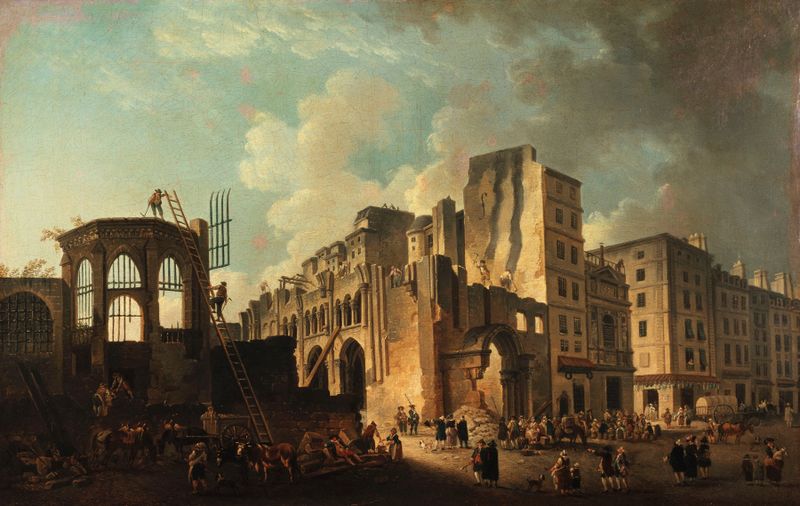
La démolition de l’église des Saints-Innocents, rue Saint-Denis
Pierre-Antoine Demachy
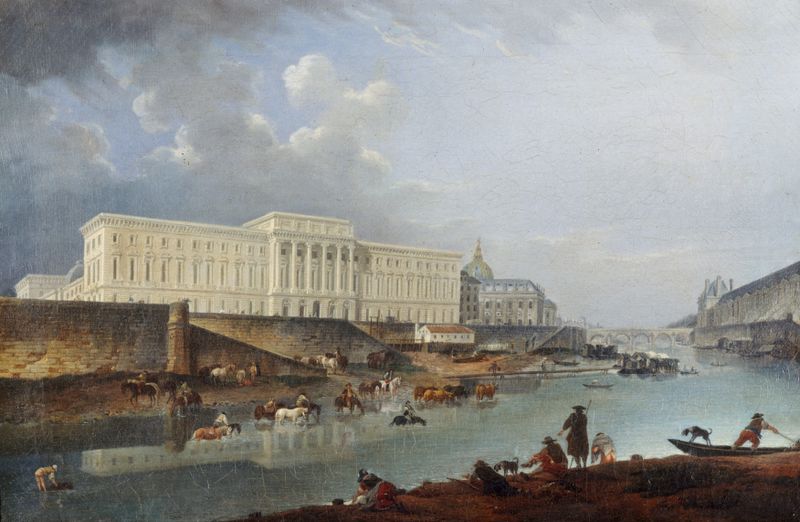
L’Hôtel de la Monnaie, le quai de Conti et la Seine, vus de la pointe de la Cité
Pierre-Antoine Demachy

Dégagement de la colonnade du Louvre
Pierre-Antoine Demachy

L’Hôtel de la Monnaie et le Louvre, vus du Pont-Neuf, vers 1800
Pierre-Antoine Demachy
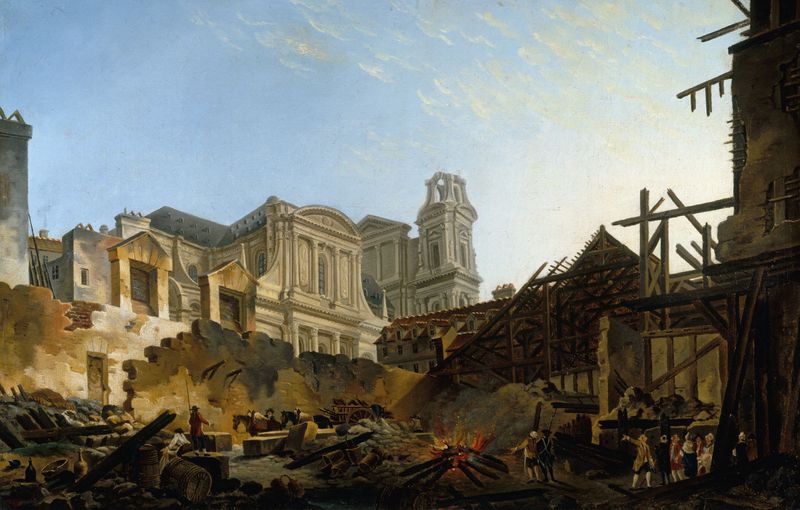
La foire Saint-Germain après l’incendie de la nuit du 16 au 17 mars 1762
Pierre-Antoine Demachy

La Foire Saint-Germain pendant l’incendie (nuit du 16 au 17 mars 1762)
Pierre-Antoine Demachy
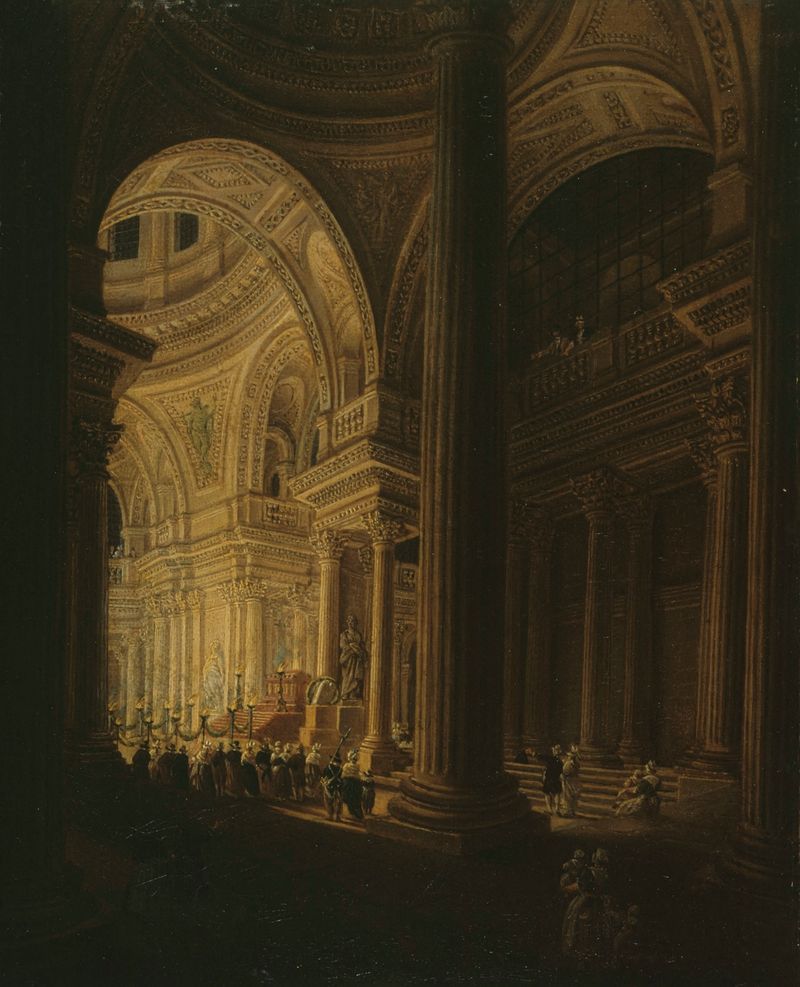
Le sarcophage de Jean-Jacques Rousseau, exposé au Panthéon (20 vendémiaire an III – 11 octobre 1794)
Pierre-Antoine Demachy
More Architecture Art
Browse all →
The statue of Liberty
Frédéric Auguste Bartholdi

View of Houses in Delft, Known as ‘The Little Street’
Johannes Vermeer

View of Houses in Delft, Known as ‘The Little Street’
Johannes Vermeer

The Cathedral in Rouen. The portal, Grey Weather
Claude Monet

The yellow house
Vincent van Gogh

The Church in Auvers-sur-Oise, View from the Chevet
Vincent van Gogh