
The Cliffs, Foilhummerum Bay, Valentia, the Point at Which the Shore-end of the Cable was Landed on July 22nd, 1865 — History & Facts
Where does light end, and longing begin? In the ethereal landscapes painted by Robert Charles Dudley, one finds echoes of both the serene and the tumultuous, where nature intertwines with human endeavor and nostalgia. Focus first on the rich, textured cliffs that dominate the scene. Look to the left, where brilliant greens and browns meet the stark, craggy rocks, each brushstroke laden with the weight of time. The sea, a vivid azure, stretches out to meet the horizon, beckoning the viewer to consider the endless possibilities that lie beyond.
Notice how the play of light dances on the water’s surface, creating a shimmering path that leads the eye toward the distant shoreline, where history and nature converge. Yet beneath this beautiful facade lies a deeper narrative. The cliffs, though majestic, symbolize the enduring struggle against the elements, a testament to both nature’s power and humanity’s resilience. The gentle waves lapping against the shore resonate with a sense of longing for connection, echoing the historical significance of the cable's landing that day in 1865.
Dudley’s palette, vibrant yet melancholic, captures a moment of pause before the onset of change, encapsulating the tension between the unyielding landscape and the fleeting nature of human ambition. In 1865, while residing in London, Dudley created this piece amidst a burgeoning interest in maritime subjects and technological advancements. The successful landing of the transatlantic cable marked a pivotal moment in communication history, as it connected continents and forever altered the way people interacted. This painting encapsulates that fusion of progress and the timeless beauty of the natural world, as Dudley sought to document an era on the cusp of transformation.
More Artworks by Robert Charles Dudley
Browse all →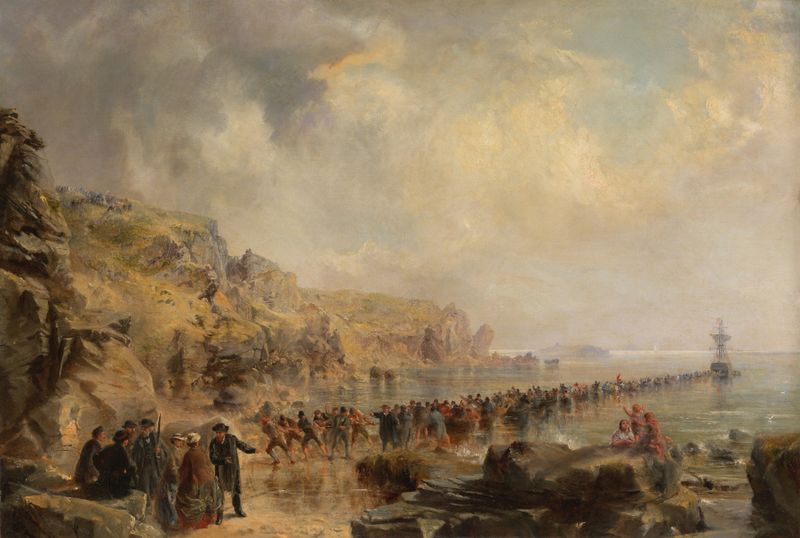
Landing the Shore End of the Atlantic Cable
Robert Charles Dudley
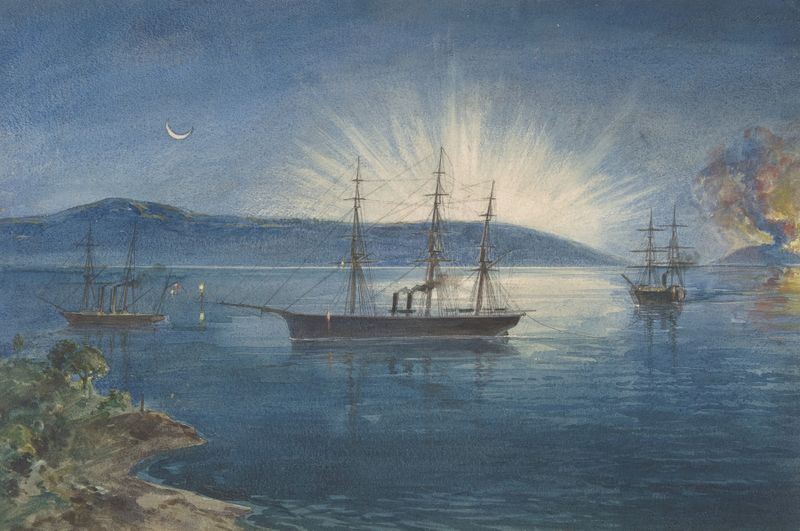
The Bay of Bull Arms, Trinity Bay, Newfoundland, Bonfires Lighted on the Hills to Notify of the Arrival of the Cable Fleet on August 5th, 1858
Robert Charles Dudley
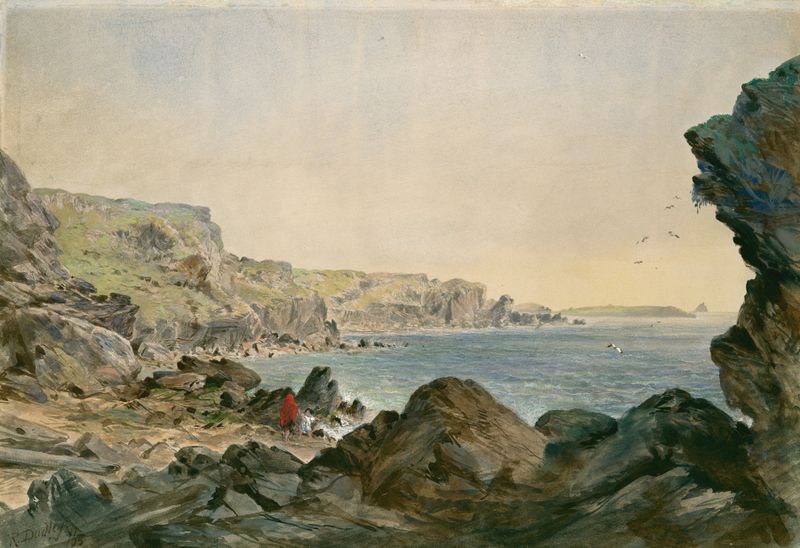
Foilhummerum Bay, Valentia, Looking Seawards from the Point at Which the Cable Reaches the Shore of Ireland
Robert Charles Dudley
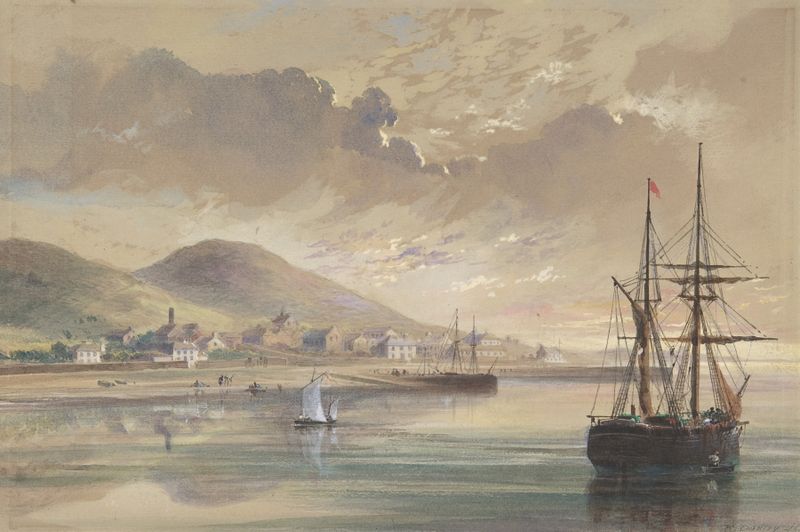
Valentia in 1857-1858 at the Time of the Laying of the Former Cable
Robert Charles Dudley
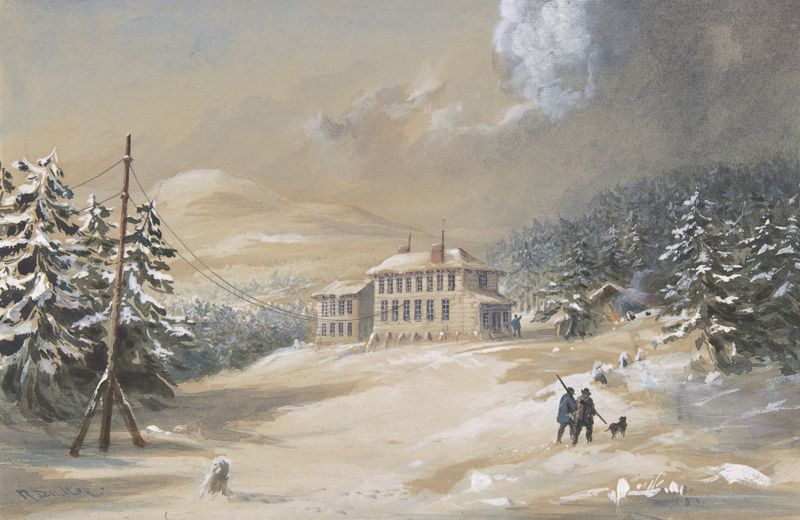
Trinity Bay, Newfoundland, Exterior View of the Telegraph House in 1857-1858
Robert Charles Dudley





