
The Bay of Bull Arms, Trinity Bay, Newfoundland, Bonfires Lighted on the Hills to Notify of the Arrival of the Cable Fleet on August 5th, 1858 — History & Facts
This sentiment echoes through the vivid hues and intricate details of an era marked by ambition and longing. The scene captured speaks to our collective desire for connection, a yearning for progress that often belies the turmoil beneath the surface. Focus first on the bolstering flames scattered across the hills, their glow flickering against the twilight sky. The vivid oranges and yellows contrast sharply with the deep blues of the water and the encroaching night.
Notice how the brushstrokes weave a narrative, creating a dynamic interplay between light and shadow—each bonfire representing a signal of hope and unifying desire, illuminating not just the landscape but also the aspirations of a nation on the brink of transformation. Delve deeper into the canvas, and you will find subtle emotional tensions—each bonfire not merely a beacon but a reminder of the past struggles faced by those in Newfoundland. The rhythmic waves beneath the glowing sky symbolize both the isolation of the landscape and the powerful pull of the incoming cable fleet. This juxtaposition of natural beauty and human ambition echoes the historical significance of the moment, where progress and longing coexist, creating a dialogue between what was and what could be. In 1865–66, the artist painted this piece during a time of technological fervor as the telegraph cable was laid across the Atlantic, revolutionizing communication.
Dudley was immersed in the spirit of optimism and change that defined this period, capturing the hope of a community eager to connect with the world beyond their shores. Amid the backdrop of his artistic exploration, he was also grappling with the simplicity of rural life, making this work a profound reflection of both personal and collective aspirations.
More Artworks by Robert Charles Dudley
Browse all →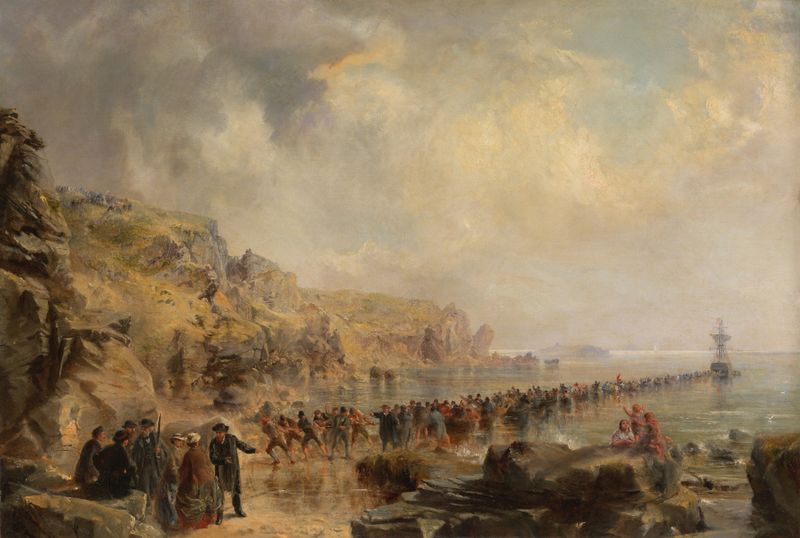
Landing the Shore End of the Atlantic Cable
Robert Charles Dudley
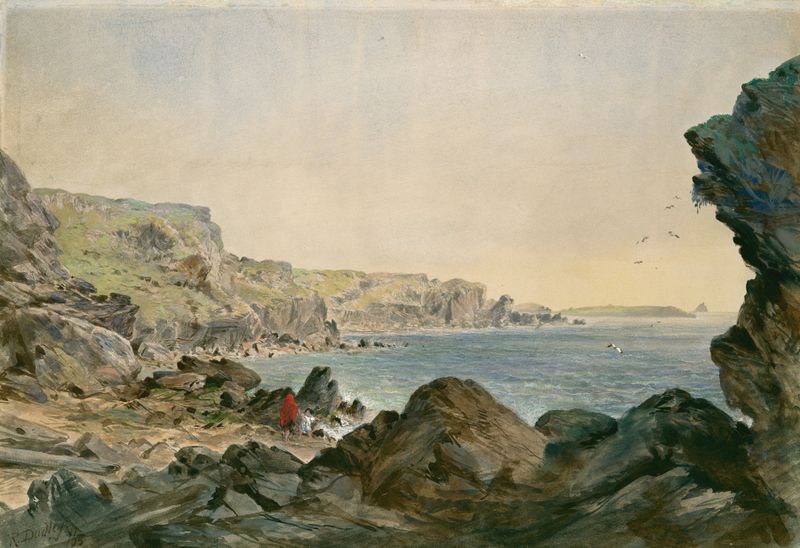
Foilhummerum Bay, Valentia, Looking Seawards from the Point at Which the Cable Reaches the Shore of Ireland
Robert Charles Dudley
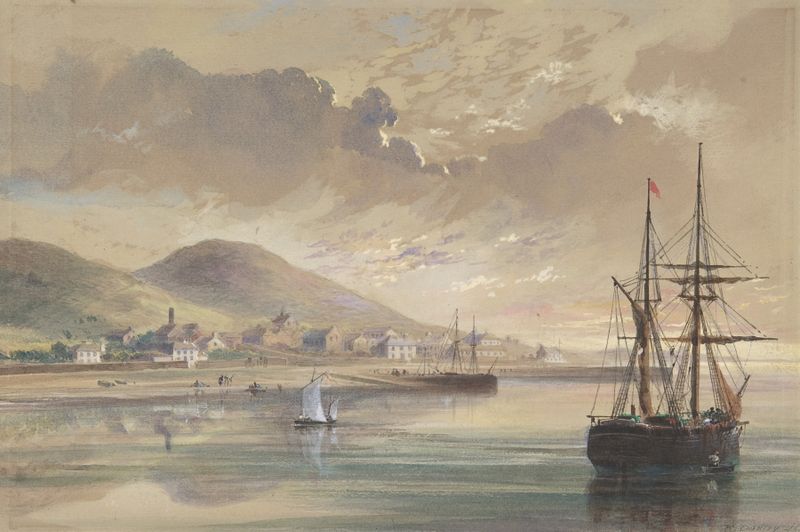
Valentia in 1857-1858 at the Time of the Laying of the Former Cable
Robert Charles Dudley
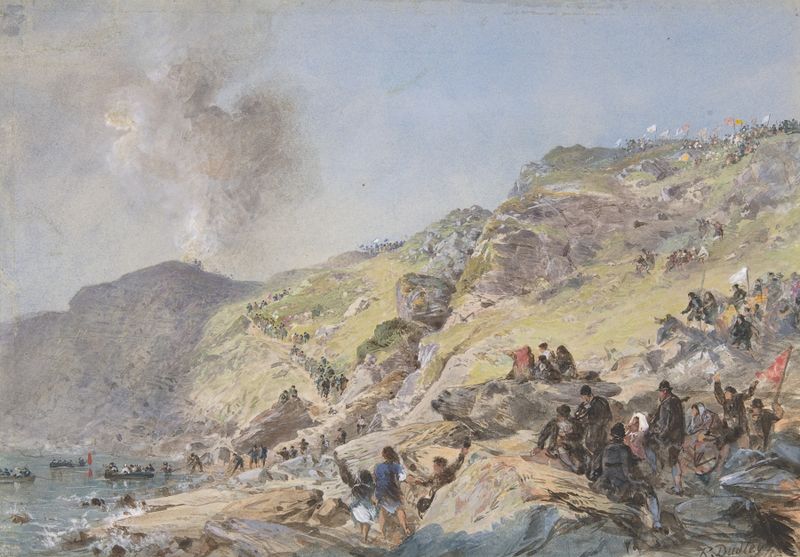
The Cliffs, Foilhummerum Bay, Valentia, the Point at Which the Shore-end of the Cable was Landed on July 22nd, 1865
Robert Charles Dudley
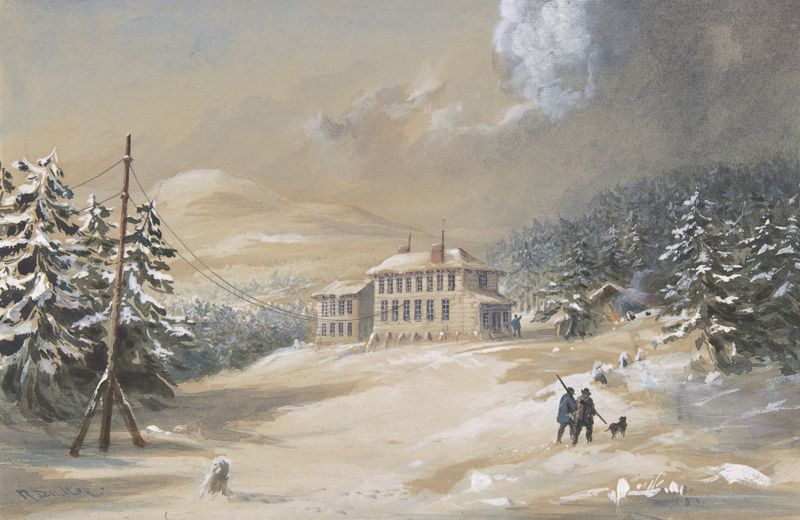
Trinity Bay, Newfoundland, Exterior View of the Telegraph House in 1857-1858
Robert Charles Dudley





