
Landing the Shore End of the Atlantic Cable — History & Facts
How do we transform the vastness of the ocean into a tether? Focus first on the dramatic tableau unfolding at the shoreline, where restless waves crash against a dusky sky saturated with hues of indigo and amber. The ships stand resolute, their sails catching a subtle breeze, while figures clad in period clothing hustle along the beach, each movement choreographed by purpose and anticipation. Notice how the artist’s meticulous brushwork captures the shimmer of the water, lending a sense of fluidity to the scene that contrasts with the solid forms of laborers working together to secure the cable, tethering the new world to the old. Delve deeper into the canvas's emotional core, where the juxtaposition of human endeavor against nature's vastness paints a story of ambition and resilience.
The cable, symbolic of connection and progress, snakes through the chaos of the shore, embodying the tension between man’s ingenuity and the untamed sea. Subtle interactions, like a sailor pointing toward the horizon or a laborer wiping his brow, encapsulate the urgency of a dream that dares to bridge continents, revealing a collective yearning for unity amidst the tumult. In 1866, Robert Charles Dudley painted this piece during a tumultuous yet transformative time in the world of communication. As the Atlantic telegraph cable was completed, marking a monumental achievement in connecting the Americas to Europe, Dudley found himself at the intersection of technological marvel and artistic expression.
Living in England, he captured this pivotal moment in his career, reflecting the spirit of innovation that defined his era.
More Artworks by Robert Charles Dudley
Browse all →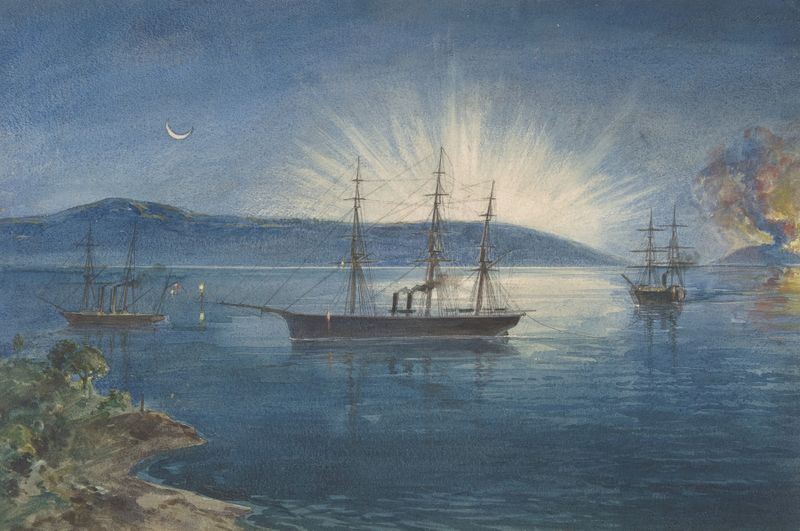
The Bay of Bull Arms, Trinity Bay, Newfoundland, Bonfires Lighted on the Hills to Notify of the Arrival of the Cable Fleet on August 5th, 1858
Robert Charles Dudley
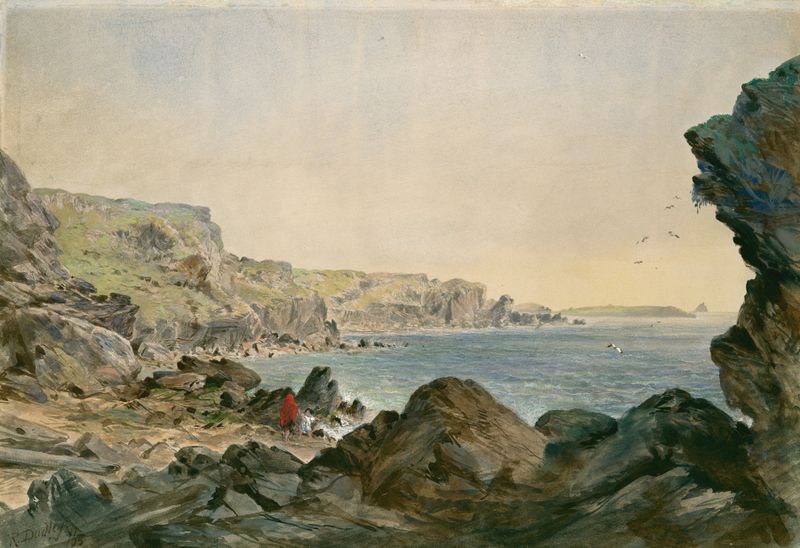
Foilhummerum Bay, Valentia, Looking Seawards from the Point at Which the Cable Reaches the Shore of Ireland
Robert Charles Dudley
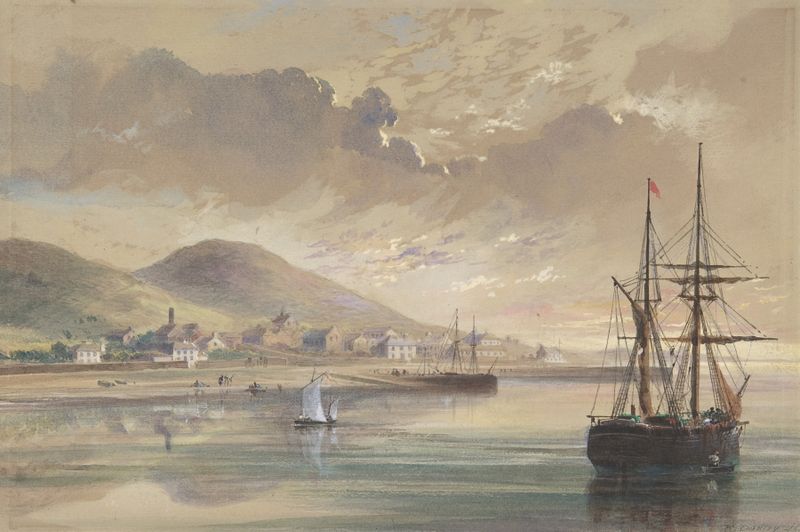
Valentia in 1857-1858 at the Time of the Laying of the Former Cable
Robert Charles Dudley
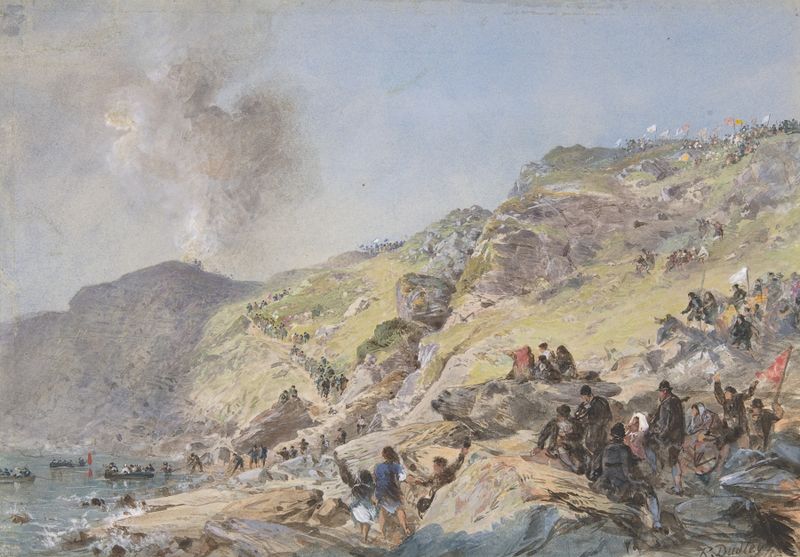
The Cliffs, Foilhummerum Bay, Valentia, the Point at Which the Shore-end of the Cable was Landed on July 22nd, 1865
Robert Charles Dudley
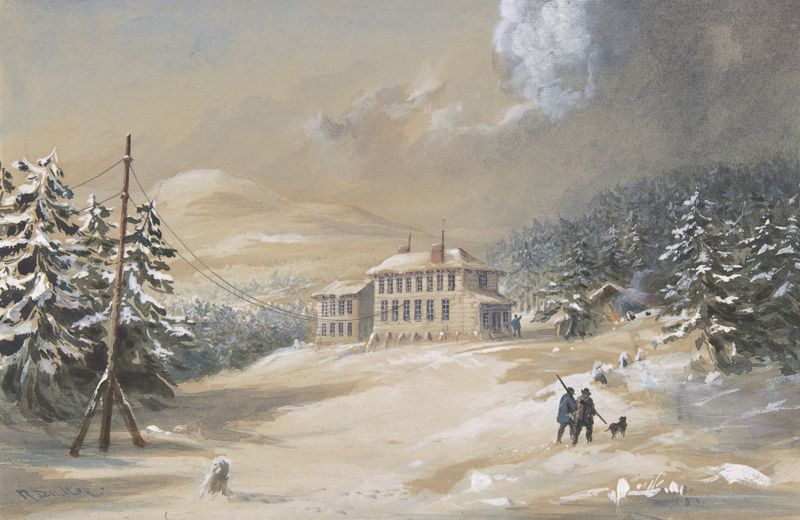
Trinity Bay, Newfoundland, Exterior View of the Telegraph House in 1857-1858
Robert Charles Dudley





