
The Cloisters, San Lorenzo fuori le mura — History & Facts
When did color learn to lie? In the embrace of vibrant hues, solitude often whispers the loudest truths. Look closely at the soft yet commanding palette that beckons you in the artwork. Notice how the gentle colors of the cloisters harmonize, yet suggest an underlying tension. The warm tones of terracotta interlace with deep, muted greens, guiding the eye through the architectural beauty while hinting at the loneliness that permeates the scene.
The light filters in, casting delicate shadows that stretch across the stone, creating a sense of both warmth and isolation. Beneath the surface, the contrasts deepen. The arches stand tall and strong, evoking a sense of permanence, yet they frame emptiness, suggesting a longing for connection that remains unfulfilled. Look at the silent spaces; they are as crucial as the structures themselves, embodying a solitude that resonates through the quiet elegance.
Each detail, from the textured stone to the serene sky beyond, intertwines with the notion of absence, inviting viewers to contemplate their own experiences of loneliness. In 1824, Christoffer Wilhelm Eckersberg painted this scene while living in Rome, a city teeming with artistic fervor yet steeped in historical solitude. At this time, he was refining his Neoclassical style, infusing it with romantic elements that bridged the gap between tradition and innovation. The world of art was undergoing transformations, and Eckersberg’s unique vision reflected both the beauty and isolation of the spaces he chose to immortalize.
More Artworks by Christoffer Wilhelm Eckersberg
Browse all →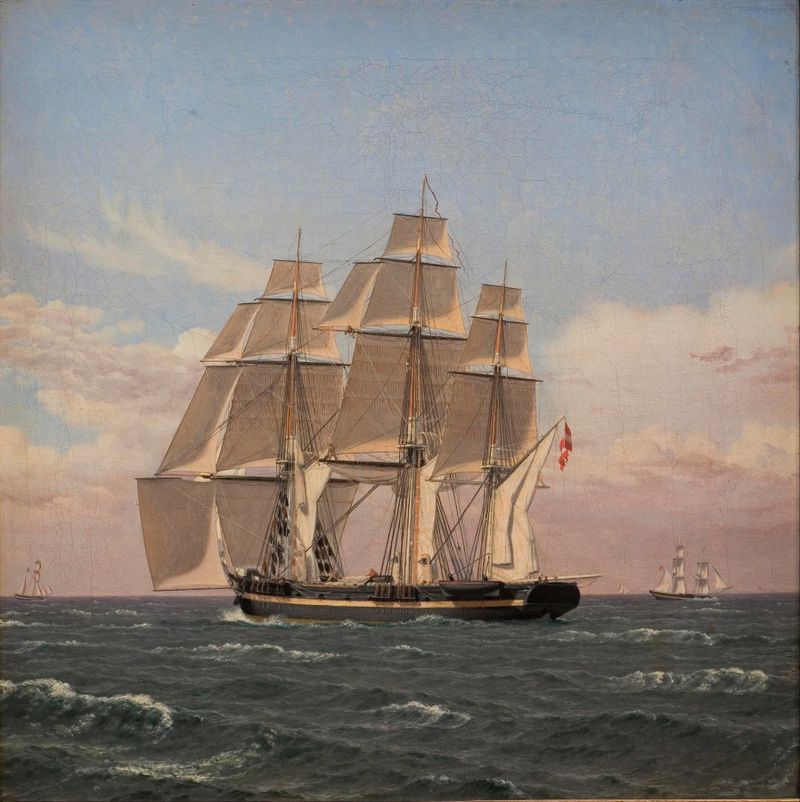
The corvette Najaden under sail
Christoffer Wilhelm Eckersberg

The Corvette Najaden under Sail
Christoffer Wilhelm Eckersberg
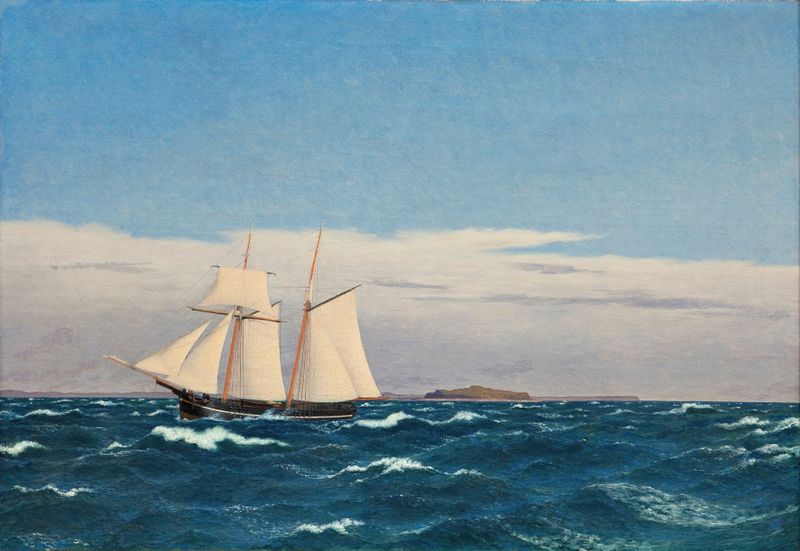
Seascape with the island of Hjelm and the coast of Jutland
Christoffer Wilhelm Eckersberg
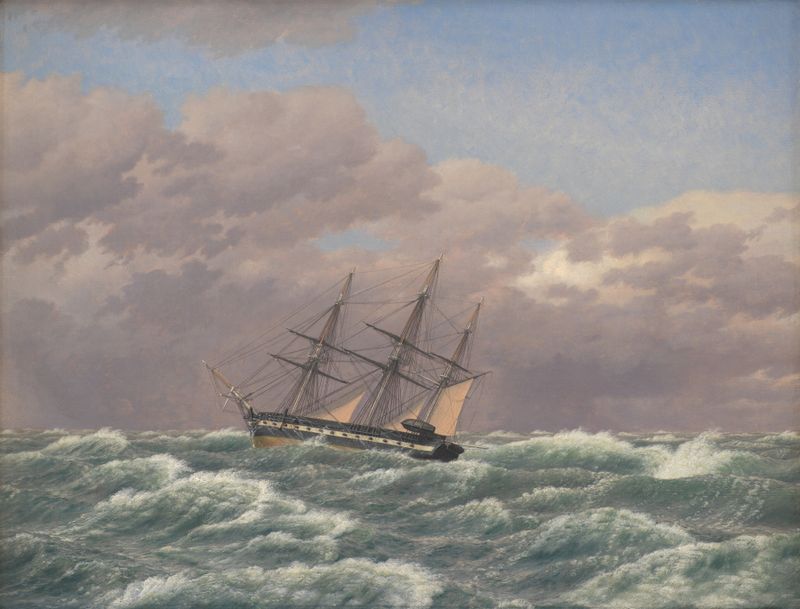
The Corvette ‘Galathea’ in a Storm in the North Sea
Christoffer Wilhelm Eckersberg
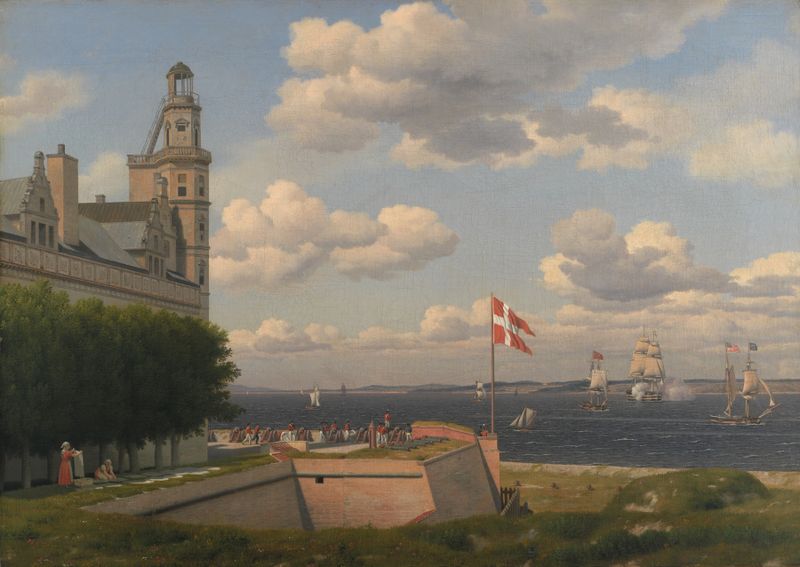
A View towards the Swedish Coast from the Ramparts of Kronborg Castle
Christoffer Wilhelm Eckersberg
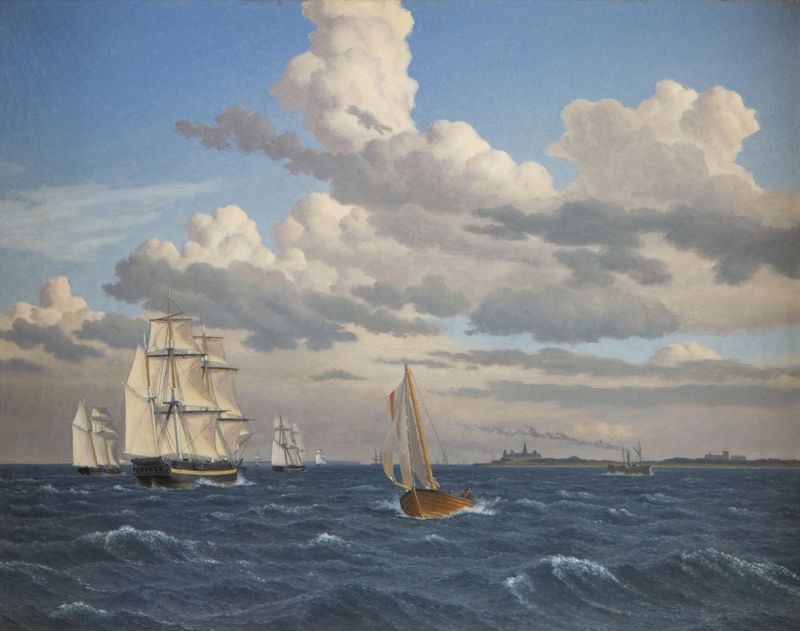
Ships in the Sound North of Kronborg Castle, Elsinore
Christoffer Wilhelm Eckersberg
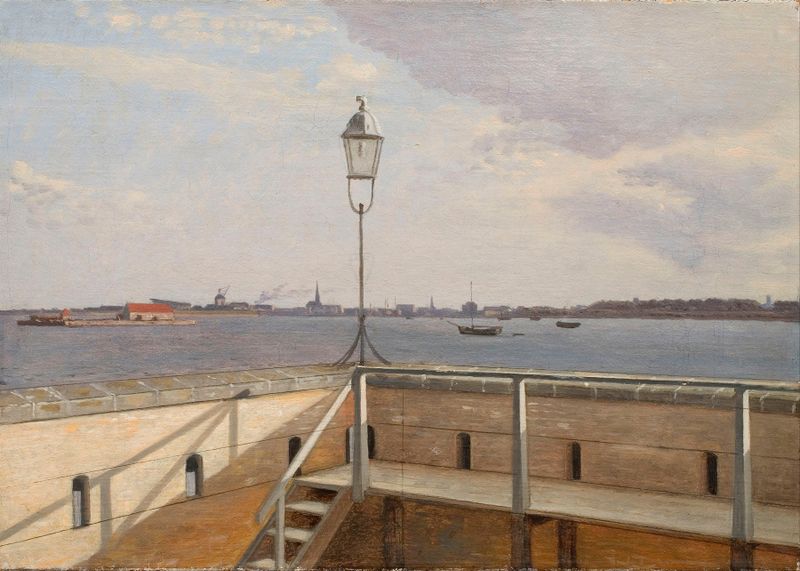
View from the Trekroner Battery with Copenhagen in the distance
Christoffer Wilhelm Eckersberg
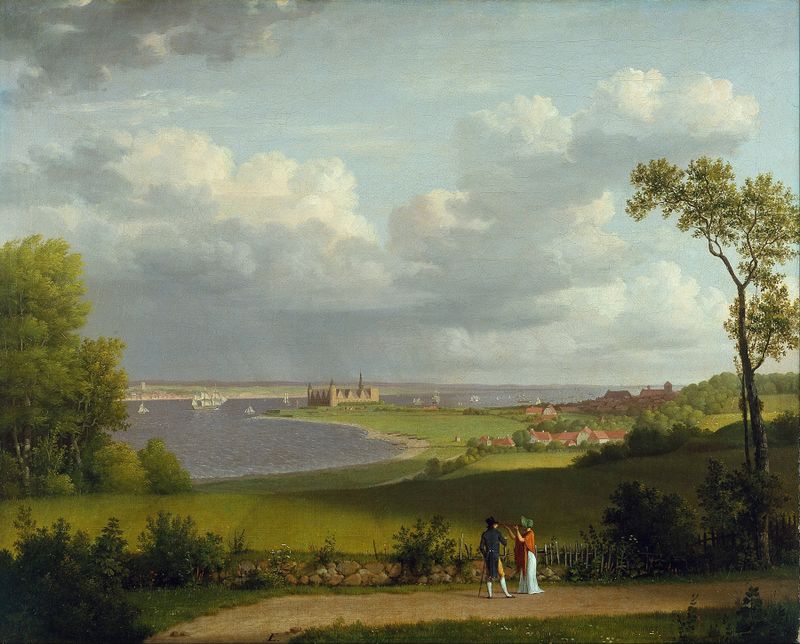
View north of Kronborg Castle
Christoffer Wilhelm Eckersberg

Vesta Temple in Rome
Christoffer Wilhelm Eckersberg
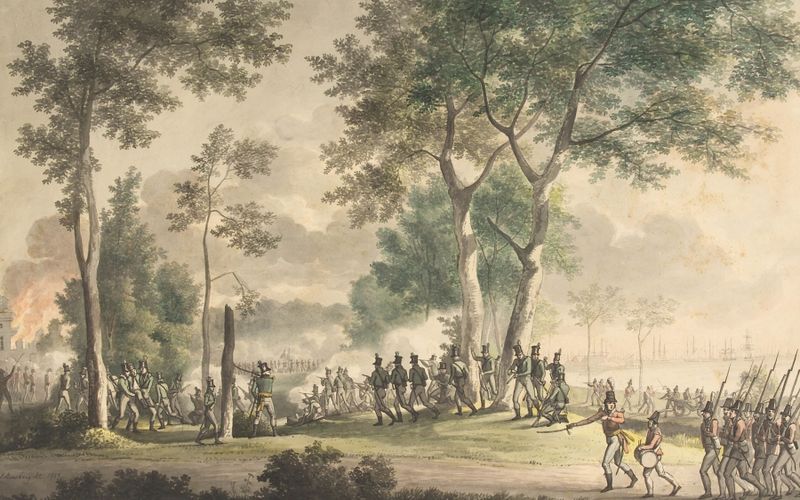
Livjægernes udfald i Classens have 31.august 1807.
Christoffer Wilhelm Eckersberg
More Architecture Art
Browse all →
The statue of Liberty
Frédéric Auguste Bartholdi

View of Houses in Delft, Known as ‘The Little Street’
Johannes Vermeer

View of Houses in Delft, Known as ‘The Little Street’
Johannes Vermeer

The Cathedral in Rouen. The portal, Grey Weather
Claude Monet

The yellow house
Vincent van Gogh

The Church in Auvers-sur-Oise, View from the Chevet
Vincent van Gogh