The Dancing Class — History & Facts
A group of young women in white tutus gather in a rehearsal room, some clustered around a violinist at the piano, others practicing at the barre or pausing in mid-step on the bare wooden floor, their reflections caught in a tall mirror that anchors the scene. The central dancer, with chestnut hair and a pink ribbon at her waist, stands poised en pointe, while her companions display a mixture of concentration and fatigue, their gestures both elegant and awkward. The Dancing Class was painted by Edgar Degas around 1870, marking one of his earliest attempts to capture the world of ballet at the Paris Opéra.
Degas relied on preparatory studies for this work, and the unfamiliarity of the environment gives the dancers a certain stiffness, contrasting with the more relaxed figures in his later ballet scenes. This painting introduces motifs that would become central to Degas’s ballet series: the barre, the mirrors, and the careful architectural framing of the rehearsal space. Scholars have noted that the composition’s spatial arrangement owes a debt to Velázquez, and that Degas’s use of structure guides the viewer’s gaze through the room.
As one of the foundational works in his ballet series, The Dancing Class set the stage for Degas’s lifelong exploration of the rehearsal room and the private world of dancers.
Sources: Metropolitan Museum of Art, record 29.100.184 · Wikidata Q7476471 · Wikipedia: The Dancing Class · Image source (Wikimedia Commons)
More Artworks by Edgar Degas
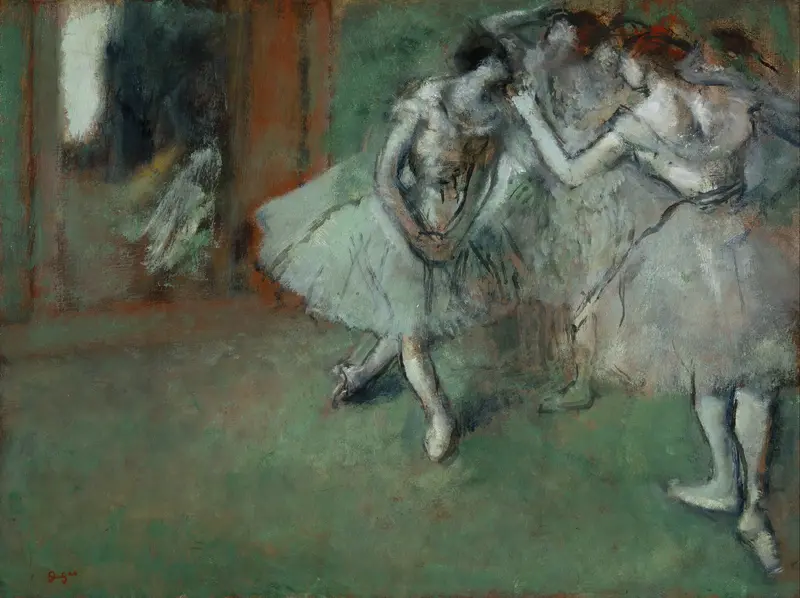
A Group of Dancers
Edgar Degas

Two Dancers on a Stage
Edgar Degas
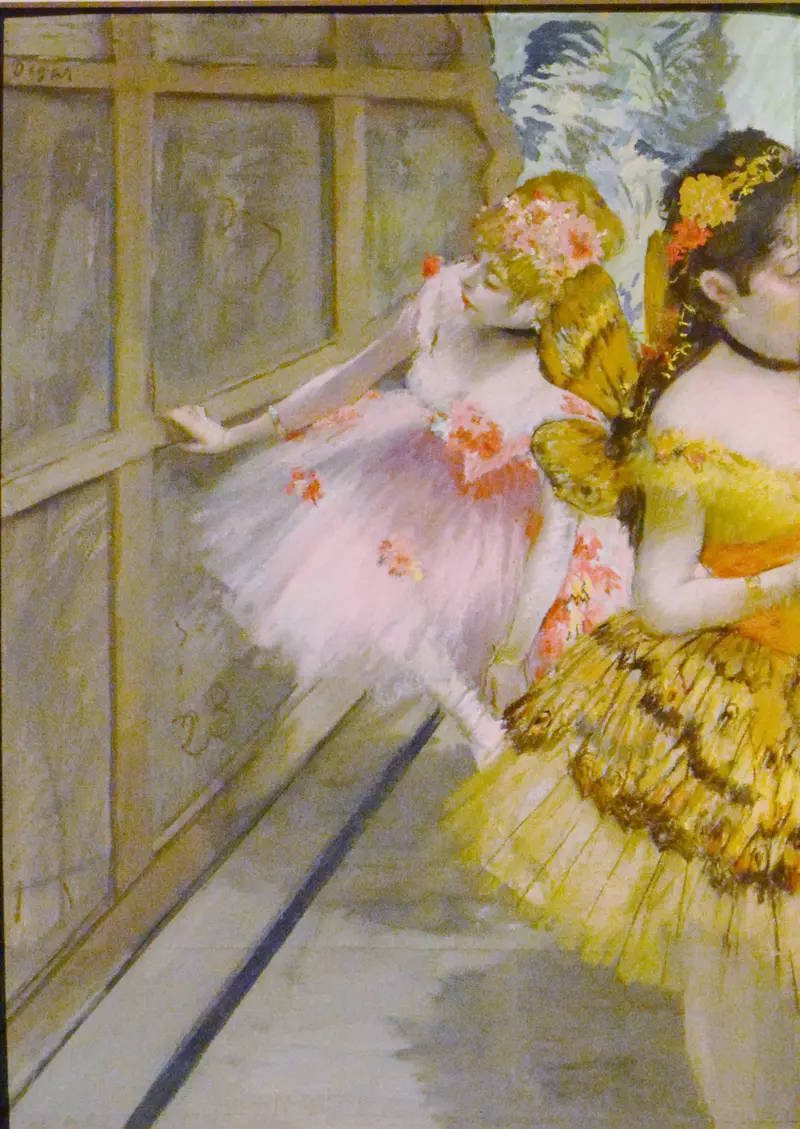
Dancers in the Wings
Edgar Degas
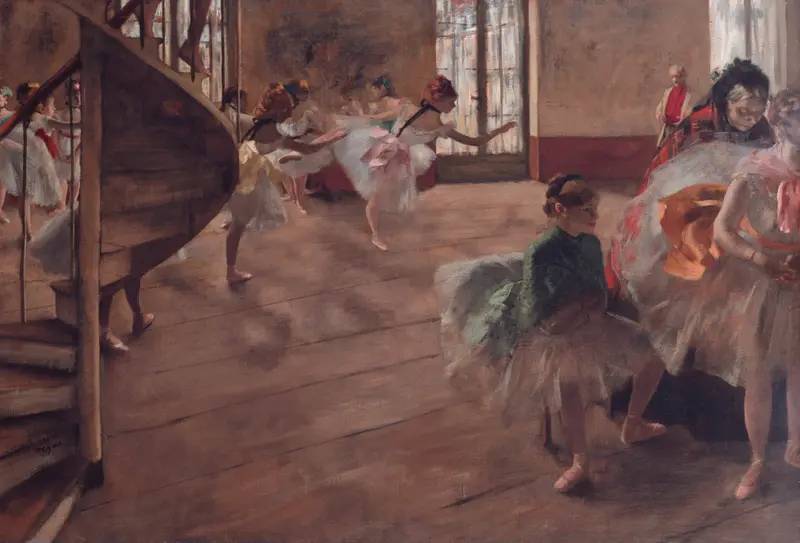
Ballet Rehearsal
Edgar Degas
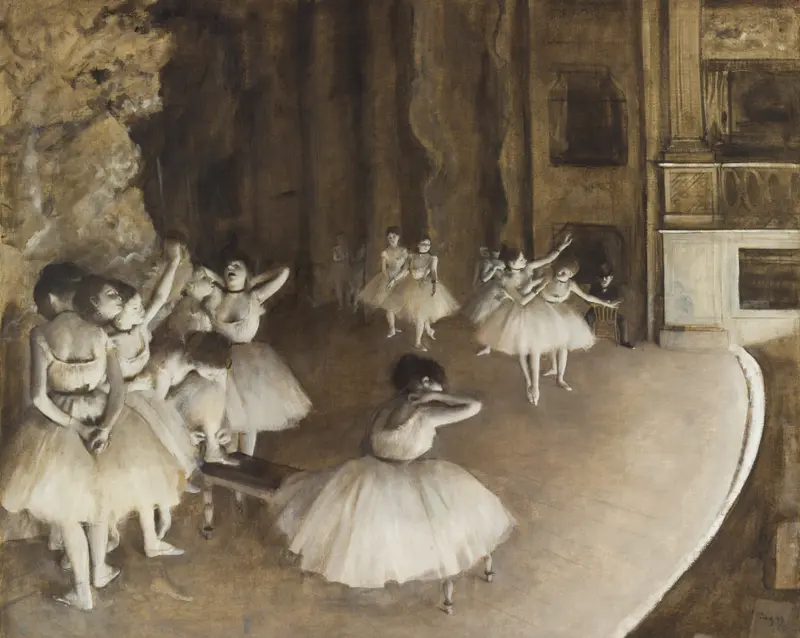
Ballet Rehearsal on Stage
Edgar Degas
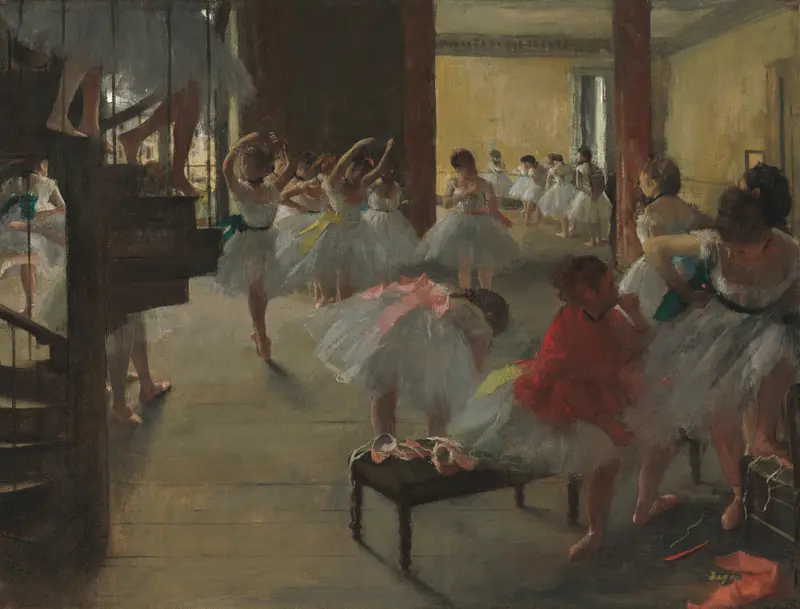
The Dance Class
Edgar Degas
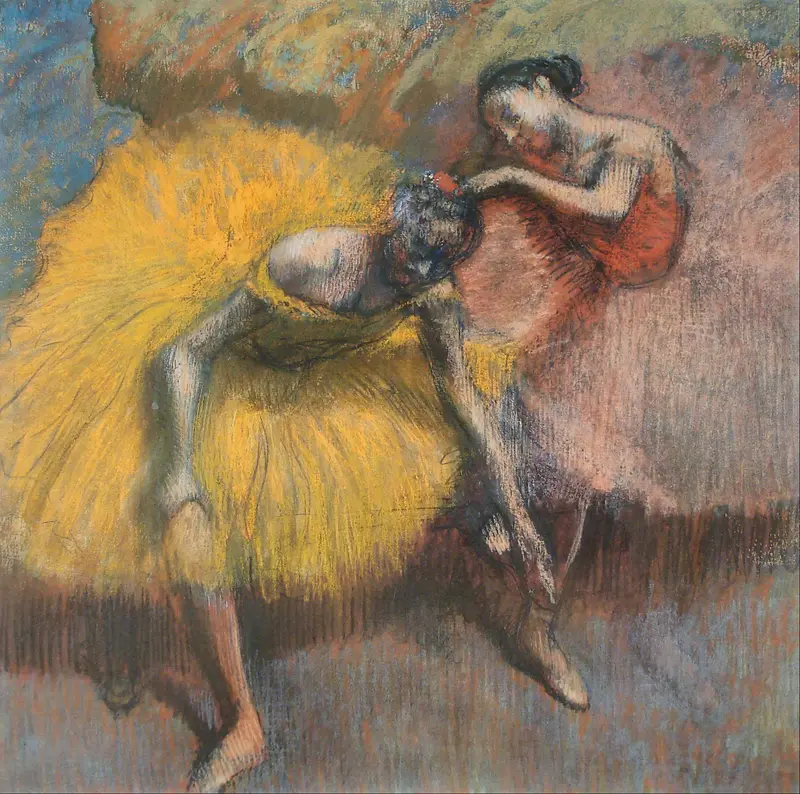
Two Dancers - Yellow and Rose
Edgar Degas
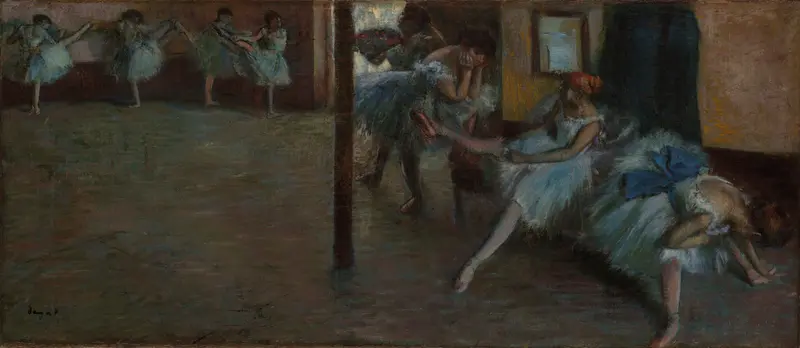
The Ballet Rehearsal
Edgar Degas
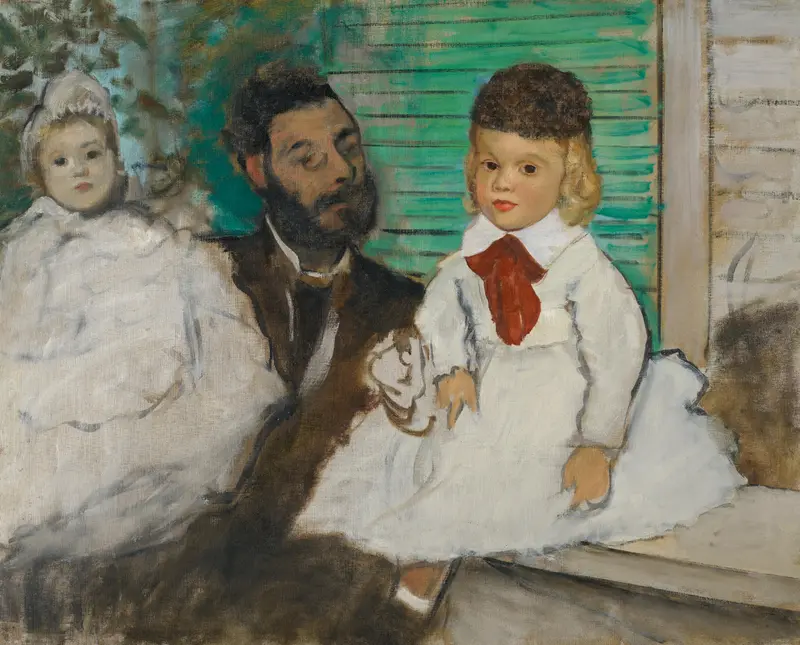
Count Lepic and His Daughters
Edgar Degas
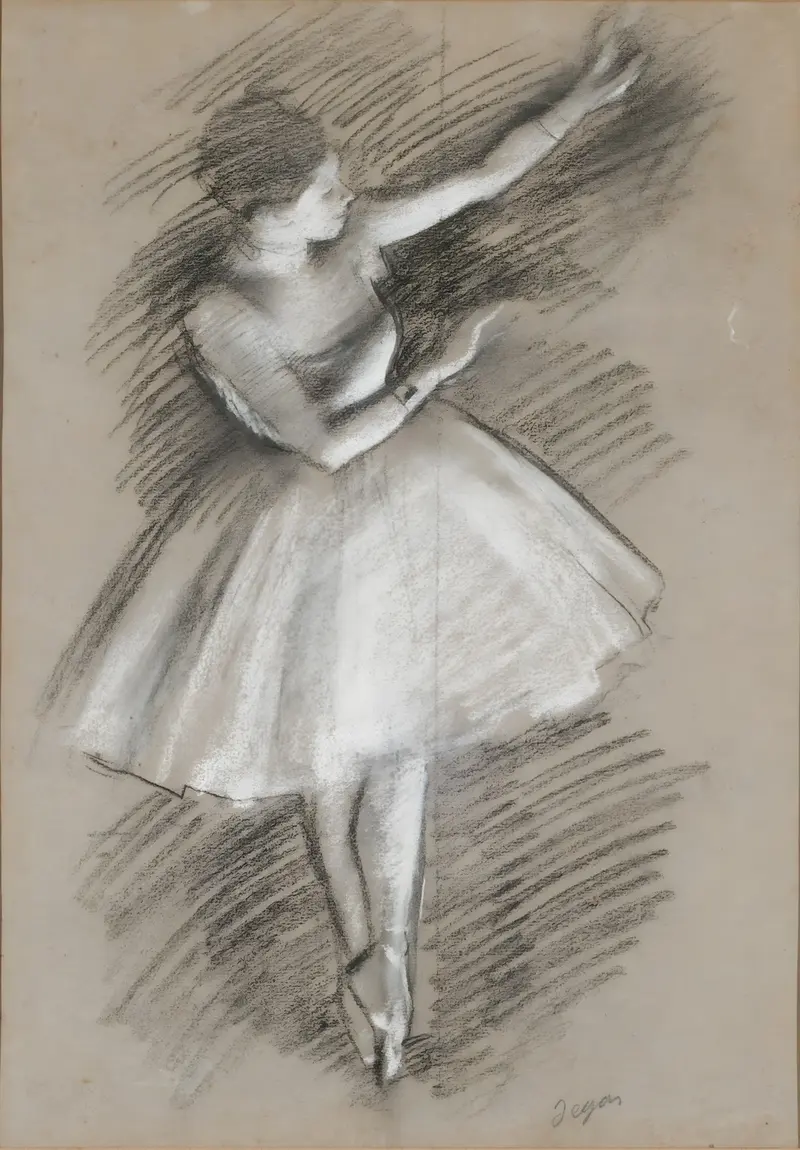
dancer in white
Edgar Degas